

Japan Eases Bans, Expands Weapon Exports
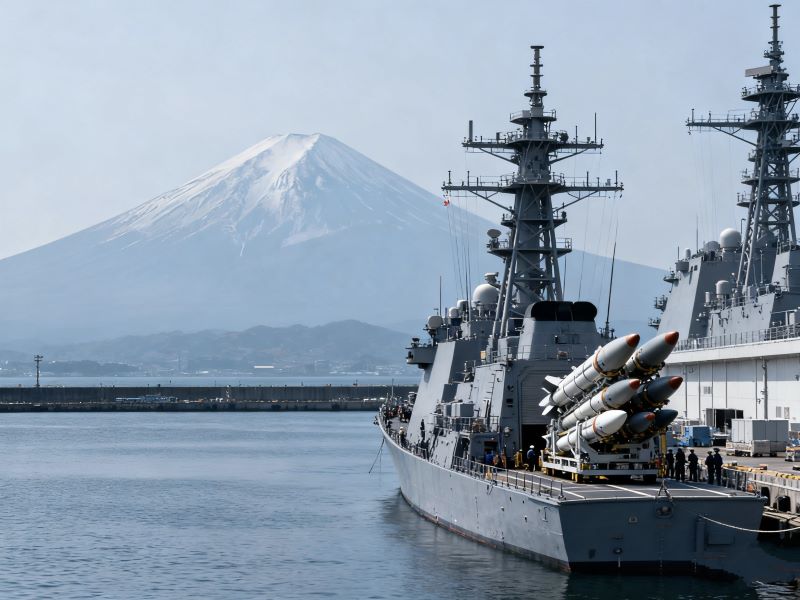
Belgium-based “Army Recognition” website concluded on November 30 that Japan is working to lift strict restrictions excluding lethal weapons from its export list, following a series of recent arms export moves by the country.
Philippines Talks: Missiles, Vessels and Aircraft
As reported by the latest news on November 30, multiple sources revealed that the Japanese government has launched informal consultations with the Philippines on exporting the Self-Defense Forces’ Type 03 medium-range surface-to-air missile. This move clearly reflects Tokyo’s eagerness to promote defense equipment exports.
The Type 03 medium-range surface-to-air missile, developed by Mitsubishi Heavy Industries starting in the 1990s to replace aging U.S.-made Hawk anti-aircraft missiles, is operated by the Japan Ground Self-Defense Force. Mounted on trucks for rapid mobile deployment, each launcher typically carries six missiles with an effective range of approximately 50 kilometers, a maximum interception altitude of around 10 kilometers, and a speed of about Mach 2.5. Equipped with a solid-propellant rocket engine and a high-explosive fragmentation warhead, the missile targets high-speed aircraft and cruise missiles. Its active electronically scanned array radar can track up to 100 aerial targets and engage 12 simultaneously. In Japan’s air and missile defense architecture, the system performs pure air defense tasks—lacking ballistic missile interception capabilities—and fills the gap between short-range air defense missiles and U.S.-made Patriot PAC-3 anti-missile systems that protect key bases and major cities.
The export aligns with the Philippines’ urgent modernization needs. The Southeast Asian nation has recently begun procuring modern ground-based air defense systems and anti-ship missiles to safeguard coastal airports, ports, and energy infrastructure. The Japanese-supplied air defense missiles will be deployed on Luzon Island and selected coastal bases, complemented by previously provided Japanese air defense radars and intelligence support from the United States and other allies.
In addition to missile talks, The Japan Times disclosed that Japan is discussing the transfer of secondhand frigates and patrol aircraft to the Philippines. The Philippine Navy has expressed interest in acquiring at least three Abukuma-class frigates and five TC-90 patrol aircraft from the Japan Maritime Self-Defense Force to enhance its maritime surveillance capabilities.
Gradual Easing of Export Restrictions
Japan’s relaxation of weapons export policies has followed a path of “gradual breakthroughs.” In 2014, the country replaced its “Three Principles on Arms Exports” with the “Three Principles on Transfer of Defense Equipment,” shifting from a “principle of prohibition” to a “principle of permission.” Building on this, Japan provided the Philippines with five TC-90 patrol aircraft and multiple sets of air defense radar systems between 2017 and 2018.
Currently, the operational guidelines of the “Three Principles on Transfer of Defense Equipment” only allow exports of five categories of equipment: rescue, transportation, surveillance, monitoring, and mine-sweeping, excluding fully lethal weapon systems in principle. However, the ruling Liberal Democratic Party and Komeito Party explicitly stated in their coalition agreement a plan to abolish the “five-category restriction” by 2026. The government of Takashi Takaichi aims to scrap the existing rule limiting defense equipment exports to non-combat uses in the first half of next year, with specific export feasibility studies to commence immediately after the formal decision.
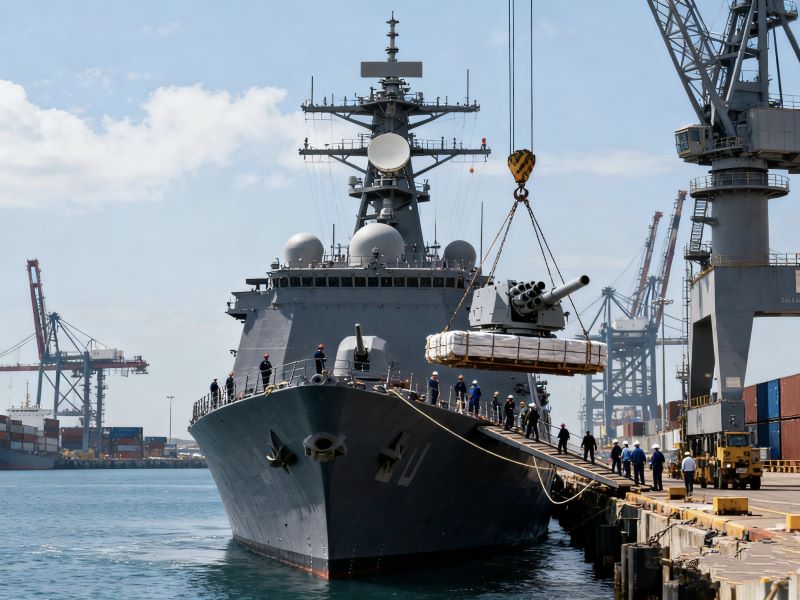
In 2023, Japan further revised the principles to expand the scope of exportable “finished products” from “jointly developed equipment” to “licensed-produced equipment.” Recently, Japan approved the supply of domestically manufactured Patriot PAC-3 interceptor missiles to the United States, marking its first export of lethal weapons. “Army Recognition” noted that the consideration of exporting Type 03 missiles to the Philippines is not an isolated case but a new step in Japan’s ongoing efforts to break through relevant arms export restrictions.
It remains unclear how Japan will export entire sets of secondhand military equipment under the current principles or if further revisions to the rules are necessary. However, “these restrictions are unlikely to last long,” The Japan Times commented, as the ruling Liberal Democratic Party is eager to expand overseas weapons sales and is accelerating efforts to relax rules on exports of lethal defense equipment.
High-Level Promotion of Defense Exports
Kyodo News also reported on November 30 that Japanese Defense Minister Shinjiro Koizumi plans to hold politic talks with New Zealand Defense Minister Andrew Little in Tokyo in mid-December, with Koizumi proposing to conduct “top-level promotion” to boost defense equipment exports. Following Australia’s decision to introduce Japan Maritime Self-Defense Force’s Mogami-class frigates, Little has expressed strong interest in acquiring the advanced warships and plans to visit one at the JMSDF’s Yokosuka Base.
China’s Foreign Ministry spokesperson previously stated that due to Japan’s history of militarist aggression, its military and security developments have long attracted close attention from Asian neighbors and the international community. In recent years, Tokyo has significantly adjusted its security policy, increased defense budgets year by year, continuously relaxed weapons export restrictions, and pursued breakthrough military development. “We urge Japan to earnestly respect the security concerns of neighboring countries, deeply reflect on its aggressive history, adhere to the path of peaceful development, and win the trust of Asian neighbors and the international community through concrete actions.”


Related Articles

China May Boost US Soybean Imports Significantly
Feb 4, 2026 – High-level China-US telephone talks on February 4 have...

The United States Officially Withdraws from the World Health Organization
On January 22, 2026, the U.S. government announced that its withdrawal from...
Somalia Ends All Agreements with the UAE
According to the latest reports, the Federal Government of Somalia recently announced...

U.S. Announces Withdrawal from 66 International Organizations
On January 7, U.S. President Donald Trump signed a far-reaching presidential memorandum,...