

Farewell to Architectural Visionaries of 2025
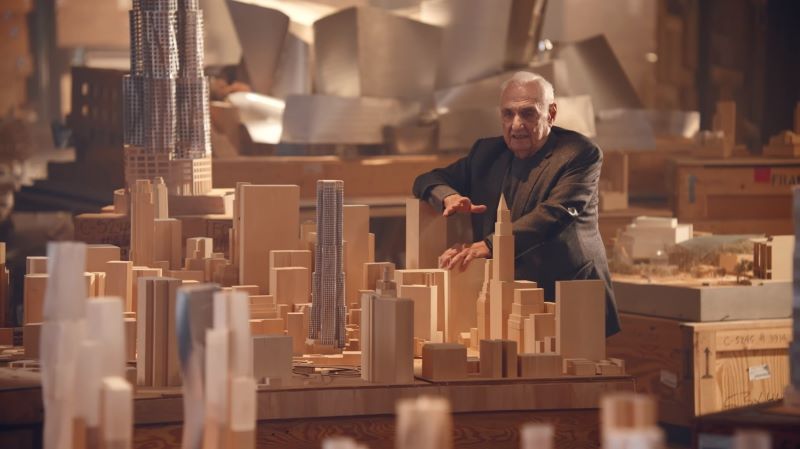
Each year brings innovations, projects and shifts in architectural culture, yet it also marks the loss of pioneers who shaped the discipline for decades. As architecture advances, the passing of these visionaries creates a moment for the field to reflect—on enduring legacies, evolving practices and guiding principles for the future. Their work transcends individual buildings or writings, reminding us that architecture is a collective endeavor shaped by both contemporary creators and those whose foresight continues to influence how we envision cities and landscapes.
In 2025, the architectural world mourned the loss of thinkers and practitioners from across the globe, whose work addressed interconnected themes. Some rooted built environments in cultural memory through identity, symbolism and historical continuity; others pushed architectural boundaries via engineering precision, ecological systems and radical experimentation. Spanning post-war Britain, rapidly urbanizing China, Central European avant-gardes and evolving cultural hubs like Berlin and New York, their diverse practices defined architectural culture over the past half-century and will continue to shape its engagement with society, technology and the environment.
Reshaping British Architecture
The architectural history of late 20th-century Britain is indelibly linked to Terry Farrell and Nicholas Grimshaw, two figures who reimagined the built environment with contrasting responses to their cultural era.
Terry Farrell’s career was intertwined with the rise of British postmodernism. His architecture explored symbolism, building facades as communication interfaces and the expressive potential of ornament—ideas vividly realized in projects such as London’s MI6 Building and Comyn Ching Triangle. Farrell viewed cities as spaces where historical layers coexist with contemporary needs, believing architecture is intertwined with cultural narratives, serving both functional and public declarative purposes.
Nicholas Grimshaw was a leading figure in high-tech architecture, focusing on structure, performance and the logic of construction. Projects like Cornwall’s Eden Project and London Waterloo Station’s International Terminal exemplify his style of revealing rather than concealing building systems. For Grimshaw, architecture was a dynamic framework shaped by engineering principles and environmental strategies, anticipating modern discussions on modularity, adaptability and material efficiency.
Shaping Urban Landscapes
Several 2025 departures left legacies extending beyond individual buildings to urban transformation. Léon Krier and Yu Kongjian approached urban planning from fundamentally different angles: the former revived spatial logics of historical settlements, advocating continuity, proportional harmony and human-scaled coherence; the latter advanced ecological infrastructure resilient to climate pressures and capable of restoring degraded landscapes. Their work forms a trans-temporal dialogue, showing cities can be shaped through cultural memory revival or natural system reactivation—both rooted in the belief that urban form is a collective responsibility requiring care, planning and long-term vision. Léon Krier was a core figure in the New Urbanism movement. His drawings, writings and urban proposals championed walkable neighborhoods, traditional architectural typologies and clear hierarchies of public space.
Experimental Practices & Boundary Expansion
While Farrell, Grimshaw, Krier and Yu influenced large-scale urban frameworks, Helmut Swiczinsky, Ricardo Scofidio and Dennis Crompton pushed architecture into intersections of form, technology and narrative. Their practices embraced experimentation, treating architecture not just as built form but as a platform for critical inquiry, sensory experience and speculative thinking.
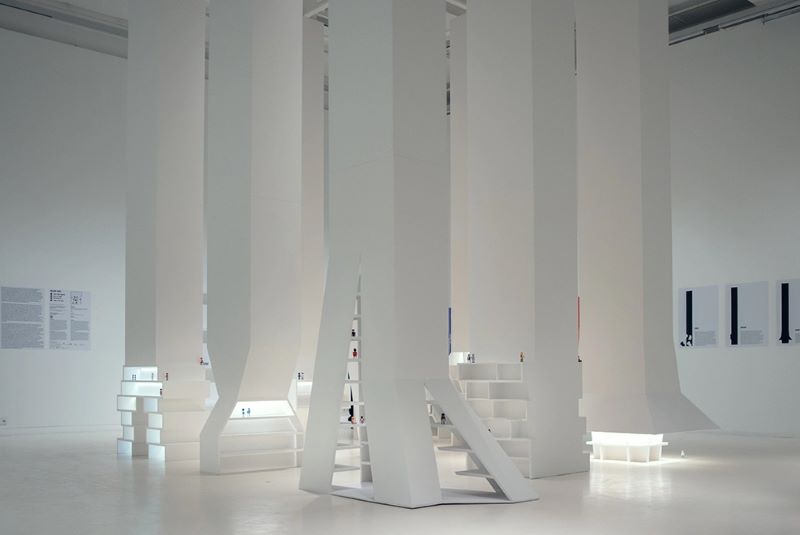
Helmut Swiczinsky and Wolf D. Prix playing a pivotal role in developing deconstructivist architectural language. Their projects feature fragmentation, dynamic geometry and structures that appear in motion. From early rooftop extensions in Vienna to later works like BMW Welt in Munich, the firm’s approach questioned stability, hierarchy and traditional form. Swiczinsky saw architecture as an environment shaped by tension, energy and the unpredictability of contemporary life.
Ricardo Scofidio was instrumental in transforming architecture into interdisciplinary practice. Before Diller Scofidio + Renfro gained acclaim for large-scale cultural and urban projects, the studio deeply engaged with performance art, installations and the politics of public space. Works like the Blur Building and early conceptual installations explored how technology influences perception and how bodies move through space. Scofidio’s practice blurred boundaries between architecture and other fields, challenging the notion that architecture is defined solely by buildings.
Dennis Crompton, a founding member of Archigram, represented another form of architectural experimentation. The group’s drawings, publications and speculative projects envisioned cities shaped by mobility, prefabrication and technological imagination. As the collective’s archivist and documentarian, Crompton ensured this intellectual legacy remained accessible, enabling ongoing dialogue with Archigram’s ideas long after the movement disbanded.
Advancing Architectural Culture
Architecture is shaped not only through drawings and construction sites but also through dialogues, exhibitions and cultural frameworks that disseminate ideas. Few embodied this dimension as profoundly as Kristin Feireiss, co-founder of Berlin’s Aedes Architecture Forum. Her work demonstrated that architectural culture relies heavily on spaces for debate as much as on buildings themselves.
Since the 1980s, Aedes has ranked among the world’s most influential architectural platforms, hosting groundbreaking exhibitions for practices that later became part of the international architectural lexicon. Feireiss highlighted the importance of institutions fostering academic discussion, showing curation is not a peripheral activity but a core mechanism for architecture to interpret itself, negotiate values and expand its reach. Under her leadership, Aedes became a hub for architects, researchers and the public, generating conversations that transcended Berlin’s cultural scene. Her legacy reminds us that architectural culture advances through diverse forms of creation, and spaces dedicated to presenting ideas are just as transformative as the ideas themselves.
Form & Innovation: Frank Gehry
Frank Gehry’s passing marked the loss of one of the most influential architects of the late 20th and early 21st centuries. Few have left such a profound imprint on the visual and cultural vocabulary of architecture. Gehry treated form as an open proposition, using materials, structures and dynamic expressions to challenge architectural conventions. From early avant-garde experiments with low-cost materials in his Santa Monica residence to the sculptural complexity of the Guggenheim Museum Bilbao, his projects expanded the possibilities of architectural expression while remaining deeply connected to urban experience. His projects remain part of architecture’s shared vocabulary, embodying the idea that experimental spirit can coexist with civic impact, and that architectural expressiveness is inseparable from its ability to inspire public imagination.


Related Articles

Local Moves for Clean Energy’s Spatial Impacts
January 26 marks the International Day of Clean Energy, an initiative raising...

Architecture’s Blue Notes: Tension and Subtle Deviations
The pentatonic scale, a musical framework built from just five notes, creates...

Niall McLaughlin to Win 2026 RIBA Royal Gold Medal
The Royal Institute of British Architects has named Irish architect, educator and...


Composites Reshape Modern Architecture Globally
Once confined to aerospace and automotive industries, composite materials have emerged as...