China’s passenger car exports exceeded 6 million units in 2025, a new historical record, according to data from the China Association of Automobile Manufacturers and the General Administration of Customs. The top 10 destination countries for the exports have been released, showing a mixed performance of traditional markets and emerging growth drivers across the globe.
Top Three Markets: Divergent Trends
Russia, the UAE and Mexico claimed the top three spots on the list, with a combined export volume of 1.5859 million units, accounting for half of the total exports to the top 10 destinations, yet each market posted distinct growth trajectories.
Russia retained its position as the largest export destination for China’s passenger cars with 555,400 units shipped in 2025, but the figure represented a sharp 46.1 percent year-on-year decline. The country became China’s top passenger car export market in recent years as European and American automakers withdrew amid the Russia-Ukraine conflict, with exports hitting a historical peak in 2024. The slump in 2025 came as Russia raised the scrappage tax on imported cars by 70-85 percent in October 2024 and further increased import tariffs to 20-38 percent in January 2025, coupled with rising customs clearance costs that eroded the price competitiveness of Chinese cars. Meanwhile, Russia’s strong support for local automakers through differentiated subsidies and localized production has squeezed the market share of imported vehicles. Despite the decline, Chinese brands still hold over 50 percent of the Russian market, with Haval, Chery and Geely ranking among the top-selling brands.
In stark contrast, the UAE emerged as the biggest growth driver, jumping to the second place with 539,700 units exported, a 74.3 percent year-on-year surge. Chinese car models have shed their “cost-effective” label and moved upmarket in the luxury-focused UAE market. The Baojun Yep Plus, priced at around 70,000 RMB in China, sells for 160,000 RMB in Dubai, while BYD’s Yangwang U8L has become a favorite among local wealthy consumers, competing alongside Lamborghini and Ferrari.
Mexico ranked third with 490,800 units exported, a 44.2 percent year-on-year increase, solidifying its status as China’s core passenger car market in the Americas. Chinese-made light vehicles accounted for nearly 20 percent of Mexico’s total sales in 2025, meaning one out of every five new cars sold in the country is from China— a stark contrast to the market share of less than 1 percent for Chinese self-owned brands five years ago.
Mid-tier Markets: Mixed Growth Across Regions
The fourth to tenth destinations on the list also showed varied performance, with notable breakthroughs in Europe and steady growth in other emerging markets.
The UK saw 320,800 units of Chinese passenger car exports, a 70.3 percent year-on-year rise, while Brazil, the largest automotive market in South America, recorded nearly 300,000 units exported, up 34.6 percent year-on-year. Belgium posted a modest 4.5 percent growth with 289,500 units shipped. Saudi Arabia, Australia and Kazakhstan all maintained varying degrees of growth in Chinese car imports. Iran, a traditional market for China’s passenger cars, however, saw a 31.6 percent year-on-year decline with 164,100 units exported in 2025.
NEVs Lead Growth, Fuel Cars Remain Stable
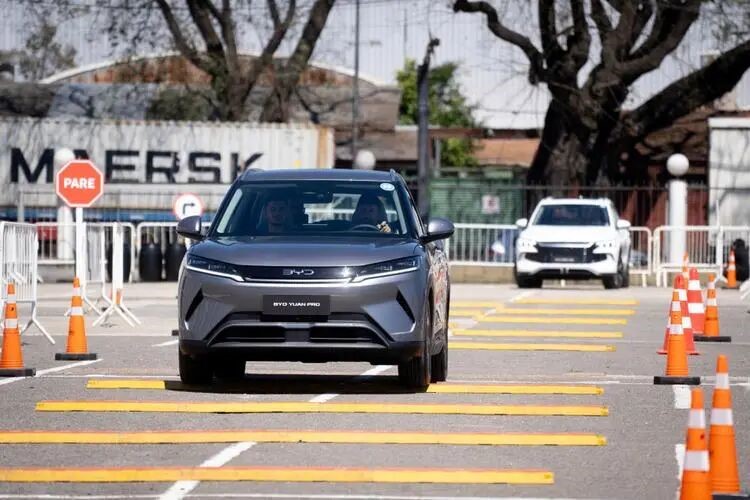
New energy vehicles (NEVs) have become the core highlight of China’s passenger car exports in 2025, achieving robust growth in both European and emerging markets, with a growth rate far outpacing that of traditional fuel vehicles.
Belgium and the UK have become the core European markets for China’s NEVs, with year-on-year export growth of over 80 percent for Chinese NEVs to both countries in 2025, significantly higher than the overall export growth rate. Traditional fuel vehicles, on the other hand, maintained a stable performance as the foundation of China’s car exports, mainly meeting the stock demand in traditional markets such as Russia and Iran with relatively steady export volumes but slowing growth.
Global Layout Shifts to Localization
Localized production, R&D and marketing are set to become the mainstream trends for Chinese automakers as their global layout deepens. The competitiveness of Chinese cars in the international market is shifting from price advantage to technological and brand strength, which is expected to help China further expand its global market share and reshape the global automotive industry landscape in the near future.