

AI Image Editing Feature Sparks Controversy: How Can Artists Protect Their Rights?
During the joyous Christmas season of 2025, a new feature on X, the social media platform owned by Elon Musk, shattered the festive tranquility, plunging artists worldwide into anger and disappointment. The platform officially launched an “AI Edit” feature based on the Grok model, claiming it aims to lower creative barriers, enhance platform interactivity, and find a high-frequency application scenario for the Grok model. However, this seemingly innovative feature has triggered massive resistance due to its blatant disregard for creators’ rights and interests.
As reported, the “AI Edit” feature is extremely easy to use. Users only need to long-press an image on mobile devices or click the “Edit Image” button on the web version, enter text prompts, and they can conduct secondary creation on all public images on the platform. Whether it’s replacing image backgrounds, altering characters’ movements, expressions, and costumes, or adding brand-new elements, AI can complete the task quickly. But the crucial issue is that this feature is mandatory for all public images—any user can arbitrarily edit others’ works without the original creator being notified. Even more unacceptable is that the platform does not provide an option to disable or opt out of this feature. Faced with such unauthorized edits, creators have neither the right to refuse nor any means of counteraction.
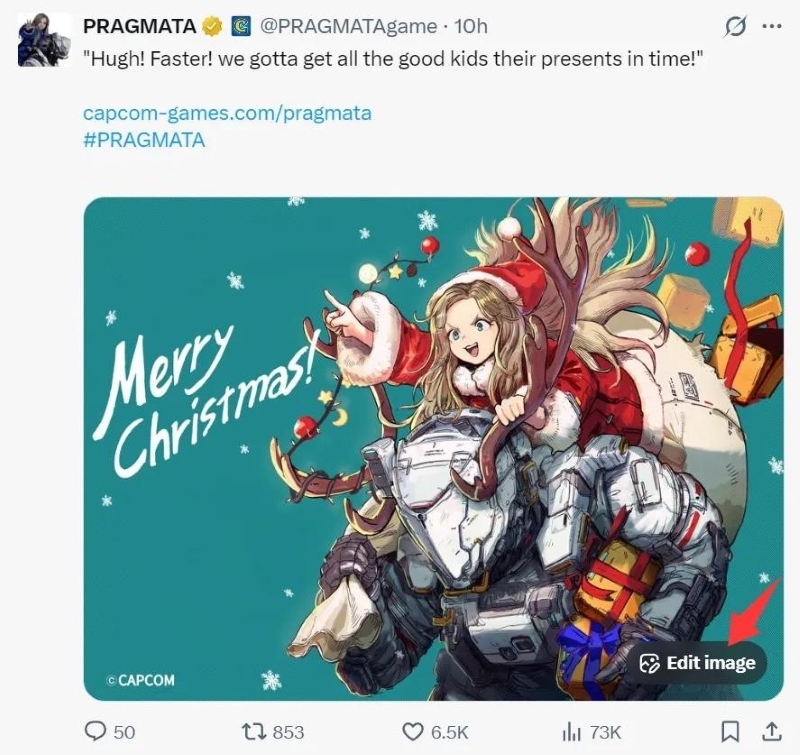
AI-edited works can be directly posted in the comment section of the original post, allowing users across the network to view, share, and even modify them again. Under such rules, once a work is published, it no longer fully belongs to the creator but automatically enters a “publicly editable state” on the platform, over which even the original author has no right to intervene. This means that works crafted with immense effort by artists can be quickly transformed into low-quality spoofs by AI and spread arbitrarily. Not only does this damage the creators’ reputation, but it also deprives them entirely of control over the derivative uses of their works. The right of attribution and the right to integrity of the work are rendered meaningless, and creators may even be wrongfully held accountable for edited content containing pornographic, defamatory, or other harmful information.
Resentment Boils Over: A Battle for Rights from “Covert Theft” to “Blatant Robbery”
The collective outrage of artists is by no means an impulsive reaction but an outburst of long-standing conflicts stemming from the AI industry’s persistent neglect of original rights. Long before X launched this feature, copyright disputes between creators and the AI industry had never ceased. Many artists have experienced the despair of seeing AI tools generate near-identical copies of their works simply by entering a prompt with their name. It’s important to note that a unique artistic style is the soul of an artist’s work, honed over years or even decades. Yet AI can easily “copy” it by scraping just dozens of works and training for a few hours.
More frustratingly, under the current laws of many countries, style replication is mostly not deemed an infringement, making AI’s “theft” of artistic styles akin to legal plunder. The GPT-4o Studio Ghibli style controversy in March 2025 is a typical example. At the time, OpenAI CEO Sam Altman was celebrating the addition of millions of new users on X, completely ignoring the blatant insult this behavior posed to original creators. Earlier, Christie’s announcement of hosting the first dedicated AI art auction sparked a joint protest signed by over 2,800 artists worldwide. They denounced it as “showcasing stolen achievements and profiting at the expense of traditional artists.” Even though Christie’s responded that the training materials came from the creators themselves, the anger persisted.
If AI scraping works for training was “covert theft,” then X’s new feature is “blatant robbery” that tears off the fig leaf. Some “neutral observers” argue that AI image editing has long existed—ordinary people can do it offline on computers, and X is merely providing an interface. But this argument is entirely unfounded. The platform’s built-in button essentially legitimizes infringement with official endorsement, drastically lowering the threshold for violations and allowing non-technical users to engage in infringement with a single click. The harm inflicted on creators is far more severe than private editing, representing a blatant insult to their dignity.
Fighting Back Against Desperation: Migration, Technical Countermeasures, and Industry Transformation
Faced with X’s actions and the collective neglect of creators’ rights by global content platforms driven by AI traffic anxiety, artists have taken various forms of action. A large number of users have chosen to delete all their past works, empty their accounts, and withdraw from X, striving to safeguard their last shred of creative dignity. After leaving X, BlueSky, a social platform co-founded by Jack Dorsey, the former CEO of X, has become the preferred destination for many artists. As early as when Musk announced that xAI would scrape X’s content to train models, a large number of artists applied to join BlueSky. Its clear commitment to “never use user data to train AI” has made artists who have suffered repeated harm feel respected once again.
Another platform called Cara is even more radical, branding itself as an “anti-AI safe haven for artists.” It not only explicitly promises not to use user content to train AI models but also incorporates anti-AI scraping measures—automatically adding a protective layer called “Glaze” to images and prohibiting the upload of AI-generated content. However, such principled platforms are ultimately few and far between. Most artists are caught in a dilemma: on one hand, mainstream platforms offer enormous exposure opportunities alongside potential infringement risks; on the other hand, niche platforms provide security but limited influence. Like rootless duckweed, they wander aimlessly in their quest for creative space and rights protection.
The creators’ resistance has not been in vain. Amid sustained outcry and pressure, major platforms and industry organizations have begun to address loopholes, attempting to balance AI development with copyright protection. Many platforms have introduced “anti-scraping” policies and technologies, such as adding metadata tags to block AI crawlers, launching anti-scraping features, and monitoring and intercepting abnormal bulk downloads to protect creators’ works. Legally, multiple countries and regions have initiated discussions on AIGC copyright regulations to fill legal gaps. Industrially, major image libraries like Getty Images have not only prohibited the upload of unauthorized AI materials but also collaborated with AI companies to launch paid training datasets, offering new ideas for copyright protection.
The development of AI technology should ideally empower creation and the industry, not grow wildly at the expense of original creators’ rights. How to strike a balance between technological innovation and rights protection is not only a problem that X must confront but also a crucial issue that the entire AI industry must resolve. In this context, staying informed about the latest AI news becomes essential for artists to navigate the evolving landscape and safeguard their legitimate interests.



Related Articles
Lorem ipsum dolor sit amet
Lorem ipsum dolor sit amet consectetur adipiscing elit. Quisque faucibus ex sapien...
Lorem ipsum dolor sit amet
Lorem ipsum dolor sit amet consectetur adipiscing elit. Quisque faucibus ex sapien...
Découvrez le monde passionnant de Nine Casinos : votre guide complet
Le secteur des casinos en ligne ne cesse de croître, offrant aux...
Découvrez comment la technologie révolutionne l’expérience des casinos en ligne
Avec plus de 60 % des joueurs français qui préfèrent désormais jouer...