

The World’s First AI-Designed Antibody Enters Phase III Clinical Trials

In December 2025, GB-0895, the world’s first fully AI-designed antibody drug developed by Generate Biomedicines, officially initiated Phase III clinical trials. This milestone event marks the comprehensive transition of AI-synthesized antibodies from theoretical concepts to clinical applications, bringing a revolutionary transformation to the field of pharmaceutical R&D.
A Breakthrough Drug: A New Benchmark for Long-Acting Targeted Therapy
GB-0895 is a long-acting monoclonal antibody targeting thymic stromal lymphopoietin (TSLP). As a “master switch” cytokine at the apex of the airway inflammatory cascade, TSLP-related therapies hold significant therapeutic value for severe asthma and chronic obstructive pulmonary disease (COPD). The drug is primarily indicated for adult and adolescent patients with severe refractory asthma whose conditions remain uncontrolled despite medium-to-high doses of inhaled corticosteroids (ICS), demonstrating substantial potential for clinical application.
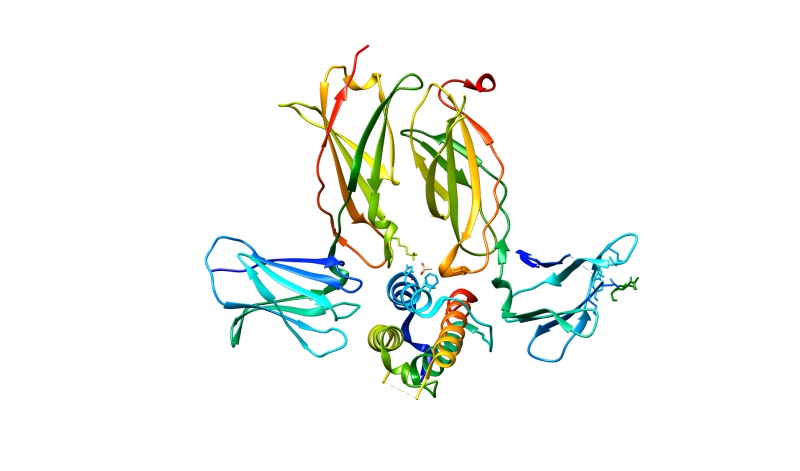
Compared to existing anti-TSLP therapies (such as tezepelumab), which require monthly injections, GB-0895—leveraging ultra-high affinity and an exceptionally long half-life (approximately 89 days, 3-4 times that of standard biologics) achieved through AI design—extends the dosing interval to once every six months, significantly reducing the treatment burden on patients. More notably, the drug took only four years to progress from initial design to Phase III clinical trials, cutting the traditional pharmaceutical R&D timeline by nearly half and setting a speed record for antibody drug development. Currently, two global Phase III clinical trials, SOLAIRIA-1 and SOLAIRIA-2, have been launched, enrolling a total of 1,600 patients to verify its efficacy across large-scale and diverse patient populations.
AI Empowerment: The Transition from “Drug Discovery” to “Drug Generation”
The successful development of GB-0895 is underpinned by the deep integration of generative artificial intelligence and biology. For decades, antibody design relied on traditional trial-and-error methods, which involved screening massive libraries of natural molecules or immunizing animals to identify effective drug candidates. However, the rise of generative AI has driven the pharmaceutical industry’s transition from “drug discovery” to “drug generation,” enabling a new model of creating drugs through precise, purposeful “programming”—a shift that aligns with the latest AI trend reshaping scientific innovation.
Generate Biomedicines’ Generative Biology platform serves as the core pillar of this transformation. Built on the programmable protein generation model Chroma (dubbed the “DALL-E of protein engineering”) developed in 2022, the platform forms a closed-loop system integrating computing power and high-throughput laboratory validation. Its operational process consists of four iterative cycles: AI algorithms generate thousands of novel protein sequences targeting specific objectives; these computer-designed sequences are synthesized into physical proteins in the laboratory; high-throughput automated technologies test various properties of the proteins, including binding capacity, stability, and interactions with the immune system; and experimental data is fed back into the AI model to form a “virtuous cycle,” where each new molecule created enhances the platform’s intelligence and precision.
Unlike traditional methods that typically optimize only one protein property at a time (often at the expense of others), this platform can simultaneously and synergistically optimize multiple characteristics such as efficacy, stability, and manufacturability. Its core technical modules include a diffusion process compliant with polymer conformation statistics, an efficient neural network architecture suitable for molecular systems, and more—enabling the conversion of protein design into a Bayesian inference process under external constraints, which can encompass symmetry, molecular shape, semantic features, and even natural language instructions. Experimental validation has shown that proteins generated based on the Chroma model exhibit excellent biophysical properties such as high expression levels and correct folding, with the crystal structures of some designed proteins achieving atomic-level alignment with the model structures.
Currently, Generate Biomedicines has entered multi-billion-dollar collaborations with Amgen and Novartis, and partnered with NVIDIA to enhance its computing capabilities. These collaborations focus on tackling “undruggable” targets and developing multispecific antibodies that were previously unattainable through manual design, establishing an AI-driven R&D pipeline covering three key areas: immunology, oncology, and infectious diseases. The advancement of GB-0895 into Phase III clinical trials not only validates the clinical value of AI-designed antibodies but also illuminates the future of pharmaceutical R&D—in this AI-enabled new era, life-saving innovative drugs may be created with just a few keystrokes.



Related Articles
Red Dog Casino: Quick‑Fire Slots & Lightning‑Fast Wins for High‑Intensity Gamers
Why Red Dog Casino Appeals to the Rapid‑Fire Player For players who...
Oscar Spin – Quick‑Hit Casino pour Gagnants Rapides
Le Jeu en Courtes Séquences Commence Ici Oscar Spin est conçu pour...
Dragonslots: Quick‑Fire Gaming für den modernen Speedster
Getting Started – The First Click Wenn Sie auf https://dragonslots-offiziell.de/de-de/ landen, begrüßt...
Ritzo Casino – Quick‑Fire Slots and Rapid Wins for the On‑The‑Go Player
1. Γιατί το Ritzo λάμπει για σύντομο, υψηλής έντασης παιχνίδι Φανταστείτε να...