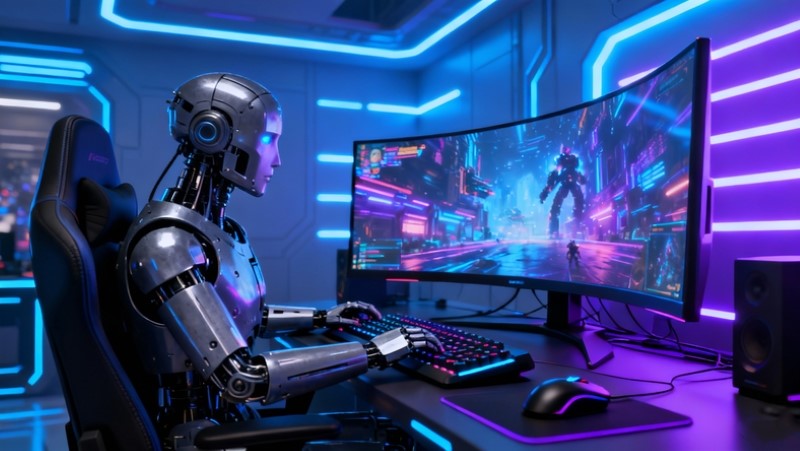
In January 2026, a mysterious player named “택배기사 (Courier)” emerged out of nowhere in League of Legends’ Korean server, stunning both the gaming and tech communities with extraordinary battle records. Specializing in mid lane and jungle roles, the account climbed into the top 5 of the Korean server after only 51 hours of gameplay across 56 matches, boasting a peak win rate of 95% and ultimately securing the top spot temporarily with 52 wins and 4 losses, translating to an overall win rate of 92%. Its proficiency in 22 heroes and an undefeated record in jungle matches further drew widespread attention.
What is even more remarkable is that the player once engaged in high-intensity matches for 14 consecutive hours, starting at noon and logging off at 2:30 AM the next day, maintaining top-tier operational standards throughout without any signs of fatigue-induced mistakes common among human players during prolonged competition. Combined with Elon Musk’s previous public announcement that he would have the AI model Grok 5 challenge top human esports teams in League of Legends, the public widely speculates that this mysterious top player is actually a practical test account for Grok 5, a breakthrough highlighted in the latest AI news.
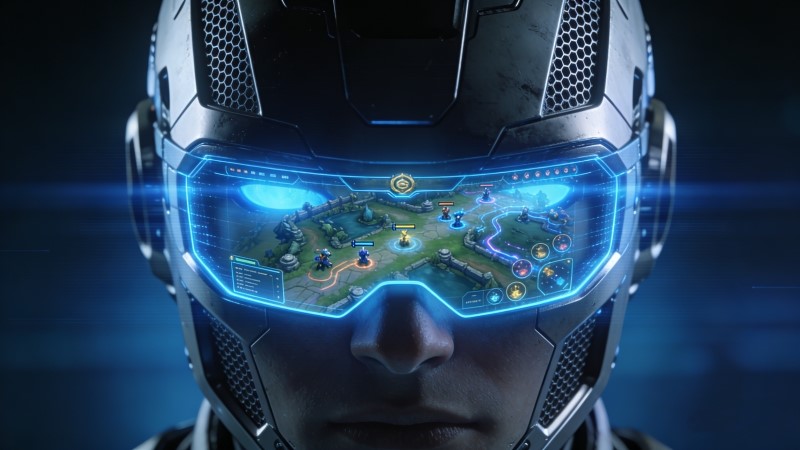
Musk has set strict fairness rules for Grok 5’s gaming challenge: the AI must obtain visual information through a monitor just like humans, with visual effects equivalent to 20/20 vision (the Anglo-American standard for normal eyesight). Meanwhile, its response latency and click rate must not exceed human limits, ensuring that its decision-making process fully simulates that of human players. The core reason for choosing League of Legends as a training platform lies in the high compatibility between the complex characteristics of such MOBA games and the training needs of embodied intelligence.
In the game, the AI must confront a constantly changing competitive environment. Opponents may learn, deceive, or make mistakes, while teammates’ behaviors are equally unpredictable. This requires the model to quickly assess situations and make trade-offs with incomplete information. Such a high-density, uncertainty-filled dynamic system effectively hones the AI’s autonomous decision-making and generalized understanding abilities, preventing it from relying on rote memorization of specific scenarios—core competencies essential for robots to enter the real world.
Notably, Musk has explicitly stated that Grok 5’s vision-language-action model will be directly applied to Tesla’s Optimus robot. The gaming scenario essentially serves as a training ground for the robot model; the logic of coping with complex environments learned by the AI in the game can provide a cognitive foundation for physical robots. However, there are key differences between games and the real world: games have clear rules and fixed parameters, allowing the AI to calculate high-precision success rates through massive simulations. In contrast, the real world features irregularly shaped objects, materials susceptible to environmental influences, and a lack of a unified rulebook, meaning the same action may yield completely different results in different scenarios.
Therefore, to transform Grok 5’s powerful in-game capabilities into practical embodied intelligence for Optimus, it is necessary to integrate an understanding of physical laws and safety boundaries as well as corresponding decision-making abilities. Nevertheless, the gaming scenario has highly condensed the core challenges of the real world—intense information flow, narrow decision-making windows, and extremely low error tolerance. The AI’s ability to “carry the game” in such an environment indicates that it has mastered the basic survival logic for navigating complex worlds.
Although the AI identity of the mysterious account has not been officially confirmed, Musk’s layout is clearly evident: training Grok 5 to play games is by no means merely about pursuing competitive victory, but rather a crucial step toward Artificial General Intelligence (AGI). When the cognitive abilities refined in games are combined with the physical Optimus robot, it is expected to break through the core bottlenecks of real-world applications. With the upcoming launch of Optimus V3 in the first quarter of 2026, the “super brain” plan for robots behind this AI gaming training is awaiting real-world verification.