

Poland Extends Ban on Ukrainian Grain Imports Amid EU Trade Tensions
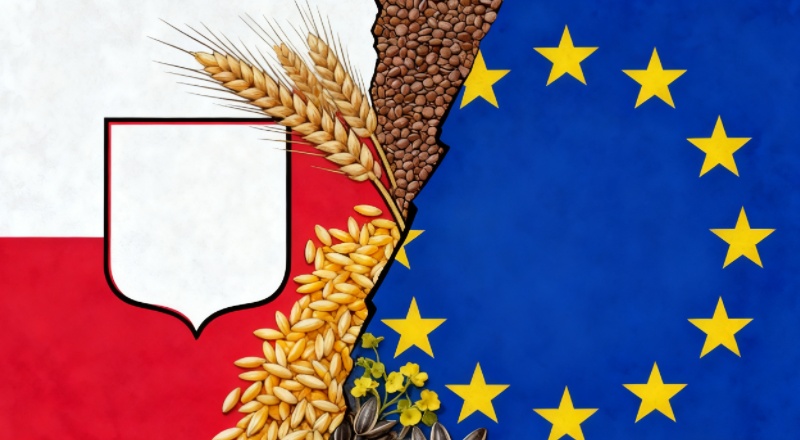
On October 29, 2025, Poland’s Ministry of Agriculture and Rural Development announced that the import ban on Ukrainian wheat, corn, rapeseed, sunflower seeds, and related products would remain in force indefinitely. The decision coincided with the implementation of the new EU–Ukraine trade agreement, which maintains tariff-free access for Ukrainian agricultural goods. Poland’s move highlights a sharp contrast with Brussels, which continues to promote trade liberalization.
The extended ban targets the core grain and oilseed categories that triggered market turmoil in 2023, excluding poultry and eggs. According to Polish officials, the EU’s new framework fails to address regional supply-demand imbalances. The measure, they said, responds directly to the demands of over 120,000 protesting farmers and aims to stabilize the domestic market after wheat and corn prices fell by 28% and 32% respectively in the past two years.
Deepening Trade Dispute
The conflict stems from trade shifts following the Russia–Ukraine war. To support Kyiv’s economy, the EU removed tariffs and quotas on Ukrainian exports. However, the influx of low-cost Ukrainian grain flooded Central and Eastern Europe, undercutting local producers and driving down prices.
In 2023, tensions between Poland and Ukraine escalated when both countries imposed reciprocal bans. Earlier this year, the agriculture ministers of Poland, Hungary, Bulgaria, Romania, and Slovakia sent a joint letter to the European Commission, demanding the reinstatement of tariffs on Ukrainian imports. These nations argue that the ongoing liberalization is eroding their agricultural competitiveness and distorting internal EU markets.
Economic Impact and Outlook
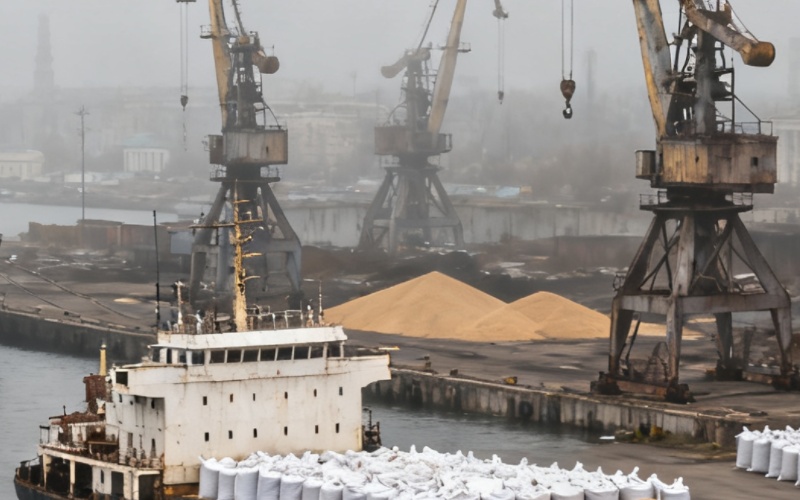
Poland’s decision is expected to reshape regional grain flows. As a key transit country for Ukrainian exports, its restrictions will likely limit Kyiv’s access to EU markets. While the policy may protect Polish farmers and stabilize local prices, it could also raise costs for domestic processors dependent on Ukrainian raw materials. Industry associations have already warned of potential rapeseed shortages, which may affect Poland’s oil-processing sector. Meanwhile, Ukraine is considering taking the case to the WTO or the EU dispute settlement system to challenge what it views as discriminatory measures.
Looking ahead, three scenarios are possible: Poland may broaden the ban to cover additional agricultural goods. Ukraine could pursue formal trade disputes through international mechanisms. The EU will face growing pressure to balance solidarity with Ukraine and the economic interests of its member states.
Ultimately, Poland’s continued import restrictions highlight the growing tension between supporting Ukraine’s wartime economy and protecting domestic farmers. How Warsaw and Brussels reconcile these competing goals will test not only their political coordination but also the EU’s internal cohesion in the months ahead.


Related Articles

New Zealand’s Kiwifruit Output Expected to Hit Record High
Benefiting from optimized planting varieties and favorable weather conditions, New Zealand’s kiwifruit...

FRUIT LOGISTICA 2026 Innovation Award Winners Announced
On February 6, the 20th edition of FRUIT LOGISTICA concluded in Berlin,...

Carbon Robotics Launches First Large Plant Model
Carbon Robotics, a U.S.-based agritech firm focused on agricultural artificial intelligence and...


Brazil’s Corn Industry Hit Hard by Leafhopper Infestation
A new research conducted in Brazil has revealed staggering economic losses to...