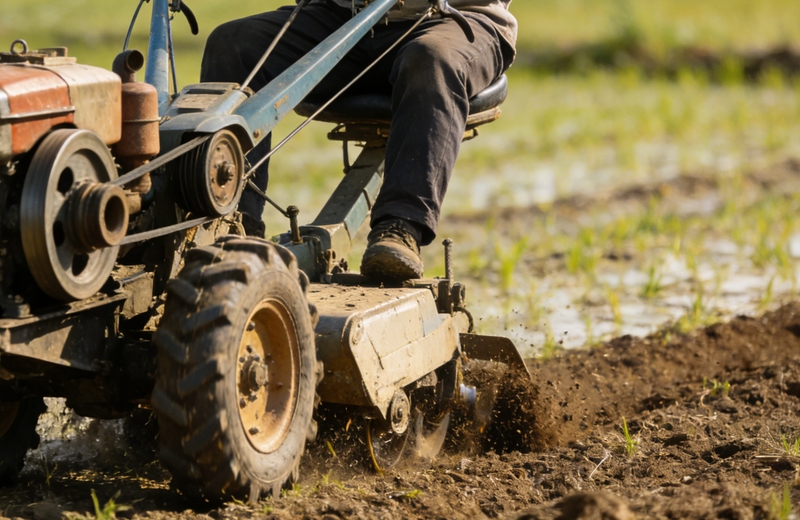
In recent years, India’s agriculture has faced severe challenges amid dual pressures from climate change and structural issues. In September 2025, multiple regions across India experienced heavy rainfall, with precipitation levels exceeding the long-term average by 15% and reaching as high as 115% in some areas. These extreme weather events triggered widespread flooding, causing extensive damage to mature crops such as soybeans, cotton, and rice—particularly in major agricultural states like Punjab and Rajasthan. According to Indian media reports, this disaster has severely impacted agricultural production. Economist Kapoor predicts that due to reduced crop yields, India’s agricultural growth rate in the fourth quarter of 2025 will drop to 3% to 3.5%, significantly lower than the 6.6% recorded in the same period of 2024. Climate risks have clearly become a major challenge for India’s agricultural development, and addressing this issue is now urgent.
Agriculture’s Structural Challenges Emerge
Agriculture holds a significant position in India’s economy, yet it has long been plagued by structural contradictions, uneven development, and low efficiency. According to a report by the Organisation for Economic Co-operation and Development (OECD), India possesses over 170 million hectares of arable land, with approximately 43.5% of its working population relying on agriculture for livelihood. However, agricultural output accounts for only 16% of the country’s GDP. This indicates that growth in agricultural income lags far behind that of non-agricultural income. More critically, the majority of India’s farmers are smallholders and marginal farmers, with plots smaller than 2 hectares, accounting for 86% of the agricultural workforce. These smallholders have limited production capacity, and their fragmented land holdings and small-scale operations leave them ill-equipped to fully address external challenges such as market volatility and climate risks. This has resulted in a persistent inability to elevate their production and living standards.
Implementing Policy Measures
To boost the agricultural economy, the Indian government has implemented a series of stimulus and support measures. The Reserve Bank of India requires banks to allocate 40% of their net bank credit to priority sectors, with 18% specifically earmarked for agricultural credit. However, due to issues such as insufficient collateral and cumbersome loan procedures, many smallholders and marginal farmers struggle to access formal credit. According to an OECD report, only 41% of smallholder farmers can access bank credit, with approximately 30% of agricultural loans still originating from informal channels like moneylenders. Furthermore, an inadequate social security system means that even when farmers do obtain credit, they often divert it toward other living expenses rather than agricultural production.
The Indian government has also established minimum support prices for certain agricultural products based on average production costs, while providing subsidies for electricity, irrigation, and fertilizers used in farming. However, the actual effectiveness of these policies is often questioned. The OECD report notes that minimum support prices are implemented in only a few states and cover a limited range of products, primarily wheat, rice, and cotton, with weaker support for other agricultural goods. Moreover, agricultural subsidies are frequently misappropriated, preventing them from effectively fulfilling their intended purpose.
Future Outlook
Indian agriculture must address multiple challenges through comprehensive and systematic solutions. Sanjay Kumar, Chairman of the Indian Agricultural Scientists Recruitment Board, emphasized that these challenges extend beyond technical issues to encompass land management, pest control, and water and soil resource management. Therefore, a multi-pronged strategy is essential to enhance the overall resilience of agriculture. This can be achieved through three core initiatives: strengthening agricultural technological innovation and application, promoting land consolidation and encouraging cooperative models to address fragmentation issues, and improving financial and social security systems. Only through comprehensive reforms and long-term investments can India effectively tackle challenges such as climate change, structural issues, and policy implementation. This will ultimately lead to sustainable agricultural development while elevating farmers’ living standards and agricultural productivity.