

European Leaders Accompany Zelensky to US to Prevent Repeat of White House Clash

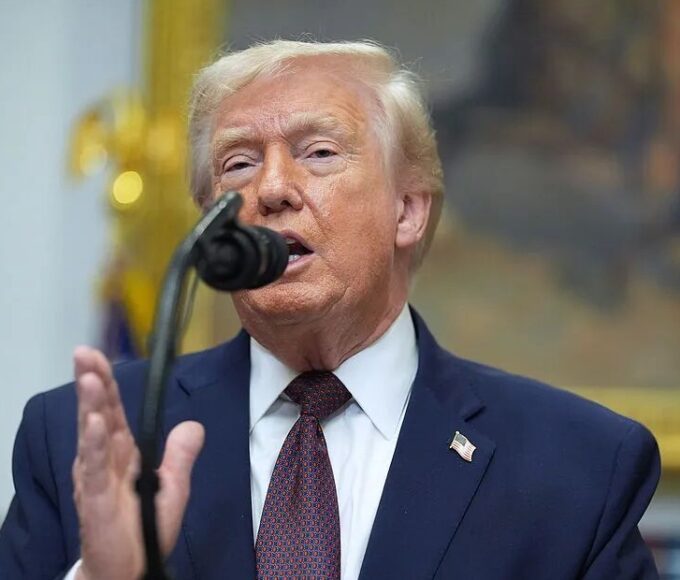
After U.S. President Donald Trump met with Russian President Vladimir Putin in Anchorage, Alaska on the 15th, Ukrainian President Volodymyr Zelensky posted on social media on the 16th that he had been invited to meet with Trump in Washington, D.C. on the 18th to discuss “all details” regarding ending the Russia-Ukraine conflict. This marks Zelensky’s first visit to the U.S. since his public heated argument with Trump at the White House on February 28. On the 16th, Trump stated that the best way to end the Russia-Ukraine conflict is through “direct peace negotiations” rather than merely reaching a ceasefire agreement. The latest analysis by RIA Novosti suggests that the situation has shifted following the U.S.-Russia summit, and Ukraine may subsequently be forced to make concessions; if Ukraine is unwilling to compromise, the U.S. might exert pressure. Regarding Zelensky’s upcoming visit to the U.S., European Commission President Ursula von der Leyen, NATO Secretary-General Mark Rutte, and leaders from countries including France, Germany, Italy, and the U.K. announced on the 17th that they would accompany him to avoid a repeat of the “White House clash” and to persuade Trump to include Europe in subsequent U.S.-Russia-Ukraine trilateral talks. The New York Times analyzed that with recent Russian military breakthroughs in parts of the eastern Donbas frontline, Ukraine faces increasing battlefield pressure, and “Kyiv and Europe must adapt to the new reality shaped by Washington and Moscow.” Ukraine’s “National Network” reported on the 17th that a critical phase in resolving the Russia-Ukraine conflict is approaching, which could either pave the way for peace or lead to further escalation, with unpredictable outcomes.
Trump’s Phone Call
On the 15th, Trump and Putin held a roughly three-hour meeting in Anchorage, Alaska, with both sides giving positive assessments of the talks—though no agreement was reached on issues like a Russia-Ukraine ceasefire. Notably, the meeting did not include leaders from Ukraine or European nations. The New York Times reported that after the U.S.-Russia summit, Ukraine found itself in an all-too-familiar position: scrambling to piece together the actual content of the discussions, decipher potential agreements, and desperately trying to avoid being sidelined in negotiations. However, hours later, a phone call from Trump helped fill in “some of the blanks.”
According to Ukrinform, after Trump briefed the main points of his meeting with Putin, Zelensky stated on social media on the 16th that he had a “long and substantive” phone call with Trump. The call initially involved only the two of them before European leaders joined, lasting over an hour and a half. Zelensky also announced that he was preparing for his meeting with Trump in Washington on the 18th and coordinating with relevant parties. “All sides agreed on the need for dialogue at the leadership level to clarify all details and determine which steps are necessary and feasible,” he said.
Regarding Trump’s proposal for a trilateral U.S.-Ukraine-Russia meeting, Zelensky expressed support. “Key issues can be discussed at the leadership level, and the trilateral format is well-suited for these discussions,” he emphasized. He added that ensuring Europe’s involvement at every stage of ending the Russia-Ukraine conflict is crucial, as it would guarantee reliable security assurances for Ukraine alongside the U.S. Ukraine will continue coordinating positions with all partners, as “America’s influence will shape the course of events.”
Newsweek reported that although the meeting agenda has not been disclosed, Trump stated he would discuss with Zelensky an “agreement to end the war.” If things go well, “a follow-up (trilateral) meeting with President (Vladimir) Putin will be arranged.” The outlet noted that the in-person meeting in Washington gives Zelensky a chance to directly secure “security and military commitments” from Trump while also sending a signal about “the direction of U.S. policy.”
Zelensky Asserts His Position
The Guardian reported that on the 17th, Zelensky stated he would discuss with Trump the possibility of first achieving a ceasefire before swiftly advancing toward a “final agreement.” He stressed that Ukraine’s constitution “prohibits the cession of territory,” meaning territorial issues can only be addressed in a trilateral meeting involving the leaders of the U.S., Russia, and Ukraine.
U.S. media noted that after his meeting with Putin, Trump “suddenly shifted” to supporting the peace plan proposed by Russia, rather than his previous insistence on an immediate ceasefire. This further highlights the significant divergence between the U.S. and Ukraine regarding the conditions for peace.
On the 16th, Vladimir Dzhabarov, First Deputy Chairman of the International Affairs Committee of the Russian Federation Council (the upper house of parliament), stated that the recent U.S.-Russia summit “served as a wake-up call for Europe,” while Ukraine’s hopes of relying on Western nations to fight for it have been “shattered.” Ukrainian officials, meanwhile, fear that Trump and Putin may have already reached a consensus on the framework of a peace agreement. Oleksandr Merezhko, Chairman of the Ukrainian Parliament’s Foreign Affairs Committee, said on the 16th that Trump’s proposal to abandon a ceasefire agreement in favor of swiftly reaching a peace deal essentially aligns with “Putin’s stance” .
The New York Times, citing European senior officials briefed on the call, reported that Trump told European leaders on the 16th that a peace agreement could be quickly achieved if Ukraine agreed to withdraw its troops from the Donetsk region. In exchange, Putin reportedly pledged to freeze military operations along the frontlines in regions such as Kherson and Zaporizhzhia.
On the 16th, Trump posted on his social media platform, Truth Social, stating that “everyone,” including Zelensky and some European leaders, agreed that bypassing a ceasefire to directly pursue a peace agreement was the better option to end the Russia-Ukraine conflict, as ceasefires are often short-lived. “We are very close to a deal, but Ukraine has to agree, President Zelensky has to agree,” Trump said, adding that European countries must also “participate in some way”.
The Guardian analyzed that Trump’s signals make it clear that the White House is shifting the pressure to end the war from Russia to Ukraine and Europe. The BBC noted that this stance contradicts the core demands of Ukraine and its European backers—who prioritize an unconditional ceasefire—leaving “Kyiv and European capitals deeply unsettled”.
A joint statement published on the European Commission’s website on the 16th expressed Europe’s support for trilateral talks involving the U.S., Ukraine, and Europe but emphasized that Ukraine must receive “ironclad security guarantees.” The statement also asserted that there should be no restrictions on Ukraine’s armed forces or its cooperation with third countries, nor should Russia have veto power over Ukraine’s path to EU and NATO membership.
Italian Prime Minister Giorgia Meloni revealed on the 16th that Trump had proposed providing Ukraine with security assurances modeled after NATO’s collective defense clause. Merezhko, however, dismissed this as too vague, asking, “Which countries would agree to treat an attack on Ukraine as an attack on themselves? I’d like to believe such countries exist, but I’m not sure”.
Europe Sends “Heavyweight” Delegation
“To avoid another Oval Office clash, Europe is dispatching top figures to accompany Zelensky to the U.S., bolstering Kyiv’s negotiating leverage,” reported Politico Europe on the 17th. After Zelensky’s strained relations with Trump in February, Europe has worked to mend ties, with both the EU and Ukraine viewing the 18th meeting as a critical window to ensure Trump does not accept Russian demands such as “territorial concessions for peace.”
According to The Guardian on the 17th, European Commission President Ursula von der Leyen, NATO Secretary-General Mark Rutte, Italian Prime Minister Giorgia Meloni, French President Emmanuel Macron, German Chancellor Friedrich Merz, British Prime Minister Keir Starmer, and Finnish President Alexander Stubb all confirmed they would join Zelensky in Washington for the meeting with Trump. Von der Leyen added that she would welcome Zelensky in Brussels later that day for a “Coalition of the Willing” meeting hosted by the UK, France, and Germany.
Politico noted that given Trump’s recent wavering stance on the Russia-Ukraine war—including his apparent acceptance of much of Moscow’s arguments—Europe fears Zelensky could again find himself cornered at the White House. Thus, the delegation includes figures with established rapport with Trump. The BBC reported that Europe, learning from February’s missteps, is now “coaching” Zelensky on how to engage with Trump.
Giuseppe Spatafora, a former NATO official and current analyst at the EU Institute for Security Studies, observed: “Overall, Europeans have been talking to Trump far more frequently in recent weeks than in the past 100 days. They have influence, but it’s limited.” The New York Times highlighted that Ukraine’s future holds strategic significance for Europe, with most leaders believing that if Ukrainian defenses collapse, Russia could test NATO’s resolve within years. Scholars cited by the paper argued that the Putin-Trump meeting and subsequent talks exposed Europe’s core dilemma: lacking its own strategy to end the war, it has instead scrambled to adapt to U.S. positions while trying to hold Washington to certain “red lines” to protect Ukrainian sovereignty and European security.
Spain’s El Confidencial analyzed that Trump, eager to secure a Nobel Peace Prize, is now single-mindedly pushing Ukraine to strike a deal with Russia. Yet the challenges of advancing peace were starkly visible on the battlefield: mere hours before the U.S.-Russia summit, Russian and Ukrainian forces were still exchanging attacks.


Related Articles

China May Boost US Soybean Imports Significantly
Feb 4, 2026 – High-level China-US telephone talks on February 4 have...

The United States Officially Withdraws from the World Health Organization
On January 22, 2026, the U.S. government announced that its withdrawal from...

Somalia Ends All Agreements with the UAE
According to the latest reports, the Federal Government of Somalia recently announced...

U.S. Announces Withdrawal from 66 International Organizations
On January 7, U.S. President Donald Trump signed a far-reaching presidential memorandum,...
Leave a comment