

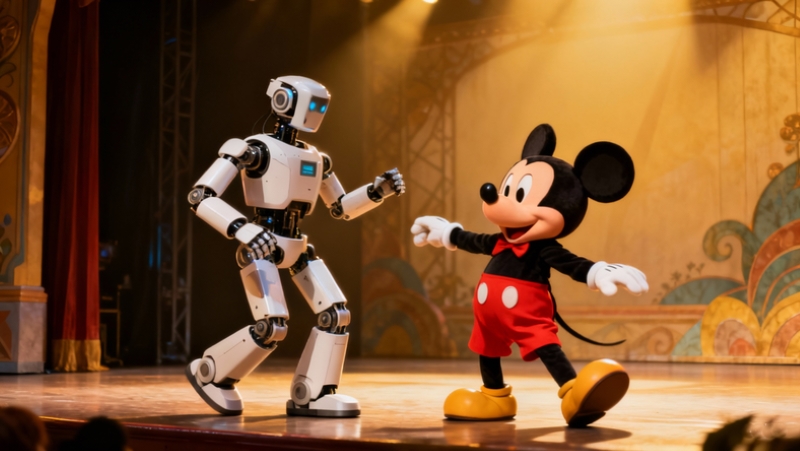
In this piece of latest AI news, we focus on a landmark collaboration that’s reshaping the intersection of technology and entertainment. On December 11, 2025, Disney announced a $1 billion equity investment in OpenAI and signed a three-year strategic licensing cooperation agreement. Simultaneously, Disney sent an infringement notice to Google, accusing it of using copyrighted works to train generative AI models without authorization. This partnership and the accompanying dispute have not only redefined how the AI and content industries interact but also presented OpenAI with both new opportunities and tough challenges amid intense competition.
Disney and OpenAI: A Strategic Alliance with Mutual Benefits
For Disney, this investment serves as a “protective layout” that secures technological support, expands distribution channels, and grants influence over rule-making. Technologically, OpenAI’s text-to-video large model, Sora 2, can interpret complex instructions and generate high-quality videos that adhere to physical logic. In the future, Disney animators will be able to quickly produce animation previews using simple commands, drastically cutting down on creation costs and time. In terms of channels, Disney has for the first time opened its IP authorization to ordinary users, allowing them to create content like “Iron Man appearing in the same frame as Elsa” on Sora. It also plans to launch the “Cameo” feature, which lets users embed their own images into AI-generated videos. This move will activate the UGC (User-Generated Content) ecosystem, enabling Disney’s IPs to achieve “cyber immortality” through social media sharing while laying the groundwork for incubating new IPs. Regarding rules, the cooperation agreement explicitly states that the animation of actors’ portraits or voices is not authorized. Disney will also collaborate with OpenAI to roll out copyright control options and revenue-sharing models, transforming itself from an IP owner to a copyright rule-maker in the AI era and pioneering a new business model for IP authorization in the AI field.
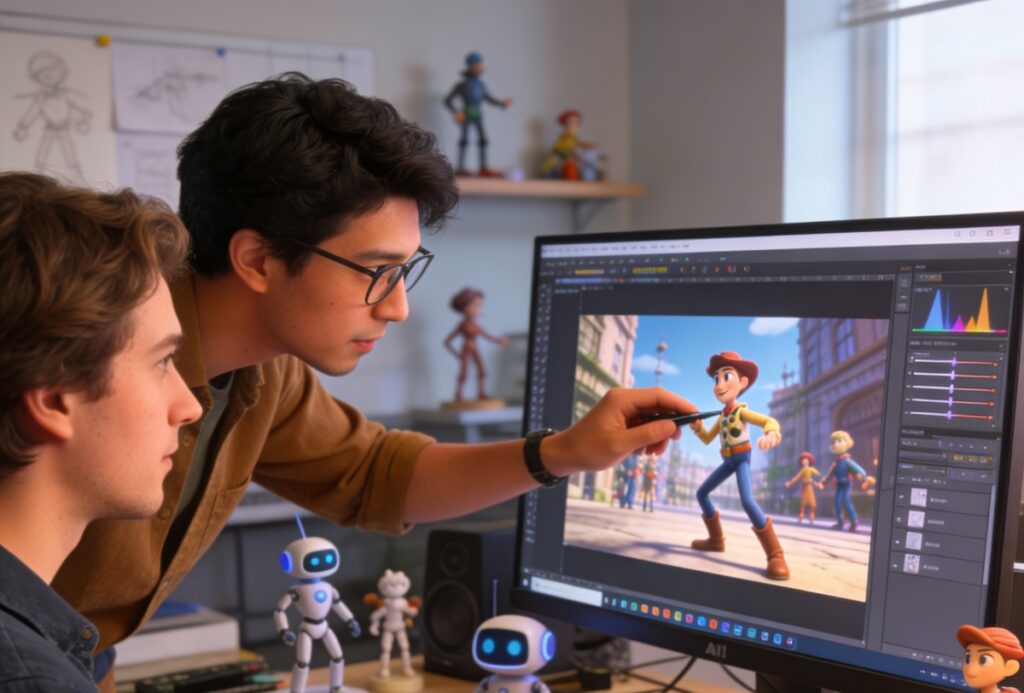
For OpenAI, partnering with Disney is a critical step in competing with rivals. By leveraging Disney’s exclusive IPs, Sora will become an AI video platform legally authorized to generate top-tier IP-based content, drawing in a large user base. The UGC content created by these users will, in turn, provide data support for model iteration. Meanwhile, Disney’s infringement allegations against Google have objectively narrowed the gray area in Google’s AI training data, buying OpenAI valuable time to advance in the generative AI sector.
OpenAI’s Challenges: A “War” Amid Technological Disadvantages
Despite securing the collaboration with Disney, OpenAI is grappling with significant challenges, the core of which stems from Google’s latest model, Gemini-3. This model has achieved a “generational gap” lead in multimodal understanding and complex task processing—it can not only comprehend the connections between images, videos, and sounds but also boasts an ultra-long context memory, enabling it to efficiently process information on par with academic papers. This directly undermines OpenAI’s technological edge.
To counter this impact, OpenAI CEO Sam Altman announced that the company has entered a “code red” state, directing all efforts toward enhancing the quality of ChatGPT and even suspending its advertising monetization business. Previously, OpenAI had planned to place shopping ads based on the search behavior of ChatGPT users, and it projected that advertising revenue would account for over 20% of its total revenue by 2030. The capital market has also shifted its stance on OpenAI: Oracle, one of its key partners, saw its stock price nearly halve in three months due to market concerns about the future of their collaboration. More critically, OpenAI is burdened with billions of dollars in computing power procurement and cloud service contracts with companies like NVIDIA and Microsoft. The business logic behind these investments relies on the assumption that OpenAI’s models remain leading-edge. Now, as its technological advantages are called into question, the “positive cycle” of its business model—where leading models attract users and revenue, which then funds further computing power purchases and model development—is at risk of collapsing.
Currently, competition in the AI industry is evolving at a breakneck pace. While OpenAI is currently mired in difficulties, whether it can break free from its predicament with new models remains to be seen.


