

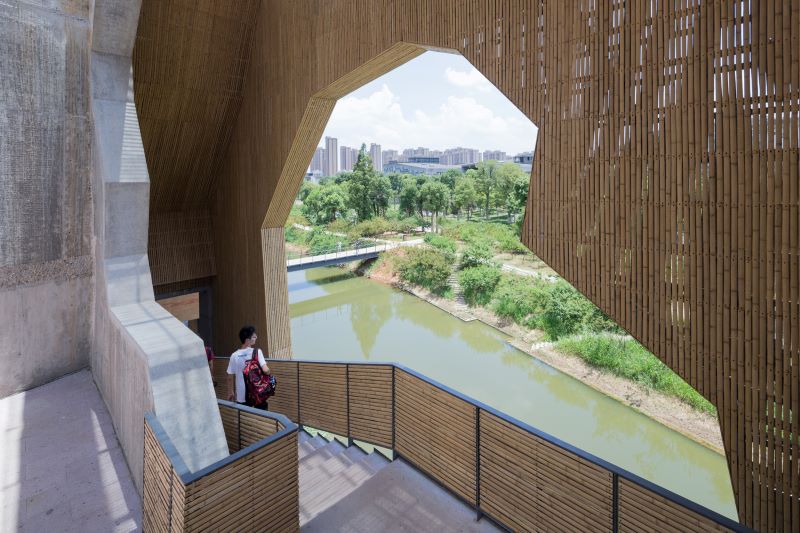
The Venice Biennale has announced that architects Wang Shu and Lu Wenyu will curate the 20th International Architecture Exhibition, set to open in May 2027. As founders of Amateur Architecture Studio and leading figures in contemporary architectural practice, the duo is renowned for their design philosophy rooted in craftsmanship, material reuse, and deep integration with site contexts. Their appointment refocuses global attention on local knowledge, building cultures, and the social realities shaping architecture today.
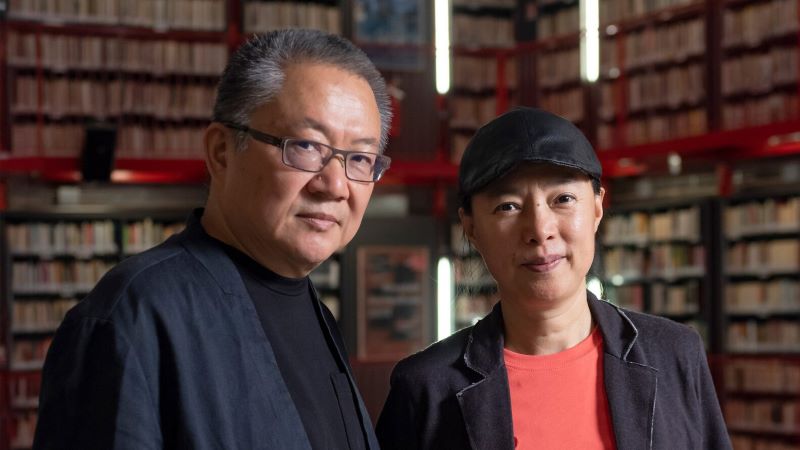
Studio Background & Educational Impact
Established in 1997, Amateur Architecture Studio has become synonymous with architectural practice grounded in local memory, artisanal skills, and the reuse of traditional materials. Beyond their built works, Wang and Lu have played a pivotal role in Chinese architectural education. They founded the Department of Architectural Art at the China Academy of Art in 2003, which later evolved into the School of Architectural Art in 2007.
Their projects are widely described as mediations between past and present—emphasizing recycled materials, ordinary structures, and artisanal ingenuity. This approach advances an architectural concept that naturally emerges from specific contexts rather than imposing itself upon them, reflecting a commitment to harmony with cultural and environmental surroundings.
Long-Standing Venice Biennale Ties
Wang and Lu’s connection to the Venice Biennale dates back nearly two decades. In 2006, they participated in the exhibition at the China Pavilion. Their work earned a special mention during the 2010 edition curated by Kazuyo Sejima, and they returned to the biennale in 2016 under the curatorship of Alejandro Aravena.
Among their iconic projects are the Ningbo Museum, Xiangshan Campus of the China Academy of Art, Hangzhou Wayaoshan, Wencun Renovation Project, and Fuyang Cultural Complex. In 2012, Wang made history as the first Chinese architect to be awarded the Pritzker Architecture Prize, the highest honor in the field.
Curatorial Vision & Concerns
In a statement accepting the curatorial role, Wang and Lu expressed concern about current architectural trends that “lean toward extremism” and detach from practical realities. They warned such tendencies “will lead to the demise of architecture” and advocated for a “simple and authentic architectural philosophy and method” deeply rooted in site characteristics, material history, and cultural heritage.
“In today’s world, the rapid and diverse changes in architecture are often superficial, driven by over-conceptualization or excessive commercialization,” the duo stated. “Extreme conceptual experiments frequently disconnect from reality, while over-commercialization tends to be shallow and unsustainable. This phenomenon cycles rapidly for survival, severing ties with real sites and ultimately leading to architecture’s demise. As a result, architecture has become a delusional expression of the future.”
Biennale Chairman’s Endorsement
Pietrangelo Buttafuoco, Chairman of the Venice Biennale, highlighted Wang and Lu’s “key voice in international architectural debates and discussions on the meaning of inhabiting world spaces.” He emphasized their ability to integrate cultural responsibility with experimental thinking, noting this duality makes them ideal leaders for the 2027 exhibition.
The pair joins an esteemed list of architects who have curated the Venice Biennale’s architecture sector, including Carlo Ratti, Lesley Lokko, Hashim Sarkis, Yvonne Farrell, Shelley McNamara, Rem Koolhaas, and Kazuyo Sejima. Their curatorship is anticipated to bring a unique perspective that bridges traditional wisdom and contemporary challenges, offering new insights into the role of architecture in an interconnected world.
As the 2027 opening approaches, the architectural community looks forward to how Wang and Lu will translate their practice’s core principles into a biennale exhibition—one that is expected to inspire reflection on sustainability, cultural identity, and the fundamental purpose of built environments in an era of rapid change.


