

Unbalanced Tariff Deal Prompts Europe to Rethink the Dilemma of Strategic Autonomy
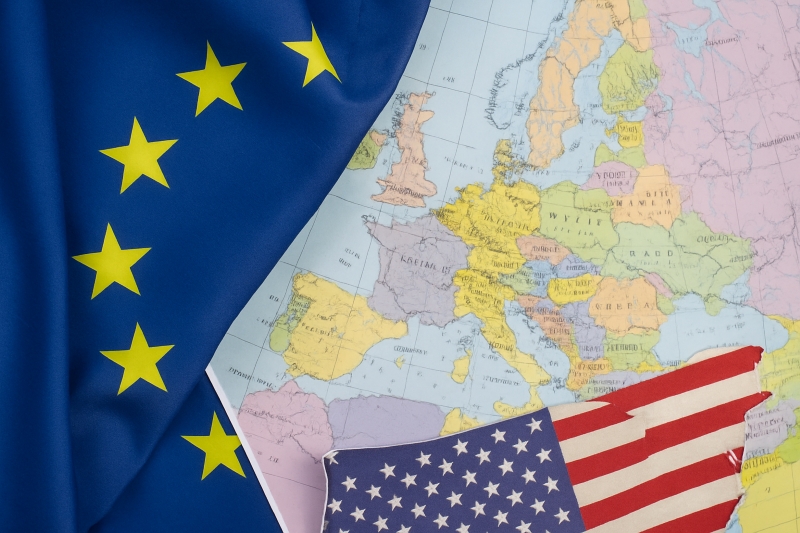
On August 3, U.S. Trade Representative Katherine Tai stated that the latest round of tariff measures is “essentially finalized” and unlikely to change. Meanwhile, the newly enacted U.S. tariffs on the European Union are already affecting European businesses. Since the U.S. and EU reached a tariff agreement, complex and critical voices have emerged within the EU, arguing that the deal represents a setback for both “European strategic autonomy” and “global free trade.” Under mounting pressure from the U.S. economically, militarily, and ideologically, European countries are engaging in deeper reflection: from the 1998 Common Security and Defence Policy, to the 2016 Global Strategy for the EU’s Foreign and Security Policy, and now—why do efforts at strategic autonomy always face such strong resistance?
“The Biggest and Most Beautiful Scam in History”
“European businesses are starting to grasp the reality of the U.S. tariff policy,” reported Reuters on August 1. As the new U.S. tariffs on the EU officially took effect that day, producers across Europe are feeling the impact. Some companies have suspended shipments, others have raised prices or are under pressure from shrinking profit margins. Some even fear they may not survive. “Businesses are gradually realizing we’re facing the highest tariffs in history,” said Andrew Wilson, Deputy Secretary General of the Paris-based International Chamber of Commerce. Many firms are experiencing shipment delays and are rethinking their business strategies. He added that trading with the U.S. now feels “almost impossible.”
In Germany’s Mosel Valley, a core white wine-producing region, winemaker Johannes Selbach said the tariffs have hurt the wine industry on both sides of the Atlantic. “The tariffs hurt Americans, and they hurt us,” Selbach said from a warehouse stacked with boxes labeled “USA.” “Thousands of wine-producing families in Europe and thousands of families in the U.S. working in importing, wholesaling, retail, and hospitality rely on this transatlantic trade.” Now, both jobs and profits are at risk.
Shortly after the U.S. and the EU reached a tariff agreement on July 28, reactions within EU member states were mixed. According to Germany’s Der Spiegel, German Chancellor Merz offered cautious praise for the deal but also voiced dissatisfaction with its terms. “These tariff measures will clearly impact the German economy,” he emphasized. “The outcome is far from ideal, but it’s the best we could achieve under current conditions.” German Vice Chancellor and Finance Minister Klingbeil stated that the federal government is conducting a comprehensive assessment of the deal’s implications for Germany’s economy and employment.
French President Emmanuel Macron stressed, “This is not the final word—we’re not stopping here. This is only the first step in the negotiation process, which will continue.” Many voices across Europe have called the agreement “imbalanced,” arguing that the EU must defend its interests far more assertively in future talks. French economist Lichès-Flores went further, calling the deal “the biggest and most beautiful scam in history.”
According to reports from Spanish outlets including El País and El Español, the U.S.-EU tariff deal is seen as a setback for both European strategic autonomy and global free trade. Confronted with America’s isolationist stance, the EU’s vision of “strategic autonomy” has quickly unraveled. The agreement is viewed not as a proactive defense of Europe’s interests, but as a passive response to U.S. unilateralism.
As part of the deal, the EU pledged to increase investment in the U.S. by $600 billion, and to purchase $750 billion worth of American energy and military equipment. Critics argue that this not only failed to reverse the trend of dependency, but deepened the EU’s reliance on the U.S. in critical areas like energy, technology, and defense—directly contradicting the goal of strategic autonomy. The EU leadership’s conduct during the negotiations has drawn criticism from some Spanish political circles and media as “submissive.”
“Both the EU and China have negotiated with the U.S. over tariffs, but their approaches differed,” reported German investigative site Table.Briefings. It noted that European Commission President Ursula von der Leyen personally met with Trump at his golf course in Scotland—essentially negotiating on his turf, as a “guest.” This contrasts sharply with the U.S.-China talks in Sweden, which were conducted on equal footing. The EU’s approach, critics say, lacked the autonomy and parity necessary for credible negotiations.
Not Just a “Beneficiary of U.S.-China Decisions”
The EU’s concessions in the recent tariff agreement highlight Europe’s economic dependence on the United States. According to German public broadcaster Deutschlandfunk, the U.S. and EU are each other’s largest trading partners with deeply intertwined economic ties. Against this backdrop, the EU was effectively forced to accept the deal to prevent further conflict and protect trade and jobs. ZDF (Germany’s Channel Two) commented that the tariff dispute has ended—temporarily—at great cost to the EU. The economic pain it caused also served as a wake-up call. The process exposed Europe’s underlying weaknesses in competitiveness, which partly explains its hesitant and ineffective pursuit of autonomy.
Specifically, the EU’s economic power is waning, with growth at just 1%. Energy prices are rising, taxes are high, bureaucracy is bloated, infrastructure is aging, and demographic pressures are mounting. On top of that, Europe’s military reliance on the U.S. has weakened its negotiating leverage—particularly in Eastern Europe, where there is deep concern over the reliability of NATO commitments.
Economic fragmentation is another major issue. Former Italian Prime Minister Enrico Letta bluntly stated: “The fragmentation of the 27 member states is our greatest weakness.” Fragmentation in financial markets makes it difficult to coordinate private investment, which directly undermines Europe’s global competitiveness. In contrast, the U.S. is rapidly advancing in fields like artificial intelligence and space technology through large-scale private capital. Moreover, roughly €300 billion in European savings flows to the U.S. each year, leading to both capital outflow and limits on financial sovereignty. Meanwhile, divisions between debtor and surplus countries, north-south tensions, and conflicting national interests make it difficult for the EU to form a unified financial strategy.
Former French Prime Minister Dominique de Villepin argued that Europe must cultivate real independence, rebuild its strategic foundations, and create a “capital union” at the financial level. But the biggest obstacle, he said, is that national leaders still prefer to bypass EU institutions and negotiate directly with the U.S. president. Villepin warned that if Europe fails to unite and quickly establish strategic sovereignty in the new global order, it risks becoming marginalized.
“What impact might U.S.-China trade restructuring have on Europe?” According to Euronews, amid growing uncertainty in U.S.-China trade relations, Europe could potentially take on a greater role—whether as an importer or exporter. The report notes that in areas like electronics, manufacturing, and textiles, the U.S. previously relied heavily on Chinese imports. Europe could now position itself as a key alternative supplier, particularly in electronics. Similarly, Europe could absorb more Chinese exports—currently, it already takes in 55% of the volume China used to ship to the U.S. in toys alone.
Francesca Ghiretti, a researcher at RAND Europe, said Europe must move from being a passive player to an active one. “Europe faces an increasingly urgent challenge: how to stop being a mere beneficiary of U.S.-China decisions and become a shaper of its own future.” According to Ghiretti, the coming months and even years will test whether Europe can stay on course amid global upheaval.
“Europe Is Under Dual U.S. Control”
After World War II, the United States and Western Europe formed a special relationship—described by historians as an “invited empire”—whereby the U.S. exerted substantial influence through a combination of economic aid, military presence, and European reliance on American leadership. In 1998, the EU launched its Common Security and Defence Policy, aimed at stabilizing surrounding regions without over-reliance on the U.S. In 2016, the EU Global Strategy on Foreign and Security Policy underscored the importance of strategic autonomy. Now, with the Russia-Ukraine war in its third year and Donald Trump re-elected as U.S. president, several European countries are once again pushing the idea of strategic autonomy.
As early as 2019, the Belgium-based Wilfried Martens Centre for European Studies released a report stating that EU strategic autonomy didn’t require the bloc to act alone on defense—it could be achieved “through strengthening ties with NATO.” But skepticism around this view has grown. That relationship is increasingly seen in Europe as a dependency that must be broken. Former chair of the French Senate Foreign Affairs Committee, Christian Cambon, put it bluntly: “Trump’s only contribution to Europe is that he forced people to realize something critical—every European country must show the will to invest in a European defense system that relies less on the U.S.”
Former French diplomat Pierre Buhler recently wrote in Le Monde that “Europe is under dual U.S. control.” The first is military. At the NATO summit in June, member state leaders agreed to raise defense spending to 5% of GDP by 2035. The unspoken assumption is that much of this money will go toward buying American weapons. In March, the EU announced its “Rearm Europe” plan, committing €800 billion to defense investment—prompting U.S. Secretary of State Marco Rubio to immediately insist that American companies not be excluded from the bidding process. Buhler argues that America’s European allies are dependent on U.S. advanced weaponry and are structurally tied to the U.S. within NATO. He adds that American tech giants like Amazon and Palantir have systems widely integrated within NATO, forming “inescapable shackles” that “kill off any attempt by Europe to build its own defense capacity,” while also channeling European funds toward the U.S.—a dynamic that could even become a “lever for American blackmail.”
The second is ideological. In February, U.S. Vice President J.D. Vance criticized Europeans at the Munich Security Conference for “backsliding on some of the core values shared with the U.S.” Buhler warns that the U.S. is recasting “Western civilization” through a narrow lens of “Judeo-Christian values,” stripping out liberalism, humanism, multiculturalism, and anything resembling “wokeness.” This ideological influence may seem separate from military control, but Buhler sees them as two sides of the same strategy. The U.S. is promoting a form of nationalism in Europe aimed at dismantling European projects it opposes. NATO, he argues, is another tool being used to prevent the emergence of a truly autonomous European defense alliance.
French media also point out that Europe has long struggled with internal tensions between national sovereignty and EU unity, between progressive values and nationalism. Under pressure from both the U.S. and China, these internal divisions prevent Europe from presenting a cohesive ideological stance—ultimately weakening its visibility and influence as a global political force.
Spain’s El País reported on August 2 that Europe is facing four “serious conflicts” and is “at a disadvantage” in all of them: the first is at the military level—Russian forces continue to advance in the Russia-Ukraine conflict, EU sanctions against Russia have not met expectations, and European countries have “yielded” to the U.S. on NATO defense spending. These facts all show that Europe is unable to sustain this front on its own. The second is in the area of trade and economics—although the EU’s tariff deal with the U.S. has helped avoid bigger losses in sectors like automobiles, it is ultimately seen as “a defeat for the EU.” The third is in industrial production—China has significantly increased its manufacturing capacity in electric vehicles, industrial robots, batteries, solar photovoltaics, wind turbines, and high-speed rail, which is impacting Europe’s traditionally strong export industries. The fourth is at the moral level—Europe’s stance on the ongoing attacks in Gaza is being closely watched by other countries around the world, and for Europe, this has become “a moral and political disaster.”
Former European Commission President José Manuel Barroso told Switzerland’s Neue Zürcher Zeitung that the European spirit is reflected not only in institutional design but also in a firm commitment to peace and democracy; without action, that ideal loses its meaning. Europe’s strength lies in its ability to turn ideals into reality. Barroso believes that although EU decision-making is often slow, it has repeatedly shown resilience at critical moments. What is meant by “strategic autonomy” is not complete self-sufficiency, but rather the ability to independently define and pursue one’s own interests—in key areas such as the economy, security, and technology, Europe can work with partners, but must not be dependent. In Barroso’s view, the EU has now clearly recognized the danger of fragmentation, and he is confident that Europe has the capacity to turn crisis into opportunity and continue advancing unity and integration.


Related Articles

China May Boost US Soybean Imports Significantly
Feb 4, 2026 – High-level China-US telephone talks on February 4 have...

The United States Officially Withdraws from the World Health Organization
On January 22, 2026, the U.S. government announced that its withdrawal from...
Somalia Ends All Agreements with the UAE
According to the latest reports, the Federal Government of Somalia recently announced...

U.S. Announces Withdrawal from 66 International Organizations
On January 7, U.S. President Donald Trump signed a far-reaching presidential memorandum,...
Leave a comment