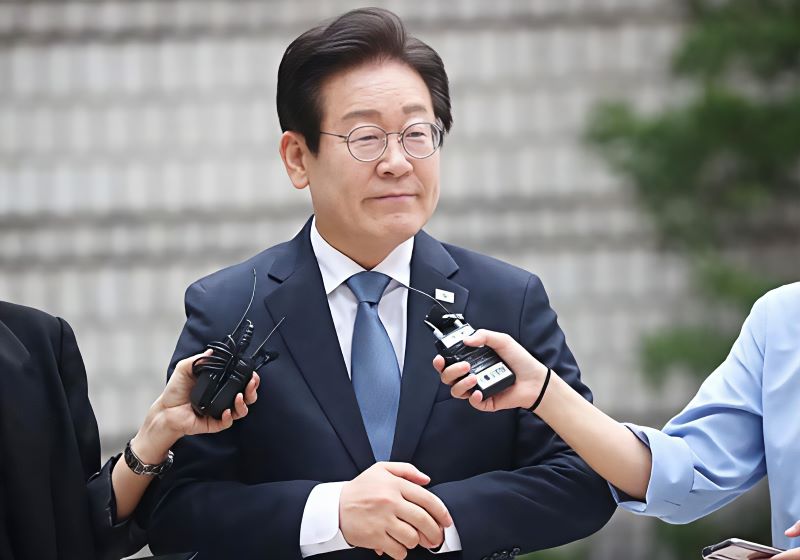
September 11 marks the 100th day of Lee Jae-myung’s presidency in South Korea. On this day, he held a press conference to clarify the government’s future policy direction.
A hundred days after taking office in a hurry, Lee’s approval rating has reached 63%, ranking third among all presidents of South Korea’s Sixth Republic—only behind former presidents Kim Young-sam (83%) and Moon Jae-in (78%). In contrast, his predecessor Yoon Suk-yeol had a mere 28% approval rating around his 100th day in office.
Amid South Korea’s battered economy, strained inter-Korean relations, and tariff pressures from the U.S., Lee has managed to gain high support by taking three key measures.
Clearing Past Turmoil via Special Investigations
On December 3, 2024, former President Yoon Suk-yeol declared emergency martial law, later got impeached, removed from office, and put on trial for insurrection. However, South Korean public opinion believed the root causes of the insurrection and those involved remained unclear.
Lee, who vowed to investigate the insurrection during his campaign, quickly passed the Special Investigation Act after taking office. He set up three special prosecutor teams to probe Yoon’s insurrection, criminal suspicions around Yoon’s wife Kim Gun-hee, and the couple’s interference in the investigation of marine soldiers’ on-duty deaths.
On July 10, Yoon was re-detained; on August 12, Kim Gun-hee was arrested. As investigations advanced, public sentiment, once shaken by the “December 3” martial law, stabilized. Meanwhile, the ruling Democratic Party (holding a parliamentary majority) pushed forward reforms in prosecution, media, and judiciary to stabilize the political situation.
Revitalizing Economy: Stock Market and Consumption Boost
South Korea’s economy was struggling. On May 29, 2025, the Bank of Korea cut its 2025 economic growth forecast from 1.5% to 0.8%, and overseas institutions predicted an even lower 0.3%-0.7%.
Lee, known as an “administrative expert” for reviving local economies as Seongnam Mayor and Gyeonggi-do Governor, ran as an “economic president” and promised to push the stock market to 5,000 points (then around 2,600 points). He attributed the stock market’s long-term undervaluation to chaebols ignoring minority shareholders’ interests, which dampened investment enthusiasm.
After taking office, he revised the Commercial Law to increase major shareholders’ responsibilities to the board, lifting the KOSPI index from 2,700 (before his election) to 3,300. To tackle weak consumption, he launched a basic income policy, distributing “livelihood recovery vouchers” (150,000-550,000 won, or ~770-2,800 RMB) nationwide. Data from South Korea Credit Data showed small businesses’ average credit card sales rose 6.44% year-on-year in the four weeks ending August 17.
Pragmatic Diplomacy for Balanced Relations
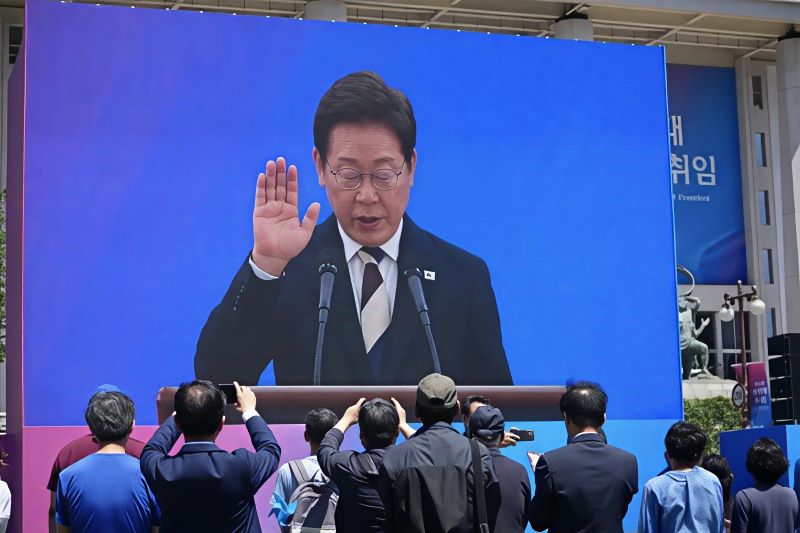
Lee’s ruling Democratic Party advocates pragmatic diplomacy—friendlier to North Korea, opposing blind follow-up to the U.S., and seeking better ties with China and Russia—different from conservatives’ ideological diplomacy. While many party members have roots in 1980s anti-U.S./Japan, pro-North Korea student movements, Lee (who didn’t join those movements) kept a distance from such groups, making his diplomacy more flexible: he avoided anti-Japanese nationalism while improving ties with North Korea, China, and Russia.
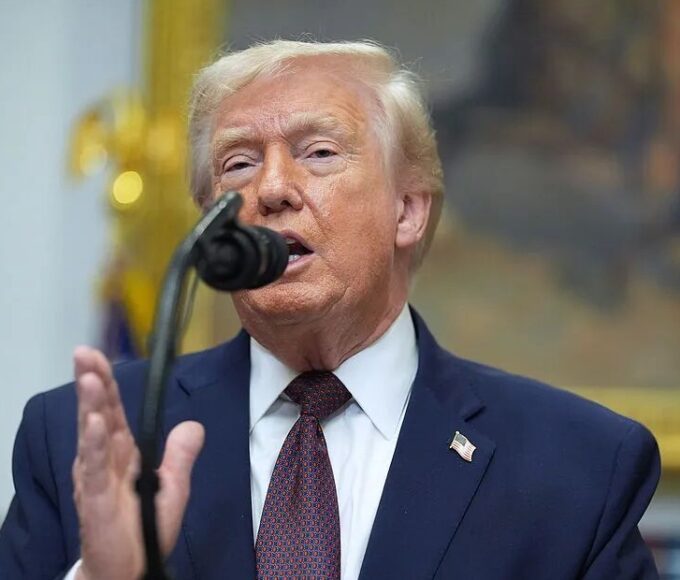
Shortly after taking office, Lee canceled loudspeaker broadcasts to North Korea and shut down the National Intelligence Service’s 50-year-old radio station targeting the North. In August, he visited Japan and the U.S.; in talks with U.S. President Trump, he highlighted Trump’s role in the Korean Peninsula peace process to gain his favor.