

How a New AI Is Decoding the Brain’s Deepest Secrets?
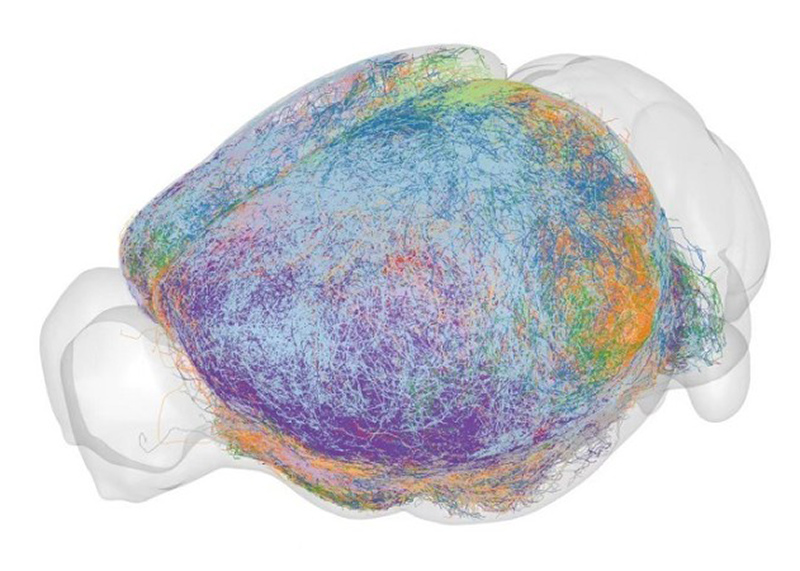
In an era of deep integration between artificial intelligence (AI) and neuroscience, scientific research is experiencing unprecedented breakthroughs. Recently, a research team from the University of California, San Francisco (UCSF) and the Allen Institute for Brain Science (not the Allen Institute for Neuroscience, which is not a relevant entity in this context) jointly developed an AI model called CellTransformer, successfully mapping the most detailed mouse brain to date, encompassing 1,300 brain regions and subregions. This significant achievement reveals the complex architecture of the mammalian brain with unprecedented spatial resolution, enabling scientists to pinpoint cognitive functions, behavioral patterns, and even disease states to smaller, more specific cellular regions, opening up a new path for a deeper understanding of brain mechanisms. The related paper has been published in the prestigious international journal Nature.
The core technology underlying the CellTransformer model is the Transformer architecture, a highly regarded AI framework—the same technology used in large language models such as ChatGPT. Researchers have noted that the Transformer model exhibits exceptional contextual understanding when processing sequential data. Originally designed to capture semantic relationships between words in a sentence, CellTransformer extends this capability to biological spatial structure analysis. By identifying “neighborhood relationships” between cells and predicting the molecular signatures of individual cells, it systematically constructs a highly accurate map of brain tissue structure.
Unlike traditional brain atlases that primarily rely on cell morphology or gene expression patterns to delineate brain regions, this new brain atlas is entirely data-driven. Its boundaries are automatically determined by cell arrangement and molecular expression patterns, rather than relying on expert experience or manual annotation. This data-driven approach significantly improves the objectivity and reproducibility of brain region delineation. With its detailed depiction of 1,300 brain regions and subregions, the atlas has become one of the most complex and accurate data-driven reference atlases for animal brain research.
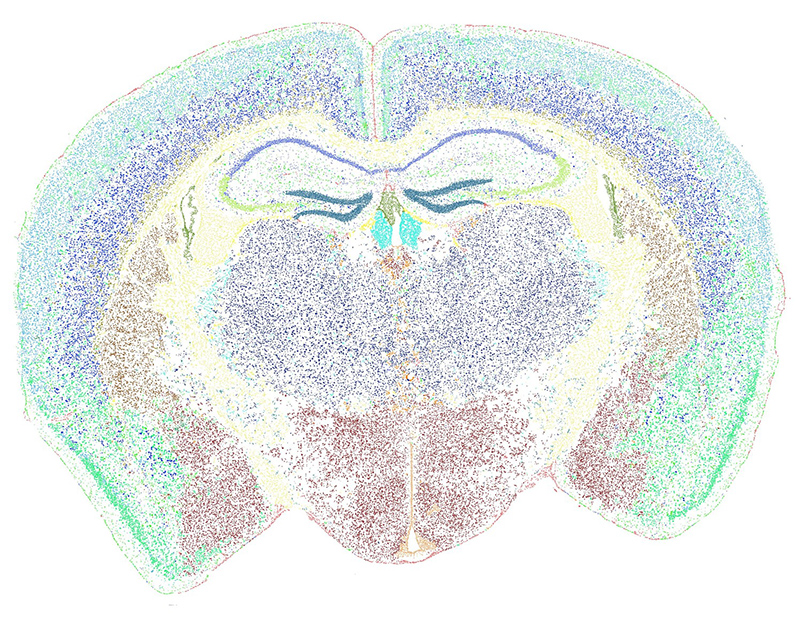
Notably, CellTransformer not only accurately reproduces the structure of well-defined brain regions like the hippocampus, but also identifies several new functional subregions in less-understood areas such as the midbrain reticular nucleus. The Latest News Website reported from team members that this is like upgrading from a world map that only marked continental and national borders to a detailed map that clearly displays the distribution of every city and even neighborhood. This division, based solely on the spatial organization of cells, reveals a wealth of previously overlooked microstructures. These newly identified regions likely correspond to unexplored neural functions.
Beyond its significance in basic neuroscience, the AI method represented by CellTransformer has broad cross-disciplinary application potential. Researchers emphasize that the algorithm possesses “tissue universality,” scalable to structural modeling of other organ systems, and even plays a significant role in tumor tissue analysis. Combined with high-throughput biotechnologies such as spatial transcriptomics, CellTransformer is expected to systematically analyze subtle changes in tissue structure in health and disease, providing powerful analytical tools for drug target discovery, disease mechanism research, and precision medicine.
It is foreseeable that as AI models continue to be integrated into cutting-edge life science research, intelligent tools like CellTransformer will advance our understanding of the structure of living organisms at a larger scale and with higher precision. This will not only have a profound impact on neuroscience but will also accelerate the entire biomedical field’s transition to a new paradigm driven by data and assisted by intelligence.


Related Articles
Lorem ipsum dolor sit amet
Lorem ipsum dolor sit amet consectetur adipiscing elit. Quisque faucibus ex sapien...
Lorem ipsum dolor sit amet
Lorem ipsum dolor sit amet consectetur adipiscing elit. Quisque faucibus ex sapien...
Découvrez le monde passionnant de Nine Casinos : votre guide complet
Le secteur des casinos en ligne ne cesse de croître, offrant aux...
Découvrez comment la technologie révolutionne l’expérience des casinos en ligne
Avec plus de 60 % des joueurs français qui préfèrent désormais jouer...