China National Space Science Center (CAS) held a press conference on November 24 to release a series of latest scientific and technical breakthroughs achieved by space science satellite missions in fields including cosmic transient celestial bodies, cosmic ray propagation, and solar eruptions. These milestones mark China’s historic leap in space science from “following” and “keeping pace” to “leading” in key areas.
Space Science Program: 15 Years of Innovation
Launched in 2011, CAS’s Space Science Pilot Program has successfully developed and launched eight scientific satellite missions, including Wukong, Shijian-10, Micius, Insight-HXMT, Taiji-1, Huairou-1, Kuafu-1, and Tianguan. The program, China’s first systematic initiative supporting space science research, has driven original achievements and technological leaps over 15 years.
The program has expanded scientific exploration toward the “four extremes”: macroscopically, creating China’s first X-ray all-sky map from domestically developed equipment; microscopically, obtaining the world’s most precise spectra of cosmic ray electrons, protons, helium nuclei, and boron nuclei; under extreme conditions, directly measuring the universe’s strongest magnetic field and detecting high-speed jets near black holes; and through interdisciplinary integration, achieving seamless convergence of science, technology, and engineering.
Technological advancements have been equally remarkable. Key technologies such as satellite-ground optical path alignment have been mastered, and China’s first international-standard X-ray calibration beamline has been established. A lobster-eye X-ray telescope with leading field of view and sensitivity—outperforming global counterparts by one to two orders of magnitude—has been developed, enabling integrated design of satellite platforms and payloads.
International cooperation has been a core pillar. The SMILE satellite represents the first full-cycle, mission-level deep collaboration between CAS and the European Space Agency (ESA). Tianguan, led by China, involves ESA, Germany’s Max Planck Institute, and France’s National Centre for Space Studies (CNES)—marking ESA’s first participation in a Chinese space science mission as an “opportunity mission.” Global scientific teams and data sharing have enhanced the international impact of China’s scientific satellites.
Capturing Cosmic Transient Signals
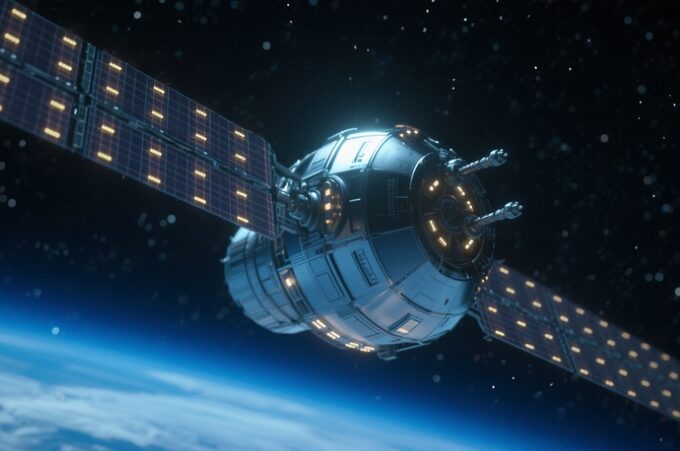
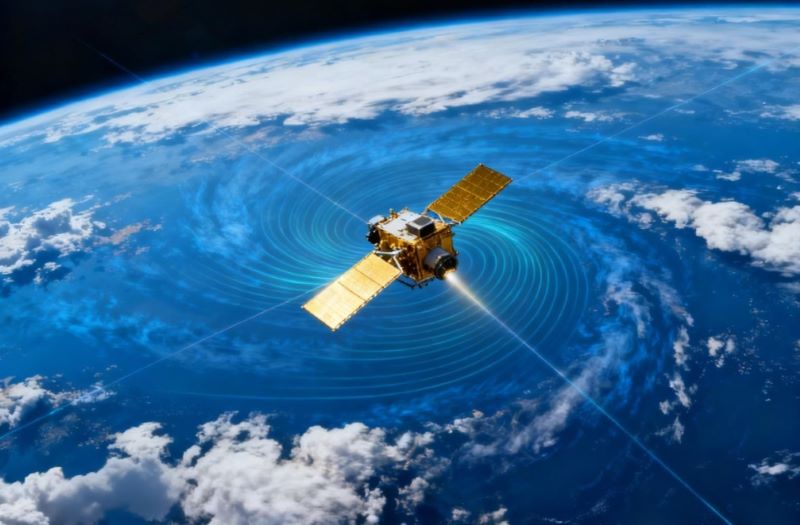
Tianguan, China’s first large-field X-ray astronomical satellite orbiting 580 kilometers above Earth, has emerged as a global “hunter” of cosmic transients. Equipped with seven pairs of high-sensitivity detectors, it discovered EP241021a, a new type of X-ray transient lasting 40 days—providing critical clues to understanding such mysterious celestial phenomena.
The satellite also detected EP240904a, a faint Galactic X-ray outburst, opening new avenues for identifying dormant stellar-mass black holes. Following its “autonomous trigger and automatic follow-up” upgrade, Tianguan captured EP240801a, an ultra-soft X-ray flash, offering insights into the diversity of gamma-ray bursts.
Insight-HXMT (Hard X-ray Modulation Telescope), known as “Huiyan,” has delivered fruitful results in multiple areas: measuring atmospheric density, unraveling accretion outburst mechanisms of Galactic black holes, studying radiation mechanisms and surface magnetic fields of accreting millisecond pulsars, locating nuclear combustion ignition sites on neutron stars, and determining the minimum variability timescale of the brightest gamma-ray bursts.
Huairou-1, tasked with monitoring high-energy celestial eruptions such as gravitational wave gamma-ray bursts and fast radio bursts, has expanded cosmic understanding. It identified a new subtype of gamma-ray bursts from compact star mergers, revealed an unprecedented magnetar outburst mode, and deepened knowledge of near-Earth orbital radiation environments through discovery of periodic particle precipitation events.
Reshaping Cosmic Ray and Solar Science
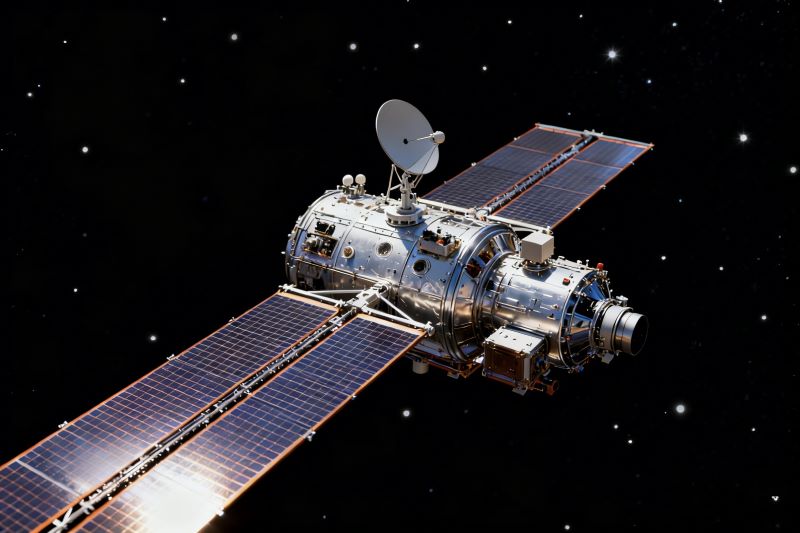
Wukong, primarily focused on indirect dark matter detection and cosmic ray research, made a groundbreaking discovery: a hardening structure in the secondary cosmic ray boron spectrum. The satellite achieved the world’s first precise measurement of the boron spectrum above 1 TeV/n, detecting the hardening with 8-sigma confidence—twice the spectral index change of primary cosmic rays like protons and helium nuclei. This suggests more complex cosmic ray propagation processes in the Milky Way than previously theorized, prompting revisions to existing models.
Kuafu-1, China’s comprehensive solar exploration satellite launched in 2022, has observed over 1,800 solar flares, including high-energy C-class, X-class, and M-class events. A key finding: the correlation rate between high-energy C-class flares and coronal mass ejections (CMEs) is far lower than traditional models predicted. Only 5 out of 127 observed high-energy C-class flares were accompanied by CMEs, challenging conventional understanding of solar eruption physics.
Future Missions: Exploring New Frontiers
CAS announced plans for four major space science missions during the 15th Five-Year Plan period, targeting breakthroughs in cosmic dark ages, solar magnetic cycles, and exoplanet exploration.
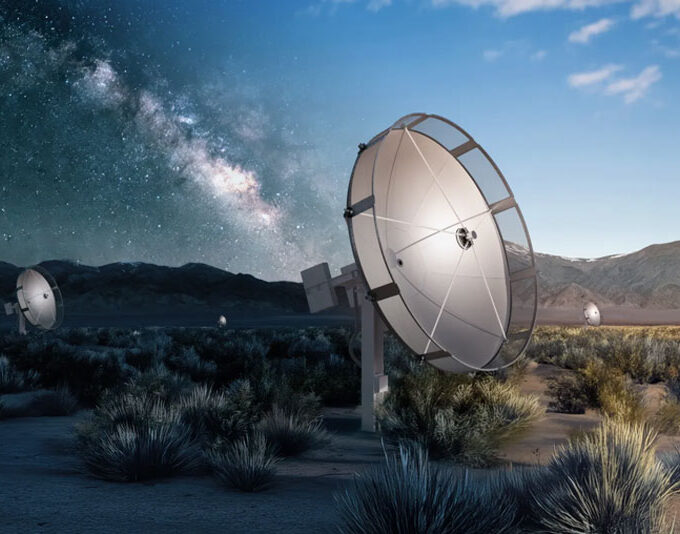
The Hongmeng Program, a low-frequency radio telescope array of 10 satellites, will be deployed on the lunar far side to shield from Earth and solar noise, capturing faint signals from the early universe.
Kuafu-2 will become the first satellite to orbit above the Sun’s polar regions, investigating the ultimate secrets of solar magnetic activity. Its observations aim to improve solar storm forecasting and deepen understanding of Earth-Sun relationships.
The Exo-Earth Survey Satellite will search for “Earth 2.0″—planets similar in size to Earth within their star’s habitable zones.
The Enhanced X-ray Timing and Polarimetry Observatory, a flagship space observatory, will explore physical laws under extreme cosmic conditions.
These missions, building on decades of innovation, underscore China’s commitment to advancing global space science and unlocking the universe’s deepest mysteries.