

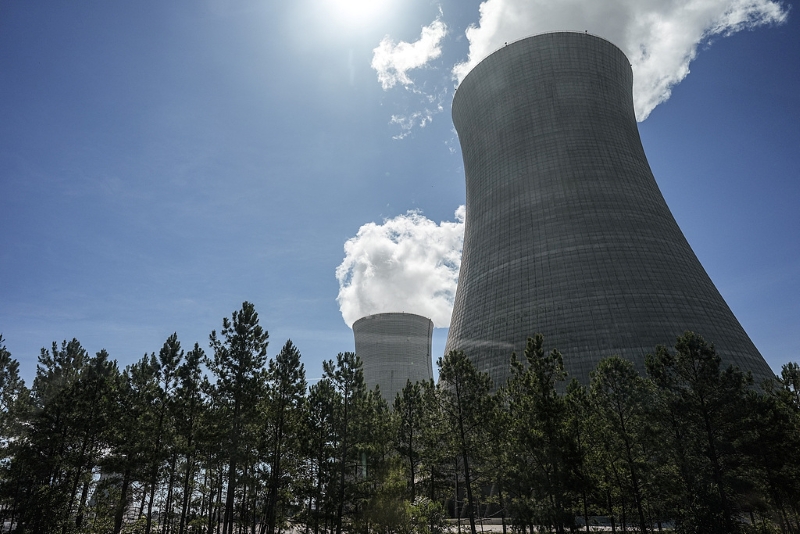
On May 23 local time, U.S. President Donald Trump signed four executive orders related to nuclear energy, including accelerating reactor testing, authorizing the Department of Energy and the Department of Defense to build nuclear reactors on federal land, overhauling the Nuclear Regulatory Commission (NRC), and enhancing the nation’s uranium mining and enrichment capabilities. According to a report by The Guardian on the 23rd, the orders are intended to drive a “nuclear revival” by enabling the construction of new reactors designed to meet the energy demands of artificial intelligence data centers and other emerging industries. As a result, U.S. nuclear-related stocks saw gains last Friday. However, several media outlets noted that while the policy supports the nuclear sector, new nuclear power plant projects in the U.S. still face major obstacles, including high costs and long construction timelines.
Hope to Reverse Overregulation in the Nuclear Industry
According to information released by the White House, the four executive orders are titled:
- Deploying Advanced Nuclear Reactor Technologies for National Security
- Reforming the Nuclear Regulatory Commission
- Reforming Reactor Testing at the Department of Energy
- Revitalizing the Nuclear Industrial Base
The Guardian reported that the orders aim to speed up approvals for reactors intended for defense and AI-related uses, reform the NRC with the goal of quadrupling nuclear power output over the next 25 years, streamline regulatory procedures to ensure three experimental reactors are operational by July 4, 2026, and increase investment in the nuclear industrial base.
According to CNBC, Trump stated last Friday that the orders focus on small advanced reactors—a technology many in the industry view as the future of nuclear energy.
The newly signed executive orders have drawn significant attention to the U.S. Nuclear Regulatory Commission (NRC). According to CNBC, the NRC is an independent agency established 50 years ago, responsible for overseeing nuclear reactor units across the country. The agency is currently facing a heavy regulatory workload. A senior White House official told reporters at a briefing that Trump’s order calls for a “complete and thorough reform” of the agency. Under the new rules, the NRC will be required to issue final decisions on reactor license applications within 18 months.
Joe Dominguez, CEO of Constellation Energy—the largest nuclear operator in the U.S.—attended the signing ceremony. He stated that the biggest bottleneck in America’s nuclear sector lies in the lengthy regulatory approval process. The New York Times noted that it remains unclear whether the president has the authority to impose sweeping reforms on the NRC, as it was created by Congress and operates independently from the White House.
Challenges Facing the Nuclear Industry
The executive order titled “Revitalizing the Nuclear Industrial Base” states that although the U.S. once led the world in nuclear energy, it now faces a new set of challenges, including global competition in the AI sector, growing demands for energy independence, and the need for uninterrupted power for national security.
The order points out that it took the U.S. nearly 40 years to match the nuclear generation capacity that another developed country added in just 10 years. It also notes that since 2017, as deployments of advanced reactor designs have slowed in the U.S., 87% of the new reactors installed worldwide have been based on designs from two other countries. Meanwhile, America’s nuclear fuel cycle infrastructure has severely atrophied, leaving the U.S. heavily reliant on foreign sources for uranium, as well as enrichment and conversion services.
The New York Times reported that Trump declared a “national energy emergency” early in his presidency, claiming the country lacked sufficient power to meet growing demand—especially from AI data centers. While most of the administration’s efforts to boost supply have focused on coal, oil, and natural gas, officials have also voiced support for nuclear energy.
According to The Wall Street Journal, many nuclear plants have been shutting down in recent years, unable to compete in price with natural gas or renewables. NRC data shows that since the 1990s, 16 nuclear reactors have been closed in the U.S.
In recent years, more than a dozen companies have begun developing a new generation of small reactors. However, none of these next-generation designs have been built to date.
Lin Boqiang, director of the China Institute for Studies in Energy Policy at Xiamen University, said on May 25 that U.S. electricity demand has long remained stable, but with the recent surge in AI development, many now predict a significant power shortfall. He noted that while the U.S. has a solid foundation for nuclear energy, the high investment and long timelines mean government policy plays a crucial role.
Safety and Cost Concerns Remain
Whether the executive orders will successfully achieve a “nuclear revival” remains to be seen. The New York Times reported that some experts argue that simply accelerating NRC approvals won’t be enough to rejuvenate the nuclear sector. The first few reactors may be prohibitively expensive to build and will likely require some form of government support to make construction feasible at scale. To address this, one of the orders directs the Department of Energy’s Loan Programs Office to provide resources. However, following a wave of layoffs under the Trump administration, the office has lost more than half of its staff this year, and House Republicans have proposed cutting its budget. Nuclear advocates warn that these cuts could hinder critical financing for new reactor projects.
Skeptics have also raised concerns that pressure from the White House could lead the NRC to cut corners on safety. Edwin Lyman, director of nuclear power safety at the Union of Concerned Scientists, warned that if safety isn’t the top priority, “the U.S. nuclear industry will fail.”
In addition, the U.S. remains years away from fully restoring its uranium enrichment capabilities. According to CNN, as of 2023, the vast majority of enriched uranium in the U.S. was imported from Russia. Following the outbreak of the war in Ukraine, new legislation ended that arrangement, and companies are now racing to establish domestic enrichment capacity.
CNBC reported that the construction of new nuclear power plants in the U.S. still faces high costs and lengthy timelines. For example, two new units at Georgia’s Vogtle Nuclear Plant took seven years to complete—far longer than planned—and ran $18 billion over budget. Lin Boqiang noted that the U.S. lacks sufficient manufacturing capacity, and its supporting infrastructure and industrial supply chains remain relatively weak. Without catching up in these areas, efforts to expand nuclear power could drive manufacturing costs even higher.




Leave a comment