

Thailand’s Durian Production Rises Sharply, Prices Fall
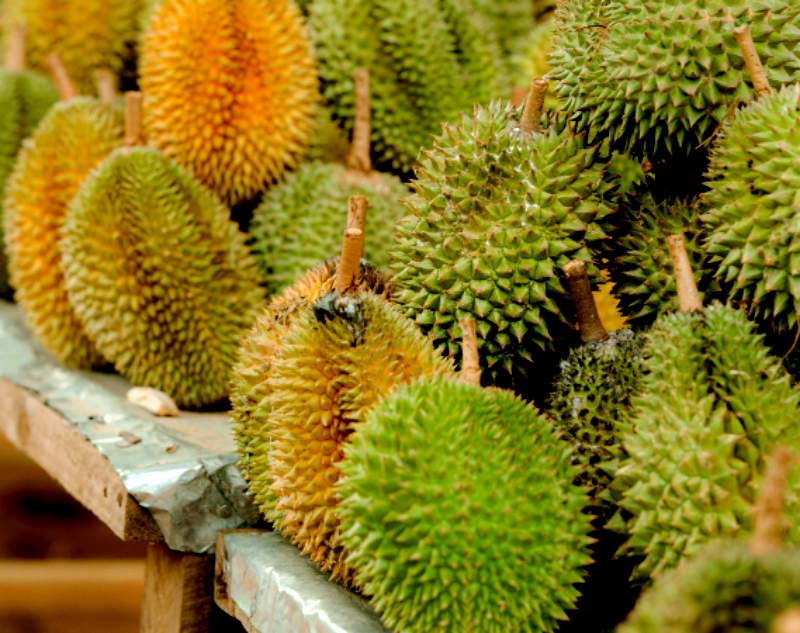
According to the latest forecast by Thailand’s Office of Agricultural Economics, the country’s total durian production is projected to reach 1,781,019 tons in 2026, representing an increase of over 16% compared to 2025. This growth is primarily driven by two key factors: First, the expansion of cultivated areas has spurred steady growth in the scale of production zones. Second, favorable climatic conditions, with temperatures and rainfall in major production areas remaining within the optimal range for durian growth, providing ideal natural conditions for flowering and fruiting.
Despite this substantial production surge, Thai durian prices have shown a persistent downward trend. Data indicates that by 2025, the overall price of Thai durians will have decreased by 16%, falling to 92.5 baht per kilogram (approximately $2.98 USD). This price level is significantly lower than the 2019-2024 average of 108.7 baht per kilogram, and the average price is projected to remain around 90 baht per kilogram in 2026, marking the lowest level in nearly six years.
Multiple Factors Driving Price Declines
One primary reason for Thailand’s falling durian prices is market supply-demand imbalance. With production surging in 2026, market supply has increased significantly, but demand has failed to grow at the same pace. This has led to oversupply, subsequently pushing prices down. Additionally, Vietnamese durians are gradually capturing market share in China due to lower transportation costs and proximity, putting pressure on Thai durian prices and forcing them to respond to competition through price cuts. Amidst falling prices and intense competition, Thailand’s durian export revenue also faces pressure. It is projected that Thailand’s durian export revenue will decline by 1.8% in 2026, dropping to US$3.705 billion.
Quality issues have become pivotal to Thailand’s durian industry maintaining its market advantage. In recent years, Thailand has faced quality issues such as premature harvesting and rushed picking, which have compromised product taste and damaged its reputation in the Chinese market, allowing Vietnamese durians to nearly overtake its market share. To address this, Thailand’s agricultural authorities have introduced new standards requiring pulp-to-dry-weight ratio testing before harvesting. This ensures fruits meet quality benchmarks before entering the market, thereby enhancing overall quality and safeguarding Thailand’s global reputation for durians.
Looking Ahead
Despite facing multiple challenges, Thailand’s durian industry continues to hold significant market potential. To address competition from emerging rivals like Vietnam, Thailand will prioritize quality enhancement, brand development, and market diversification while driving technological innovation to boost durian production efficiency. Whether Thai durians can maintain their leading position in the global market will depend on their adaptability and competitiveness within an ever-evolving market landscape.


Related Articles

New Zealand’s Kiwifruit Output Expected to Hit Record High
Benefiting from optimized planting varieties and favorable weather conditions, New Zealand’s kiwifruit...

FRUIT LOGISTICA 2026 Innovation Award Winners Announced
On February 6, the 20th edition of FRUIT LOGISTICA concluded in Berlin,...

Carbon Robotics Launches First Large Plant Model
Carbon Robotics, a U.S.-based agritech firm focused on agricultural artificial intelligence and...


Brazil’s Corn Industry Hit Hard by Leafhopper Infestation
A new research conducted in Brazil has revealed staggering economic losses to...