

Saudi Arabia Accelerates Solar Shift to Cut Oil Reliance
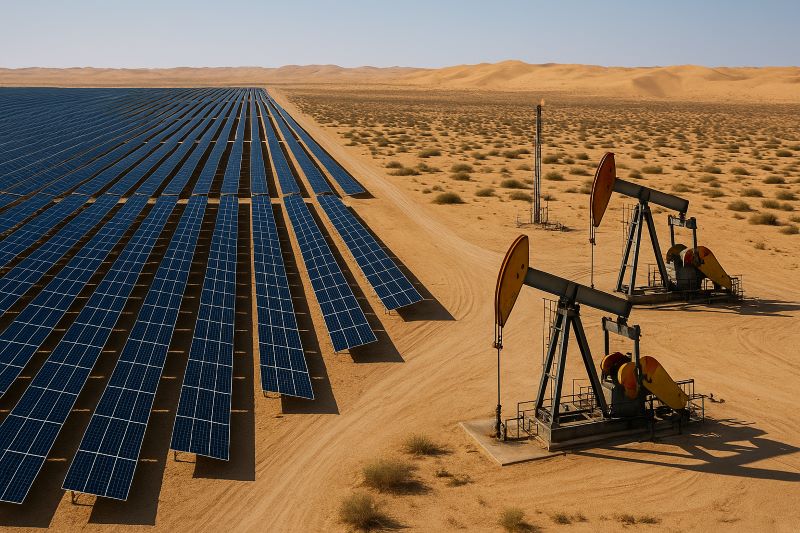
As one of the world’s largest oil exporters, Saudi Arabia is vigorously accelerating the pace of its energy transition. The government of this country recently announced that it is actively building several large-scale solar power plants and battery energy storage facilities, and plans to achieve a strategic goal of having 50% of its electricity supply come from renewable energy by 2030.
This ambitious plan marks that Saudi Arabia, which has long relied on an oil economy, is seeking to achieve economic transformation through energy diversification. Analysts point out that this is not only related to the international community’s demand for emission reduction and clean energy, but also in line with the development blueprint of Saudi Arabia’s “Vision 2030”.
Chinese technology drives down costs
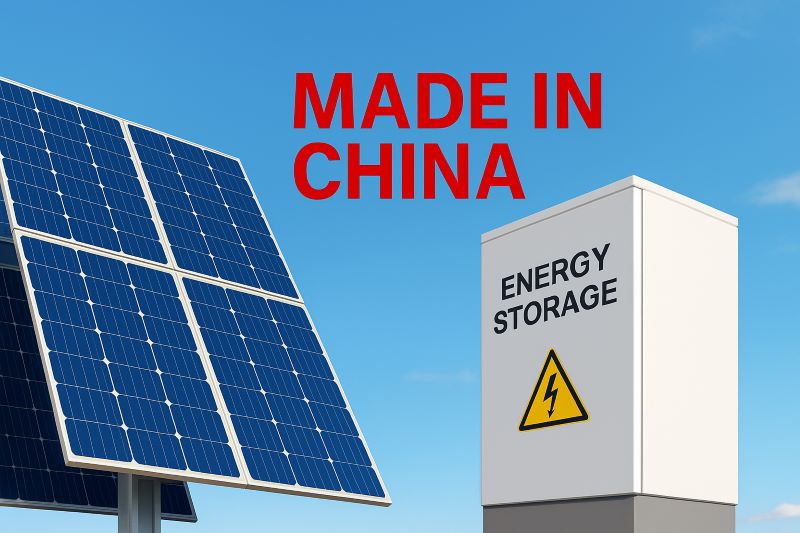
According to the latest information from industry insiders, a major driving force for Saudi Arabia’s expansion of clean energy comes from solar modules and battery energy storage equipment made in China. In recent years, China’s large-scale production in the photovoltaic and energy storage industries has significantly reduced the global construction cost of solar power, making it more feasible for Saudi Arabia to deploy clean energy on a large scale.
A Saudi Ministry of Energy official said, “Against the backdrop of the constantly changing global energy landscape, clean energy has become an inevitable choice.” Abundant solar energy resources and falling prices offer Saudi Arabia unprecedented opportunities.
Investment scale and key projects
At present, several key projects are under construction in Saudi Arabia, including the NEOM urban renewable energy project, one of the largest in the world, as well as a nationwide cluster of photovoltaic and energy storage power stations. These projects are not only aimed at meeting the country’s growing electricity demand but will also lay the foundation for Saudi Arabia’s future in green hydrogen energy and electricity exports.
According to the plan of the Saudi Public Investment Fund (PIF), hundreds of billions of US dollars will be invested in the next five years to expand solar and wind energy projects and introduce more international partners.
Persistent reliance on fossil fuels
Despite the rapid momentum of transformation, Saudi Arabia still relies heavily on oil and gas for power generation in the short term. The International Energy Agency (IEA) analysis suggests that there is still a certain contradiction between Saudi Arabia’s rapid expansion of renewable energy infrastructure and the deep structure of its oil economy. However, as technologies such as energy storage and hydrogen energy gradually mature, this contradiction is expected to be gradually alleviated before 2030.
International community response
Saudi Arabia’s move has drawn widespread international attention. Some environmental protection organizations believe that if this plan can be realized, it will significantly reduce global carbon emissions and have a positive impact in combating climate change. Meanwhile, some critics point out that Saudi Arabia is still exporting oil on a large scale, and its clean energy transition is more driven by domestic demand. The emission reduction effect on a global scale still needs to be further observed.
Conclusion
With the continuous rise in energy demand and the increasing global pressure to reduce emissions, Saudi Arabia’s energy strategy is undergoing a historic turning point. From an “oil kingdom” to a significant player in clean energy, Saudi Arabia’s transformation is not only a need for domestic economic structural adjustment but may also reshape the global energy landscape.


Related Articles

Local Moves for Clean Energy’s Spatial Impacts
January 26 marks the International Day of Clean Energy, an initiative raising...

US $12 Billion Treasury Plan Struggles to Break the Deadlock in Critical Minerals
On February 3, 2026, US President Donald Trump announced the launch of...

IEA Latest Forecast: Renewables and Nuclear to Supply Half of Global Electricity by 2030
According to the latest report released by the International Energy Agency (IEA),...


Czech Republic Shuts Down Its Last Hard Coal Mine
In January 2026, the Czech Republic officially closed its last deep-well hard...
Leave a comment