

2025 New Trends: Home Solar Rooftops Lead the Energy Shift
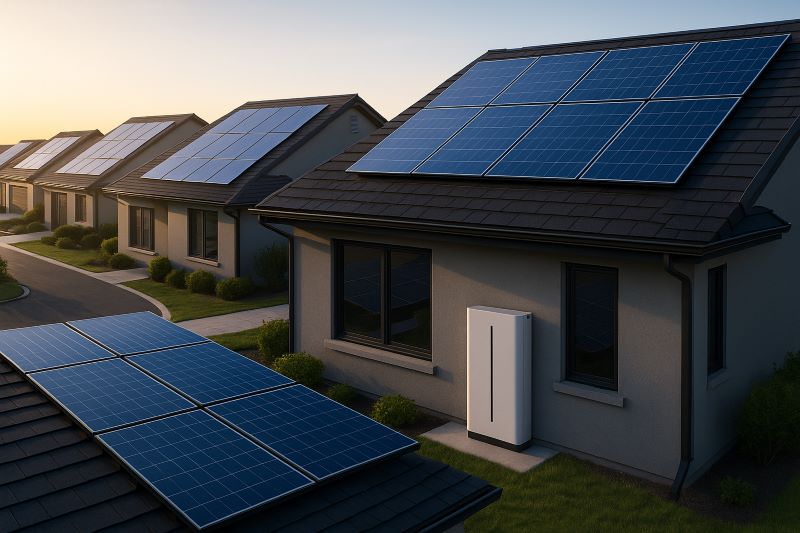
As the world accelerates its transition to clean energy, home solar rooftops are emerging as one of the defining trends of 2025. Once viewed as a niche technology for environmentally conscious households, residential solar has now entered the mainstream, driven by falling installation costs, government incentives, and breakthroughs in energy storage.
According to a latest report by the International Energy Agency, rooftop solar capacity worldwide is expected to grow by nearly 20% this year, making it one of the fastest-expanding renewable sectors. Analysts say 2025 marks a tipping point: for many households, installing solar panels is no longer just an eco-friendly choice but an economic necessity.
One of the strongest drivers of this trend is cost. Over the past decade, the price of solar modules has dropped by more than 70%, largely due to advances in Chinese manufacturing. Today, a family in the United States or Europe can install a 5-kilowatt rooftop system for less than one-third of what it cost in 2015. With rising electricity bills worldwide, the payback period for solar investments has shortened to as little as five years in some regions.
Policy support is also fueling adoption. In the U.S., federal tax credits have been extended, while states like California and Texas are offering additional rebates for households that pair solar with home batteries. Europe is following a similar path, with Germany and Spain making rooftop solar mandatory for new housing developments starting in 2025. These measures are transforming solar rooftops from optional upgrades into standard infrastructure.
A defining feature of the 2025 trend is integration with battery storage. Homeowners are increasingly adopting lithium-ion storage units to maximize solar self-consumption and protect against grid outages. Companies such as Tesla, BYD, and Sonnen have reported record demand for residential batteries this year, reflecting the desire for energy independence amid rising climate-related disruptions.
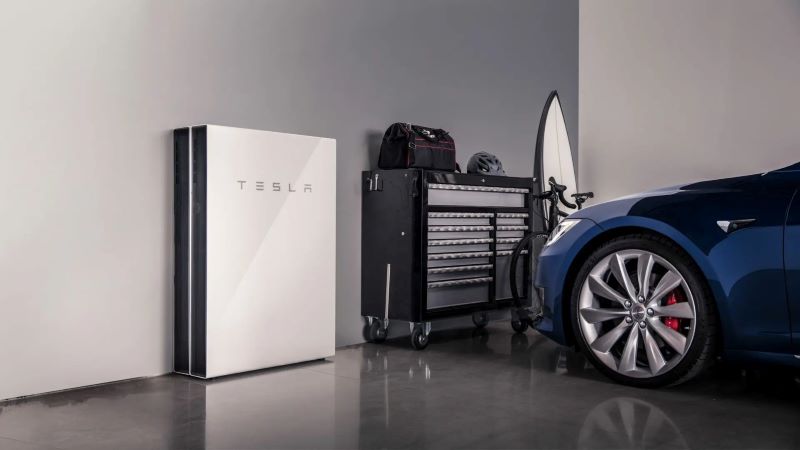
In suburban neighborhoods across North America, Europe, and Asia, solar rooftops are changing the look of communities. Rows of houses with gleaming panels and discreet battery systems in garages symbolize a broader shift in lifestyle — one where energy production is localized and homeowners play a direct role in the global energy transition.
Challenges remain, particularly in grid integration and policy frameworks. Utilities are grappling with how to balance decentralized generation, while regulators debate how to fairly compensate households for the excess energy they supply to the grid. Some regions have cut net metering benefits, raising concerns that adoption could slow. Yet overall momentum remains strong, and industry experts predict rooftop solar will account for 15% of global electricity generation by 2030.
For many families, however, the benefits are immediate and personal. “My electricity bill has dropped by 60%, and I don’t worry about blackouts anymore,” said Sarah Lopez, a homeowner in Texas who installed panels and a battery earlier this year. Her story reflects a growing sentiment among households worldwide: rooftop solar is not just a trend, but a future-proof investment.
As 2025 unfolds, it is clear that home solar rooftops are leading the charge in reshaping the global energy landscape. From cost savings to climate resilience, they embody a powerful convergence of technology, policy, and consumer demand — a latest trend that is here to stay.


Related Articles

Local Moves for Clean Energy’s Spatial Impacts
January 26 marks the International Day of Clean Energy, an initiative raising...

US $12 Billion Treasury Plan Struggles to Break the Deadlock in Critical Minerals
On February 3, 2026, US President Donald Trump announced the launch of...

IEA Latest Forecast: Renewables and Nuclear to Supply Half of Global Electricity by 2030
According to the latest report released by the International Energy Agency (IEA),...


Czech Republic Shuts Down Its Last Hard Coal Mine
In January 2026, the Czech Republic officially closed its last deep-well hard...
Leave a comment