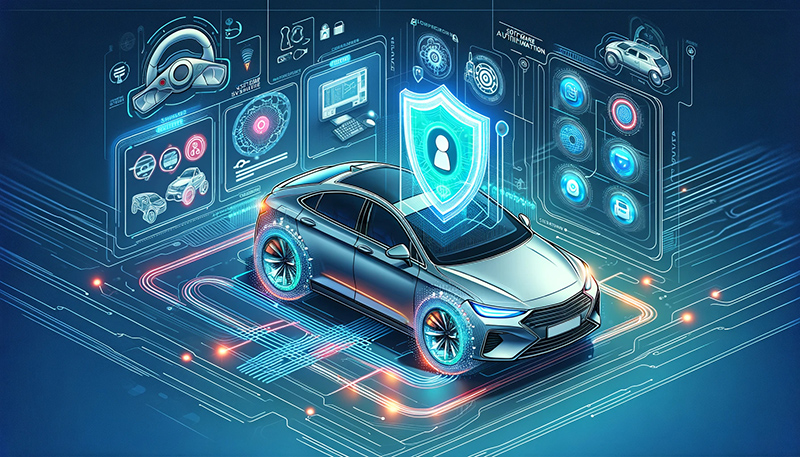
With the continuous advancement of artificial intelligence (AI), automation, connectivity, and advanced safety systems, cars are becoming increasingly intelligent and highly connected. They provide real-time road condition updates, enable inter-vehicle and inter-device communication, and are equipped with advanced driver assistance systems (ADAS) that provide early warnings of vehicle conditions.
A World Economic Forum article states that the combined power of AI and automation is not only redefining how people travel but also ushering in a new era of safer, richer, more comfortable, and more sustainable driving experiences. Of course, the resulting technical, ethical, and legal challenges also place higher demands on the industry.
Cars Are Getting Smarter
Today’s cars have evolved beyond traditional means of transportation into highly integrated digital platforms. They feature embedded safety systems, real-time connectivity, and advanced automation technologies. Automatic emergency braking (AEB) and ADAS systems have become standard features on many new cars. The European Union has mandated AEB systems for new cars, and the United States has mandated AEB for all light vehicles starting in 2029.
These AI-driven systems, powered by sensors, cameras, and machine learning algorithms, provide powerful support for self-driving cars. They help drivers make safer decisions, optimize driving routes, and avoid or mitigate accidents. They perform particularly well in dense urban areas and at low speeds, and can even enable more precise assisted parking.
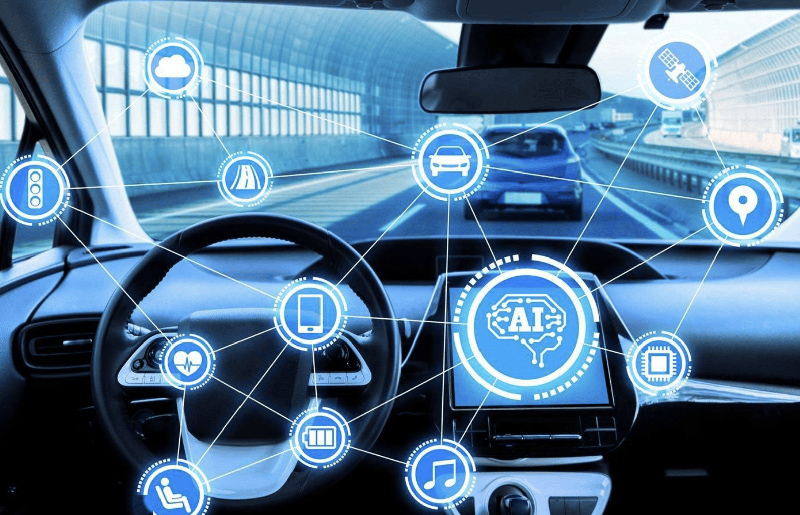
Forbes reported that AI technology is making the driving experience more personalized. Systems can automatically adjust seat position, air conditioning, and entertainment settings based on the driver’s habits and preferences, creating a customized cabin experience. AI voice assistants allow drivers to control the vehicle through natural conversation, effectively improving driving convenience and comfort.
With the continuous advancement of AI capabilities and the increasing sophistication of sensors and cameras, the era of fully autonomous driving is accelerating. Based on the latest research advances, industry experts predict that fully autonomous vehicles requiring no human intervention could be officially launched in the late 2030s.
However, the harmonious coexistence of humans and technology remains an unresolved issue. Many drivers are still adapting to semi-autonomous driving features, and some may overestimate the system’s capabilities, mistakenly believing that ADAS systems can completely replace human drivers.
AI Revolutionizes the Claims Process
AI is also revolutionizing the accident claims process. In the United States, a clear trend is the accelerating shift toward technology-driven claims and repair management. Nearly 30% of auto insurance claims are now initiated with digital photos, enabling insurers and repair providers to use AI tools to quickly respond to accident claims. By automatically assessing vehicle damage, AI can generate repair estimates for review within seconds. AI is playing an increasingly prominent role in claims and repair coordination, with both processing volume and response speed increasing simultaneously.
Increasingly, companies are investing in R&D to integrate previously fragmented post-processing processes, continuously optimizing the customer experience while enhancing employee expertise. Investment in this area is expected to grow significantly in the coming years. In 2023, AI investment in financial services reached $35 billion; by 2027, this figure is expected to rise to $97 billion, encompassing sectors such as insurance, banking, and payments.

Facing Many Unsolved Challenges
Despite the rapid development of AI and automation technologies, autonomous driving still faces many unsolved challenges.
On a technical level, complex road conditions, volatile weather, and the uncertain behavior of other road users still make it difficult for current AI systems to cope.
On an ethical and responsibility level, how should liability be determined in the event of an accident? How should AI navigate ethical dilemmas? These issues lack consensus and urgently require improved legal and regulatory frameworks. Furthermore, in the event of a system failure, the division of responsibilities between manufacturers, software developers, and vehicle owners remains unclear.
Faced with these challenges, the industry is continuously increasing investment and collaborating to advance AI governance. For example, the U.S. Department of Transportation’s Advanced Research Projects Agency (ARPA) issued an executive order advocating for the safe and responsible development and application of AI in transportation and conducting in-depth research on its impact on the autonomous driving ecosystem. By strengthening governance and establishing privacy protection standards, the industry is expected to foster technological innovation while building a broad foundation of trust.
Of course, the advancement of autonomous driving technology is inseparable from the support of new infrastructure such as 5G communications, the Internet of Vehicles, and transportation cloud platforms. It is foreseeable that the deep integration of AI and autonomous driving will reshape the automotive industry and bring people a safer, more efficient, and more sustainable future of transportation.