Recently, the EU Mies van der Rohe Award (commonly known as the Mies Award) announced its shortlist. From 410 nominations across the European Union, this year’s jury selected 40 projects from 18 countries and 36 cities. This list not only showcases unprecedented diversity in geography and typology but also serves as a crucial window into the shifting values of contemporary European architecture, as the jury explicitly established “novelty” as a core selection criterion.
Core Interpretation
The “novelty” articulated by this year’s jury chair, Smiljan Radic, does not refer to formal or stylistic eccentricity. Its deeper meaning lies in the creative manner in which architecture engages with its environment and society—specifically, whether a project can infuse new vitality into existing contexts and employ innovative spatial strategies to address real social, environmental, and spatial challenges. Among the 40 shortlisted projects, over half involve renovation and regeneration. Through the creative transformation of historic buildings, industrial relics, and public spaces, they redefine the value of existing stock. Even new construction projects consistently demonstrate profound engagement with regional context, social integration, and material recycling. This balanced emphasis on both “regeneration” and “new construction” signals a shift in European architectural practice—moving away from landmark creation toward a holistic consideration of social, environmental, and economic sustainability.
Diverse Innovation Cases
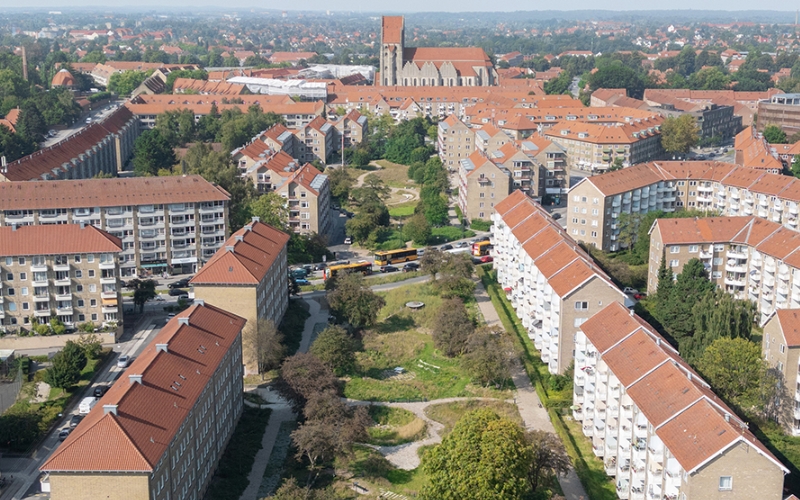
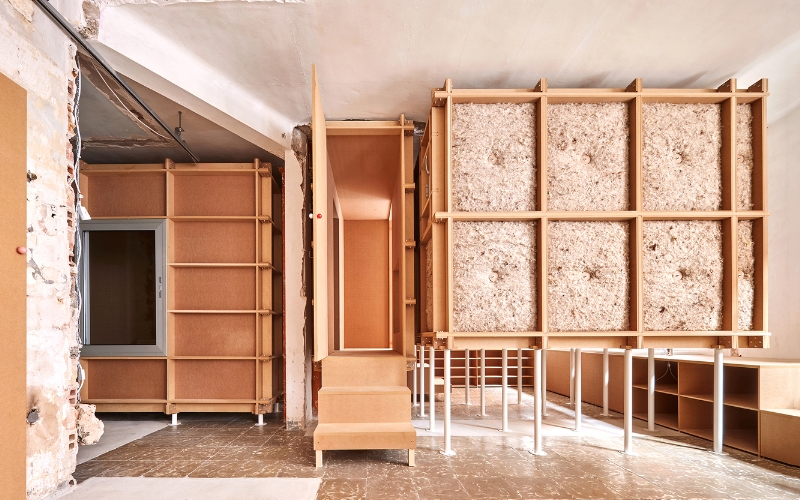
The shortlisted projects demonstrate the multifaceted dimensions of “novelty” through concrete practices. At the level of ecological and social integration, Groningen-Bispepark stands as the region’s newest and most innovative climate-adaptive park. It transforms a specialized stormwater management system into a perceptible, participatory public landscape, achieving a fusion of ecological functionality and public vitality. In the realm of economic viability and sustainable living paradigms, Barcelona’s “10k House” project delivers a breakthrough solution for affordable housing through extreme budget control (€10,000 in materials) and an innovative floor plan based on “limited heating” zones. In urban renewal and circular practices, Paris’s 206 La Fayette renovation—retaining 80% of the original structure while reconfiguring spaces—serves as a model for low-impact, high-quality renewal in high-density cities. Additionally, numerous interventions in historical heritage sites, such as the thermal baths renovation in Karlovy Vary, demonstrate innovative approaches to revitalizing cultural legacies and strengthening community cohesion through contemporary design language. Collectively, these cases prove that contemporary architectural innovation has deeply integrated multiple dimensions: environmental responsiveness, resource efficiency, social inclusion, and cultural preservation.
Outstanding contemporary architecture must be responsible and inspiring, serving as a vital medium for actively addressing climate challenges, promoting social inclusion, and sparking cultural dialogue. This list paints a future architectural landscape shaped by local practice, social engagement, and environmental ethics. The final awards will be announced in April 2026, with the ceremony taking place in Barcelona in May, marking a new high point in this profound exploration of architecture’s essence and direction.