In today’s rapidly evolving landscape of digital content creation, the rise of artificial intelligence technology has not only transformed the way videos are produced but has also introduced new challenges in determining content authenticity. Recently, Google launched a forward-looking feature in its Gemini application, designed to help users easily verify whether video content is generated by its own artificial intelligence. The introduction of this feature not only marks a significant step for Google in addressing the growing challenges of AI-generated content but also provides users with a convenient tool to better understand the origins of such content while enjoying creative material.
With the rapid advancement of AI technology, an increasing number of users are leveraging artificial intelligence to generate videos and images. This phenomenon is becoming more prominent on social media and content creation platforms, where users can effortlessly produce eye-catching videos without requiring advanced technical expertise. However, this raises the question: how can the authenticity and credibility of such content be determined? How can users ensure that the videos they watch are created by real humans or generated by intelligent algorithms?
The new verification feature launched in Google’s Gemini application aims to address this very issue. Using advanced algorithms, this feature can quickly analyze video content and determine whether it is generated by Google’s AI technology. This means that while watching a video, users can simply click a few times to obtain detailed information about the video’s origin. For users who wish to understand the background of video production, this is undoubtedly a valuable tool.
In addition to this verification feature, the Gemini application also offers more AI tools on its platform to enhance user experience. Users can utilize these tools for creative projects, video editing, and various multimedia operations. Google stated that the launch of these tools is in response to the growing demands of users, enabling them to engage in content creation more conveniently while ensuring the authenticity of the content.
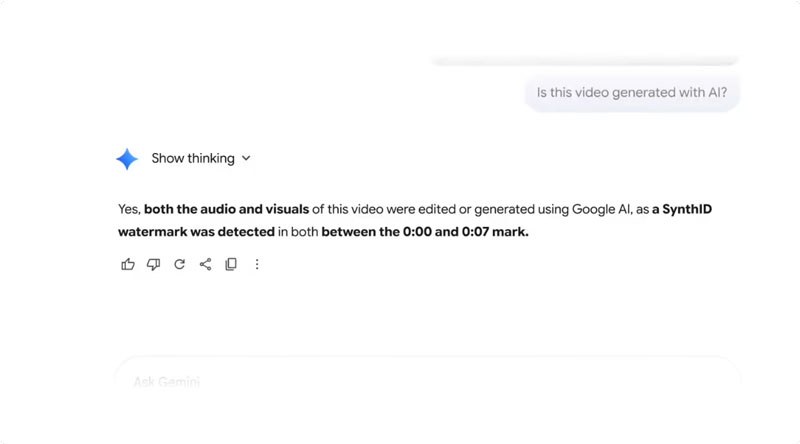
As AI technology continues to evolve, Google’s Gemini application is also constantly updated to adapt to user needs and market changes. Google explicitly stated that the purpose of launching this feature is not only to enhance user experience but also to improve the transparency of content on the platform. By detecting AI-generated content, users can gain clearer insights into whether the content they encounter is authentic and credible, thereby making more informed decisions.
According to the latest news, in the current era of information explosion, the authenticity of content has become particularly important. As users face an overwhelming amount of information, distinguishing between truth and falsehood has become a critical skill. The new feature in Google Gemini provides users with a clearer direction in this regard. It not only helps users determine the authenticity of videos but also sets a new standard for the entire content creation industry.
In the future, as AI technology continues to develop, the barriers to video generation will become increasingly lower, and more users will join the ranks of content creators. This new feature in Google Gemini will help users maintain vigilance and awareness of authenticity in the process of creating and consuming content. This not only protects users but also contributes to the overall responsibility of the online ecosystem.
In summary, the launch of the AI-generated video detection feature in Google Gemini marks the efforts and innovation of tech giants in addressing content authenticity issues. As this feature gains traction, users can enjoy a rich variety of creative content with greater peace of mind, ensuring that the information they encounter is verified, authentic, and trustworthy. This initiative will undoubtedly drive the industry toward greater transparency and health, providing users with a higher-quality content experience.