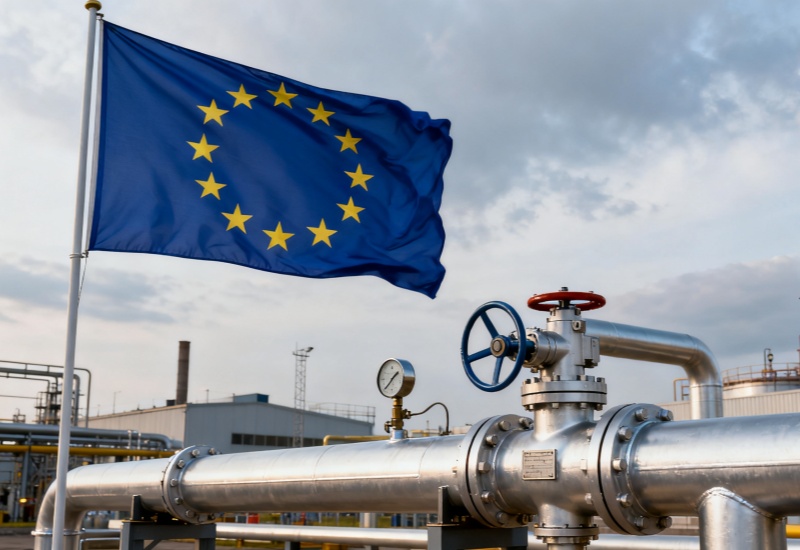
EU energy ministers reached an agreement at a meeting in Luxembourg on October 20, approving a draft regulation to phase out imports of Russian natural gas. This resolution marks a significant step forward for the EU in advancing energy independence and security.
According to the draft released by the Council of the European Union, the new rules will be implemented in stages. Starting in 2026, new contracts for Russian natural gas will be prohibited. Existing short-term contracts must be terminated by June 2026, while long-term contracts may continue until early 2028 at the latest. The regulations will also introduce gas-source certification, an import licensing system, and tracking mechanisms to prevent third countries from circumventing the ban.
This plan forms part of the EU’s REPowerEU Energy Strategy, aimed at reducing dependence on Russian fossil fuels, strengthening supply security, and accelerating the transition to renewable energy.
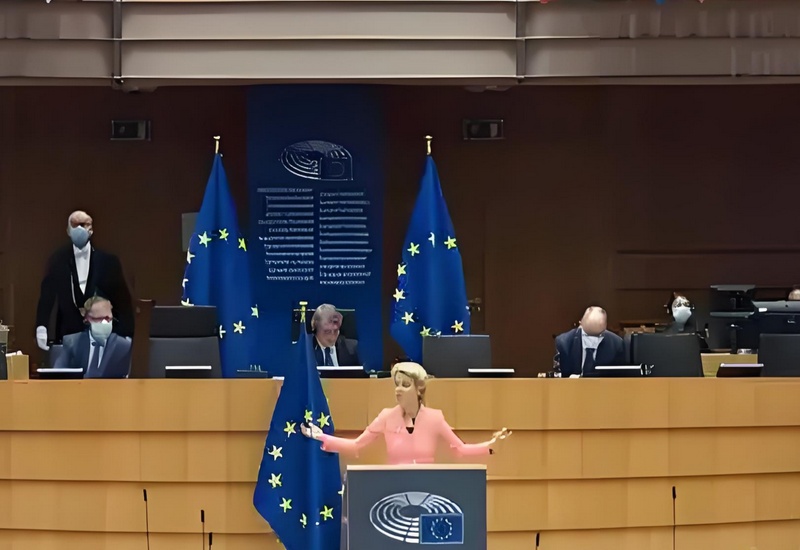
Energy Security and Independence Boost
Before the Russia-Ukraine conflict erupted, Russian natural gas accounted for nearly 45% of EU imports. This share has now fallen to around 12%, largely replaced by LNG supplies from the United States, Norway, and Qatar.
The EU believes this move will enhance energy security and weaken Russia’s fiscal revenue, thereby reducing its financial backing for the war. However, some member states—such as Hungary and Slovakia—have expressed concerns about the transition period, arguing that their geographical conditions and energy structures make the shift more challenging.
Industry experts also caution that natural gas prices may rise in the short term, requiring European energy companies to renegotiate contracts and expand LNG receiving terminals and storage facilities. Nevertheless, most member states maintain that the long-term benefits of energy diversification and independence will far outweigh the costs.
Green Transition Drives Energy Innovation
A complete ban on Russian gas imports will accelerate the EU’s green energy transition. Member states are expanding investments in wind, solar, and hydrogen projects to fill supply gaps while enhancing energy efficiency and grid interconnection capabilities.
The EU aims to further solidify its leadership in global climate governance through this energy restructuring. As the legislation enters final negotiations with the European Parliament, the coming years will test whether the EU can strike a balance between ensuring energy security, stabilizing prices, and achieving sustainable development.