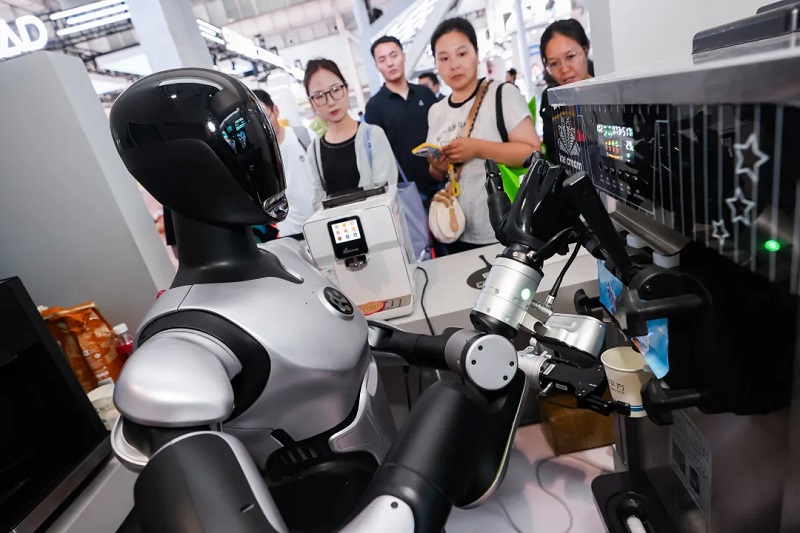
At the 2025 World Robotics Conference, currently being held in Beijing, global experts are focusing on the development of the robotics industry.
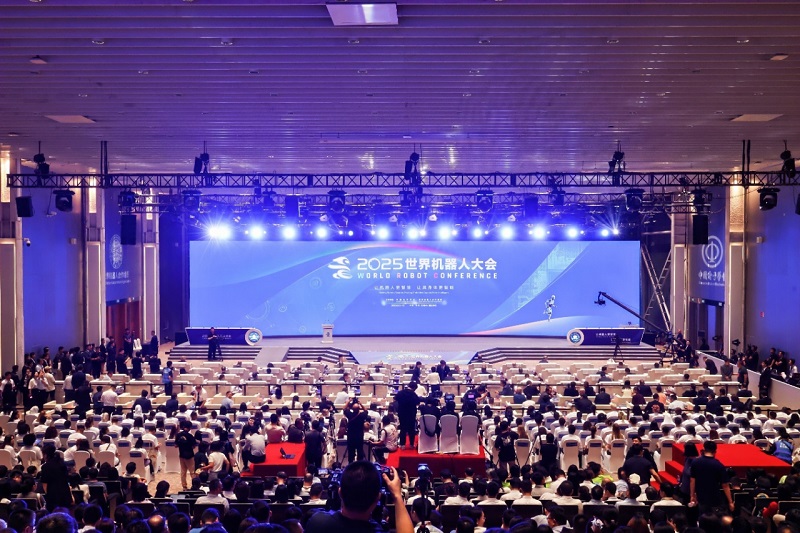
With the continuous integration of informatization and industrialization, the intelligent industry, represented by robotics, is booming. It boasts broad prospects and enormous potential, and is being integrated into production and life with unprecedented breadth and depth. In his keynote speech, Takayuki Ito, President of the International Federation of Robotics, noted that global industrial robot installations declined by 3% year-on-year in 2024, but China bucked the trend with a 5% growth rate. The Nikkei Asian Review reported on the 8th that a surge in investment in humanoid robots is sweeping the Chinese market. At the 2025 World Robotics conference, several foreign experts and industry insiders interviewed by Global Times reporters stated that China’s humanoid robot industry is at the forefront of global application, and despite geopolitical factors, they remain eager to collaborate with Chinese companies.
Xin Guobin, Vice Minister of the Ministry of Industry and Information Technology, explained that since the first World Robot Conference in 2015, the global robotics industry has achieved rapid growth, with intelligence levels rising rapidly, applications expanding rapidly, and innovative elements converging rapidly. China has become the world’s largest robot producer, and robots have become a key driver of developing new productivity and shaping a new type of smart lifestyle. Robotics is a comprehensive integration of various modern technologies, incorporating artificial intelligence, new materials, biomimetic technologies, and other emerging technologies. It is a key indicator of scientific and technological innovation and high-end manufacturing. China is currently accelerating innovation in high-end complete machines, key components, and process software, achieving breakthroughs in core technologies such as large-scale robot models, intelligent collaborative control, human-machine interaction, and multimodal perception. Data shows that by 2024, China’s robotics patent applications will account for two-thirds of all global robotics patent applications.
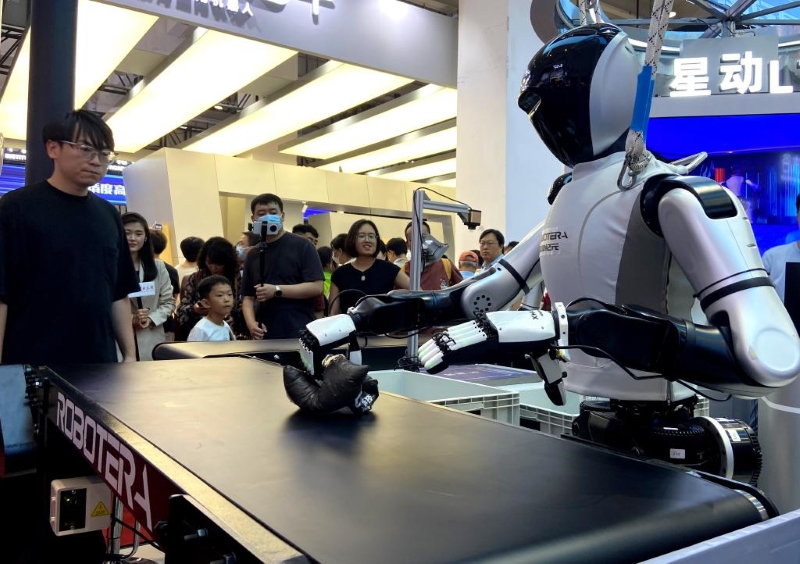
Entering the “Robot World 2.0” area, the world’s first embodied intelligent robot dealership is just around the corner. Here, customers can enjoy customized development, financing, and robot rental services, covering over 50 products across seven major categories, including medical, industrial, and companionship. “Leveraging ‘Robot World 2.0’ as a foundation, we are collaborating with renowned robotics companies like Xinghaitu and innovative platforms like the Beijing Humanoid Robot Innovation Center within the Beijing Economic and Technological Development Zone to create a global benchmark for the robotics industry ecosystem,” said Ma Ning, Deputy Director of the Robotics and Intelligent Manufacturing Industry Bureau of the Beijing Economic and Technological Development Zone.
Home to the permanent venue of the World Robot Conference, the Beijing Economic and Technological Development Zone is home to over 300 robotics companies, forming a comprehensive intelligent industrial chain spanning core components and complete machines to application scenarios. Complete robot companies are playing a leading role, driving the development of supporting component companies upstream and downstream of the supply chain, fostering a healthy ecosystem characterized by collaboration between large, medium, and small companies, and interconnected upstream and downstream sectors.
In an exclusive interview with the Global Times, Juha Ronin, Vice President of the European Robotics Association, stated, “Chinese companies started early in the development of intelligent humanoid robots, and many outstanding companies have emerged. From early quadruped robot dogs to today’s humanoid robots capable of combat performances, China has achieved remarkable success in this area.” He believes that Chinese companies are exceptionally strong in hardware production, with a mature industrial chain supporting the manufacture of components such as gears, motors, connecting rods, and sensors required for humanoid robots. “What truly astonishes me is China’s strength in artificial intelligence,” Ronin told reporters. The development of large AI language models, essential for humanoid robot research and development, requires enormous computing power, memory, and energy. The lightweight AI solution launched by Chinese AI startup DeepSeek is impressive. He believes this highly efficient and energy-efficient AI processing method is crucial for achieving real-time, low-power responses in humanoid robots.
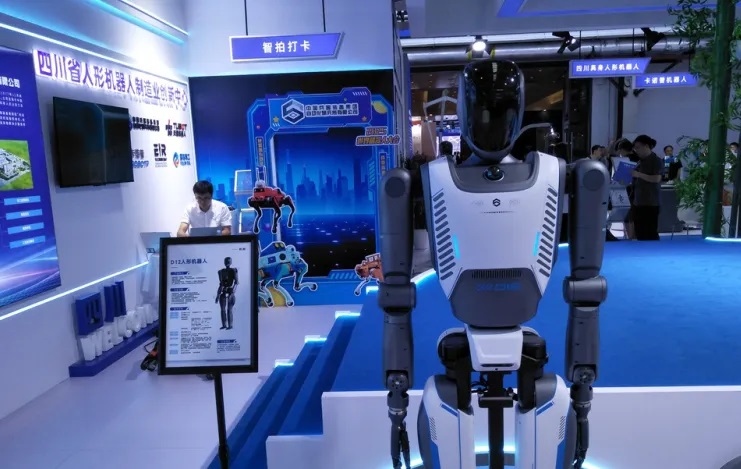
Ronin also advocates for the establishment of globally unified standards for the robotics industry, believing that only in this way can countries build trust in each other’s products. He believes that China and Europe can cooperate in almost all areas of humanoid robotics. Luo Ning said, “Cooperation in industrial production scenarios is the first choice, as this field is currently the most commercially mature. There is also great potential for cooperation in some specific areas, but it requires long-term investment. For example, in the agricultural field, China and Europe both have fertile agricultural production areas. Both sides can develop products according to local conditions: Chinese companies can focus on the large-scale application of humanoid robots in agriculture, while European companies can tackle the problems under special conditions.
Yaniv Moore, CEO of Tevel, an Israel-based agricultural robotics company, is also keenly interested in the innovations of Chinese companies in the agricultural sector. He was impressed by the robotic agricultural applications demonstrated by Chinese research institutes at the exhibition. Moore told the Global Times, “I see China’s strength and potential in this field, and we will seek to collaborate with Chinese farms. The Chinese market is enormous, and we must rely on local partners to effectively tap into it.”
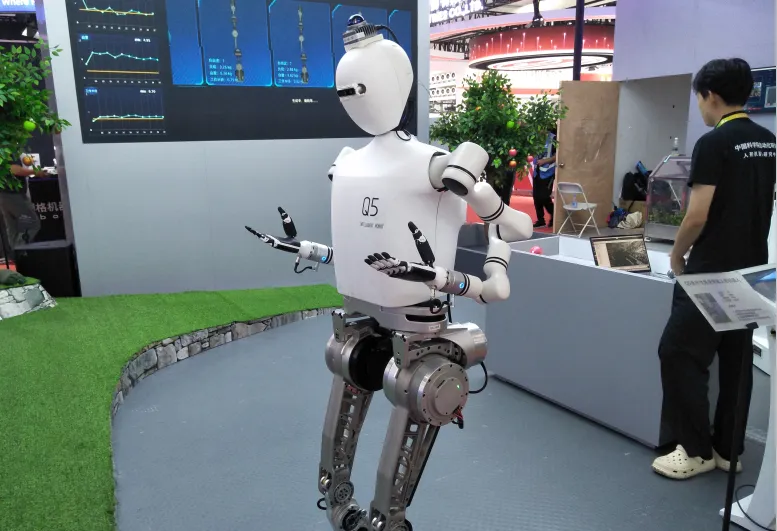
In an exclusive interview with the Global Times, Jeff Bernstein, president of the Association for the Advancement of Automation, stated that despite geopolitical uncertainties, China and the United States still exhibit significant potential for cooperation in core technologies for artificial intelligence and humanoid robots, as well as in exploring emerging scenarios. “As far as I know, there’s only one company in the United States that can mass-produce (bipedal) humanoid robots,” he told reporters, adding that American robots primarily come from Europe, Japan, and China. In this sector, American companies are more focused on component integrators and system integrators. Opportunities for cooperation between Chinese and American companies are gradually emerging in areas such as algorithm optimization and safety standard setting. He believes that both countries possess abundant talent resources. The United States boasts top-tier AI education and research institutions, while China possesses a rich foundation of AI application scenarios and manufacturing. Therefore, in this area, Chinese and American companies should work together to promote technological advancement in the industry.