

China Unveils World First Hydrogen Anion Battery Prototype in 2025
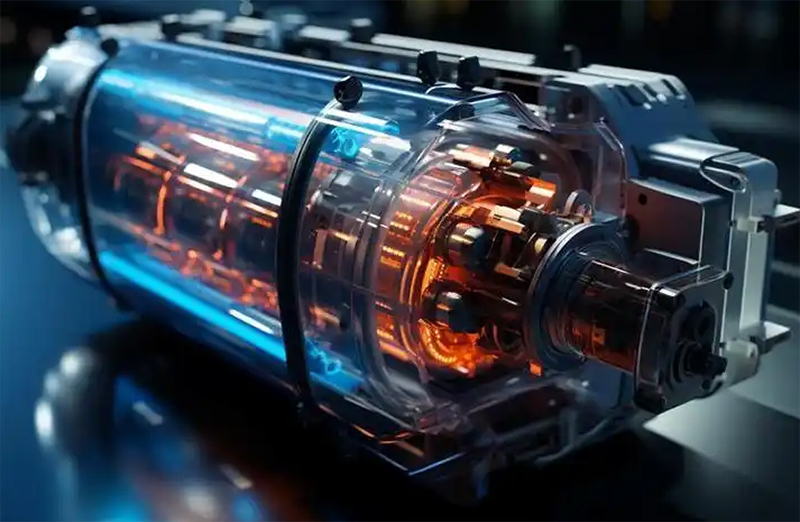
Negative hydride batteries represent a novel energy storage technology approach and are expected to play a significant role in large-scale energy storage, hydrogen storage, mobile power sources, and specialty power sources.
Recently, a team led by Researcher Chen Ping, Researcher Cao Hujun, and Associate Researcher Zhang Weijin from the Dalian Institute of Chemical Physics, Chinese Academy of Sciences, successfully constructed prototype of a negative hydride battery. The results were published in the international academic journal Nature on September 17, Beijing time.
Hydrogen is considered a crucial component of future clean energy systems and typically exists in three forms: positive hydrogen ions, negative hydrogen ions, and hydrogen atoms. Among these, negative hydrogen ions have the highest electron density and are a unique energy carrier with enormous potential.
Similar to the currently widely used lithium-ion batteries, negative hydride batteries utilize the movement of ions to store and release energy. However, the “carriers” within these batteries are negative hydride ions, not lithium ions. However, due to the lack of electrolyte materials that simultaneously meet the requirements of high ionic conductivity, low electronic conductivity, excellent thermal and electrochemical stability, and good compatibility with electrode materials, negative hydride batteries remain at the conceptual stage.
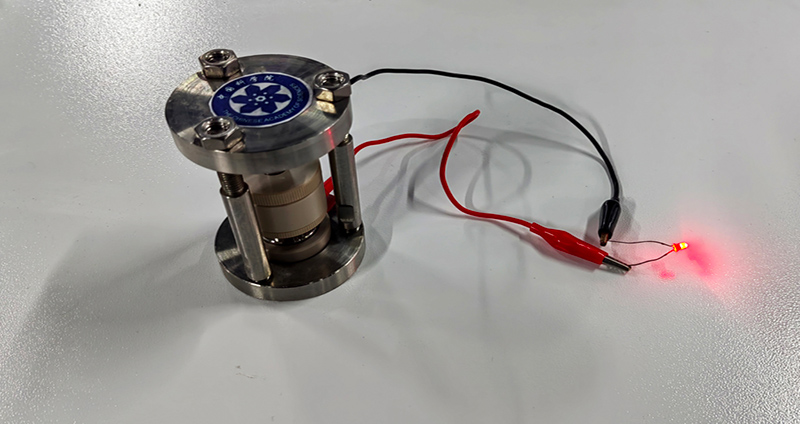
The team initiated research on hydride conduction in 2018 and developed a room-temperature ultrafast hydride conductor in 2023. Building on this foundation, the team coated the less stable cerium trihydride with a thin layer of barium hydride, a material with low electron conductivity and high stability, creating a new core-shell composite hydride. This material exhibits fast hydride conduction at room temperature while also possessing excellent thermal and electrochemical stability, making it an ideal electrolyte material.
Based on this new hydride electrolyte material, the team assembled a prototype hydride battery. The latest experimental data show that the battery’s positive electrode exhibits an initial discharge capacity of 984 mAh/g and maintains a capacity of 402 mAh/g after 20 charge-discharge cycles. The team further constructed a stacked battery, increasing the voltage to 1.9 volts and successfully lighting a yellow LED, demonstrating the feasibility of hydride batteries for powering electronic devices. This marks the advancement of Chinese researchers from “principle concept” to “experimental verification” of hydride batteries.
In the future, the team will focus on the research and development of core materials for hydrogen-ion batteries and optimization of their performance, expand application scenarios, and provide strong technical support for the development of green energy.


Related Articles

Local Moves for Clean Energy’s Spatial Impacts
January 26 marks the International Day of Clean Energy, an initiative raising...

US $12 Billion Treasury Plan Struggles to Break the Deadlock in Critical Minerals
On February 3, 2026, US President Donald Trump announced the launch of...

IEA Latest Forecast: Renewables and Nuclear to Supply Half of Global Electricity by 2030
According to the latest report released by the International Energy Agency (IEA),...


Czech Republic Shuts Down Its Last Hard Coal Mine
In January 2026, the Czech Republic officially closed its last deep-well hard...