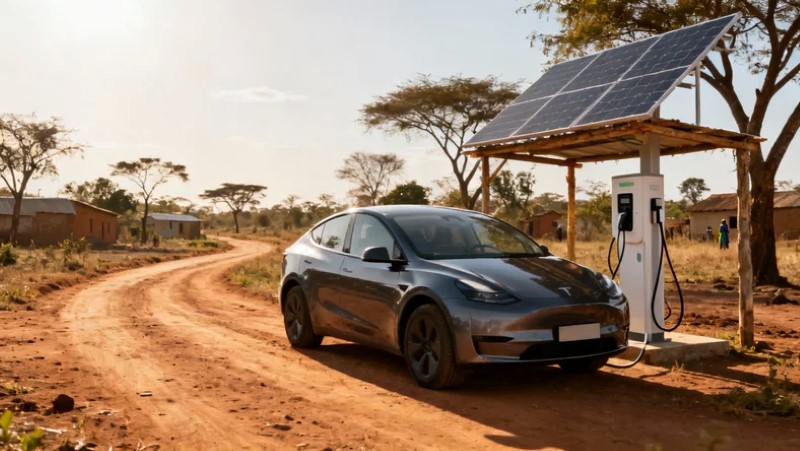
On the African continent, where grid infrastructure remains underdeveloped, electric vehicles (EVs) have not been trapped in a wait-and-see predicament. Instead, they have embarked on a development path tailored to local realities through innovative solutions such as off-grid solar charging. Relevant studies indicate that Africa’s vehicle ownership is expected to double by 2050, outpacing global growth. Although sales of electric passenger cars in Africa exceeded 11,000 units in 2024, accounting for less than 1% of the market share, markets like Morocco and Egypt have shown signs of growth, marking the quiet opening of the electric transformation curtain.
Off-Grid Solar Energy: The Key to Overcoming Charging Bottlenecks
The core breakthrough for Africa’s EV development lies in off-grid solar charging systems. According to latest industry news, a research team from ETH Zurich and the Paul Scherrer Institute (PSI) conducted modeling studies across 52 African countries and more than 2,000 locations. They found that after excluding grid factors, off-grid charging systems composed of dedicated solar facilities and fixed batteries are technically and economically feasible.
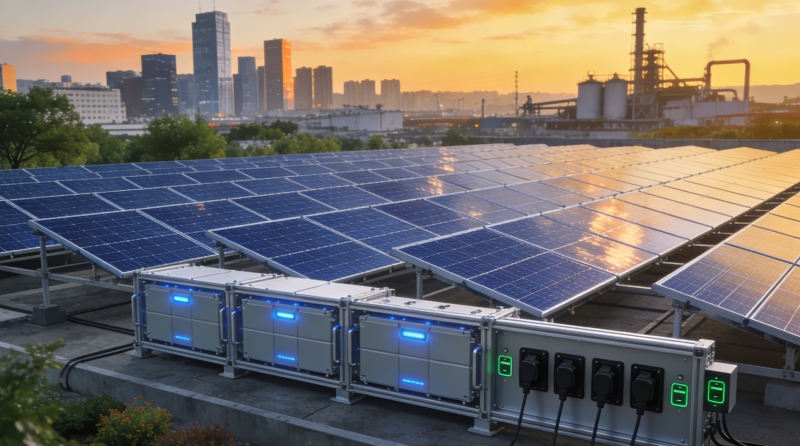
This solution successfully bypasses the traditional bottleneck of unstable or non-existent power grids in Africa. Data shows that a small electric vehicle traveling approximately 50 kilometers per day can meet its daily energy supplement needs with a compact solar system, and the charging cost accounts for a very small proportion of the total operating cost. As solar and battery technologies reduce costs, coupled with the increased supply of affordable electric vehicles, the economic viability of off-grid solutions has become increasingly prominent—even more reliable than existing power grids in some scenarios. Research also indicates that even if synthetic fuels can be produced using low-cost solar energy in regions like Chile, their costs remain higher than those of electric vehicles. Synthetic fuels are more suitable for hard-to-electrify sectors such as aviation and industry, rather than serving as the main line for Africa’s passenger car transformation.
However, this study did not include practical variables such as tariffs, subsidies, import duties, value-added taxes, or government incentives, nor did it elaborate on the expansion of public charging networks or regulations on used car imports. It only proves that electrification is “principally feasible and affordable.” There are significant differences within Africa, and financing has emerged as the biggest obstacle to EV popularization—many African countries face high investment risks and generally high loan interest rates, which disproportionately impact electric vehicles due to their higher initial purchase costs. African governments can lower transformation thresholds by introducing government guarantees, innovative financing models, and other measures. For example, in South Africa, where the financing environment is relatively stable, the South African government has rolled out targeted support policies, enabling electric vehicles to gain market competitiveness at a faster pace compared to nations burdened with high financing costs.
Priority to Operational Scenarios: A Transformation Path Aligned with Market Realities
The unique structure of Africa’s automotive market determines the development path of its electric vehicles. Data from the United Nations Environment Programme (UNEP) shows that 80%-90% of the growth in Africa’s vehicle fleet may come from used car imports. The new car market in Africa is relatively small and highly dependent on imports, making consumers more sensitive to price, maintenance networks, fuel supply, and spare parts availability. Against this backdrop, electric vehicles struggle to gain traction through high-end new models. Instead, they have chosen to take the lead in high-frequency operational scenarios such as taxis, two-wheelers, and public transportation.
In the two-wheeler sector, the economic advantages of electric motorcycles have become evident. Rwandan enterprise Ampersand has adopted a battery leasing and swapping model, allowing drivers to replenish energy with a short stop and retain approximately 35% more cash from the first day of use. Companies like Bboxx are addressing the scarcity of charging facilities by collaborating to deploy battery swapping networks. In public transportation, electric buses have become a scalable entry point. Orders for electric buses are piling up in cities like Nairobi and Kigali—BasiGo has secured 450 orders in Nairobi and 40 in Kigali. Dakar, the capital of Senegal, introduced a fleet of approximately 120 electric buses when launching its new Bus Rapid Transit (BRT) system in January 2024, with plans to transport up to 300,000 passengers daily. Although the purchase cost of electric buses is 2-3 times that of diesel buses, against the backdrop of soaring fuel prices (up by more than 80% since January 2022 in local markets) and a high proportion of renewable energy in Kenya’s power structure, the total lifecycle cost of electric buses is 25%-50% lower. This renewable energy advantage further amplifies the marginal emission reduction benefits and economic viability of electric buses.
Currently, Africa’s EV market has attracted more players to layout their strategies. Against the backdrop of escalating trade barriers in Europe and the United States, some Chinese automakers regard Africa—especially South Africa—as a potential growth market, entering with more price-competitive hybrid and plug-in hybrid vehicles. South Africa is also seen by many automakers as a springboard for expanding into East and West Africa. On the policy front, South Africa will allocate 1 billion rand to incentivize local production of new energy vehicles, batteries, and related infrastructure, and has proposed a direction to transition from fuel-powered vehicles to electric vehicles by 2035 in its Electric Vehicle White Paper. North Africa’s industrial chain is also accelerating its layout—according to information disclosed by Reuters, the Moroccan government plans to build a battery factory with an initial capacity of 20GWh, which will be expanded to 100GWh in subsequent phases, leveraging its solid automotive industry foundation to develop the EV industrial chain.