

Altman: GPT-5 Transforms AI Application

OpenAI CEO Sam Altman has emphasized that the launch of GPT-5 is more than just a high debated tech showcase—it serves as a practical roadmap for the future of artificial intelligence. During a recent podcast, he detailed how GPT-5’s enhanced capabilities are shifting AI from a mere “tool” to a reliable “collaborator,” while also delving into its potential impacts on computing power distribution, entrepreneurial barriers, and the repositioning of education and family structures in the AI age.
GPT-5’s Core Capabilities
Altman revealed that returning to older AI models after using GPT-5 feels “extremely painful,” as GPT-5 outperforms its predecessors in nearly every aspect. A key feature of GPT-5 is its integration as an all-in-one model: users no longer need to select different models for specific tasks, as it automatically adapts to the requirements at hand.
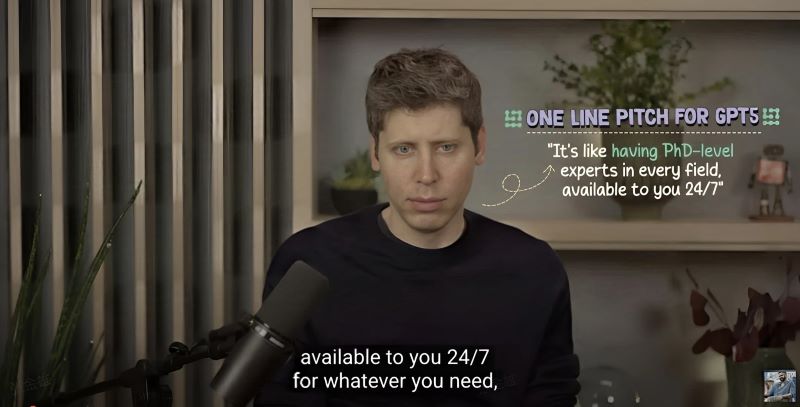
In terms of performance, GPT-5 shows significant improvements in fluency, analytical depth, reliability, and the ability to handle multi-step tasks. Altman drew a vivid comparison, stating that compared to GPT-4, GPT-5 is like having a PhD-level expert in your pocket, ready to assist at any time. He described this advancement as a major leap forward for AI, one that is actively shaping the future.
Empowering Individuals and Entrepreneurship
A central point of Altman’s discussion was the transformative impact of GPT-5 on individual potential. He argued that with AI tools like GPT-5 providing support, a 25-year-old today could achieve more than any peer in history. The key to unlocking this potential, he stressed, is adopting an “AI-native” mindset—constantly thinking about how to use AI tools to solve problems. He equated the importance of this mindset to the value of learning programming in his younger years.
For today’s youth, Altman identified proficiency in AI tools as the most crucial skill, regardless of their career path—whether they aim to start a business, work as programmers, or enter other industries. GPT-5, he explained, has made individual entrepreneurship more accessible than ever: it can help users efficiently write product software, handle after-sales service, develop marketing and communication plans, and review legal documents. Tasks that once required large teams and extensive professional knowledge can now be accomplished by a single person with the support of GPT-5.
Essential Skills for the AI Era
When asked about what to learn in the AI age, Altman highlighted three key areas. First and foremost is mastering new AI tools—he emphasized that while learning itself is valuable, “learning how to learn” is a meta-skill that benefits individuals throughout their lives, and proficiency in tools remains essential regardless of one’s field of study.
Second, in a world marked by rapid change, adaptability and resilience have become critical universal skills. Altman noted that the ability to adjust to new circumstances and maintain resilience in uncertain times is a valuable hard skill for navigating the AI era.
For those choosing to start a business, Altman pointed to a third essential skill: understanding what people want. This principle, he explained, stems from a key lesson he learned during his time at Y Combinator, the startup accelerator he joined in 2011 and led as president from 2014 to 2019. Y Combinator founder Paul Graham’s advice—”Make something people want”—resonated deeply with Altman, who observed that many hardworking entrepreneurs fail because they overlook this fundamental insight.
Navigating Change with GPT-5
Addressing how to build adaptability, learn AI tools faster, and find a clear path forward, Altman highlighted GPT-5’s role in enabling rapid experimentation. He noted that GPT-5 excels at quickly creating small-scale software solutions: when faced with everyday problems, users can leverage the model to build tools and resolve issues promptly.
However, Altman emphasized that this is just the starting point. In a world of constant and significant change, maintaining an open mindset is crucial. He frequently reminds others that “no one knows what will happen next,” and warned that overconfidence—believing one is smart enough to know exactly what users want—only leads to poor decisions. Curiosity, an open attitude, and the willingness to adapt and change one’s mind based on new data, he concluded, are essential qualities for success in the AI era.



Related Articles
What Makes Modern Online Casinos So Popular
What Makes Modern Online Casinos So Popular Online casino sites have become...
Lorem ipsum dolor sit amet
Lorem ipsum dolor sit amet consectetur adipiscing elit. Quisque faucibus ex sapien...
Lorem ipsum dolor sit amet
Lorem ipsum dolor sit amet consectetur adipiscing elit. Quisque faucibus ex sapien...
Lorem ipsum dolor sit amet
Lorem ipsum dolor sit amet consectetur adipiscing elit. Quisque faucibus ex sapien...