

AI Glasses Boom Outpaces Production Capacity
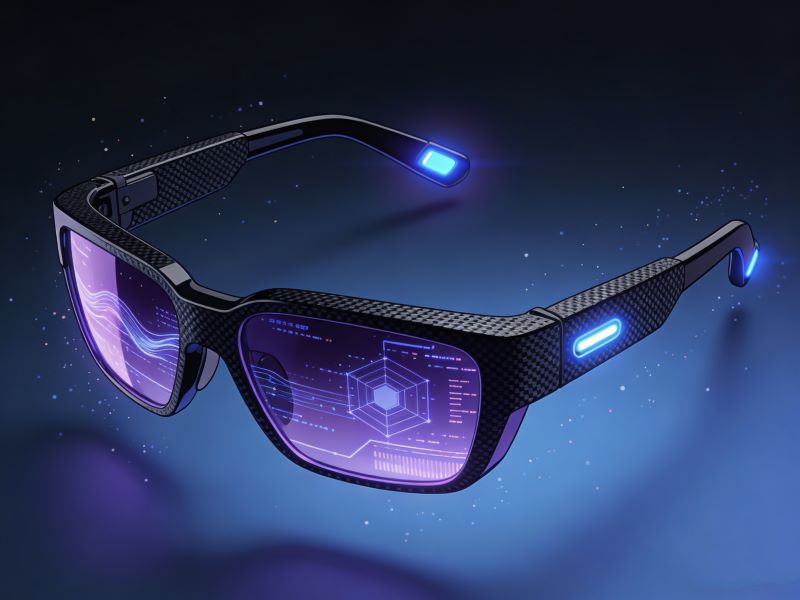
In the smart wearables sector, AI glasses are transitioning from niche geek gadgets to mainstream consumer products. This year, numerous domestic manufacturers have launched AI glasses models, with Google making a strong entry last week. However, popular models across brands are grappling with production shortages—new orders for Kuaike AI Glasses, for instance, require a waiting period of at least 15 days, and in some cases even longer.
Production Shortages: A Bottleneck for Key Brands
In November 2025, Kuaike officially unveiled its S1 and G1 series, comprising six SKUs in total. The S1 series starts at an after-discount price of 3,799 yuan, while the G1 series begins at 1,899 yuan. Notably, these are the first hardware devices integrated with Qianwen AI model. On major e-commerce platforms including Tmall, Douyin, and JD, the delivery time for Kuaike AI Glasses S1 has been extended to 45 days.
Store staff at offline experience outlets confirmed the stock shortage: “Currently, orders require a minimum 15-day wait. Supplies are limited, with only a dozen units allocated to the Shanghai region at a time.”
Another prominent player, Rokid, faced similar production constraints in September. Its supply chain adopted three-shift operations to meet surging demand. This month, the active user base of Rokid Leqi Glasses surpassed 100,000. Zhu Mingming, founder of Rokid, revealed that the company has set a sales target of over one million units for its glasses products next year—a forecast based on current sales performance and described as “not overly aggressive.”
Latest lens Technology is assisting Rokid in addressing waveguide lens production bottlenecks. With expected capacity expansion next year, Rokid’s shipment volume is projected to reach 100 million units.
Kuaike is also ramping up production, having added a new assembly line at Luxshare Precision’s manufacturing facility. Insiders from Luxshare noted that Kuaike’s team has been closely monitoring shipments since last month. Meng Xiangfeng, founder of Zhige Technology, stated: “We are accelerating production of large waveguide sheet orders for Kuaike AI Glasses, with newly purchased equipment now in full operation.” A Kuaike internal source emphasized that the team’s top priority is to fully release production capacity by January 2026, capitalizing on the Spring Festival consumption boom.
Brisk Offline Experiences, Low Conversion Rates
A smart glasses distributor indicated that models such as Rokid Glasses and Thunderbird Air4 Pro are among the top sellers. Field visits to multiple offline digital retail stores revealed that corporate users constitute the primary customer group for AI glasses.
“Office workers purchase them mainly for speech prompting and foreign-related meeting translation,” explained a store salesperson. “Ordinary consumers mostly try them out of curiosity, and few buy them just for entertainment.”
Despite high daily foot traffic for trials, conversion rates remain modest. “For Kuaike AI Glasses, our store has only received three to four orders in the past month,” a salesperson disclosed, attributing the trend to the industry still being in the market education phase.
Battery life emerges as a key pain point affecting user experience. “With continuous high-intensity use, Kuaike AI Glasses can only last about 40 minutes. For daily intermittent use, the battery life extends to approximately 2-3 hours,” the salesperson added, noting that the product supports external backup battery packs, allowing users to purchase 2-3 batteries for extended usage.
Functionally, mainstream AI glasses exhibit high homogeneity. Both Rokid and Kuaike’s offerings feature core capabilities such as AI voice interaction, AR display, photo/video recording, real-time translation, and teleprompter functions, all adopting waveguide display technology. However, differences in launch timing and pricing strategies have led to varying sales performance.
Rokid AI Glasses, priced at 3,299 yuan for the standard package, hit the market in mid-2025. In contrast, Kuaike’s standard package retails for 4,299 yuan as a November new release, contributing to Rokid’s stronger sales momentum.
Notable discrepancies also exist in myopia adaptation solutions. Kuaike offers integrated custom lenses, requiring users to provide optometric data for ordering, with additional costs ranging from 1,299 yuan to 1,999 yuan. Rokid, meanwhile, provides detachable myopia clips priced at 399 yuan for users with myopia up to 600 degrees.
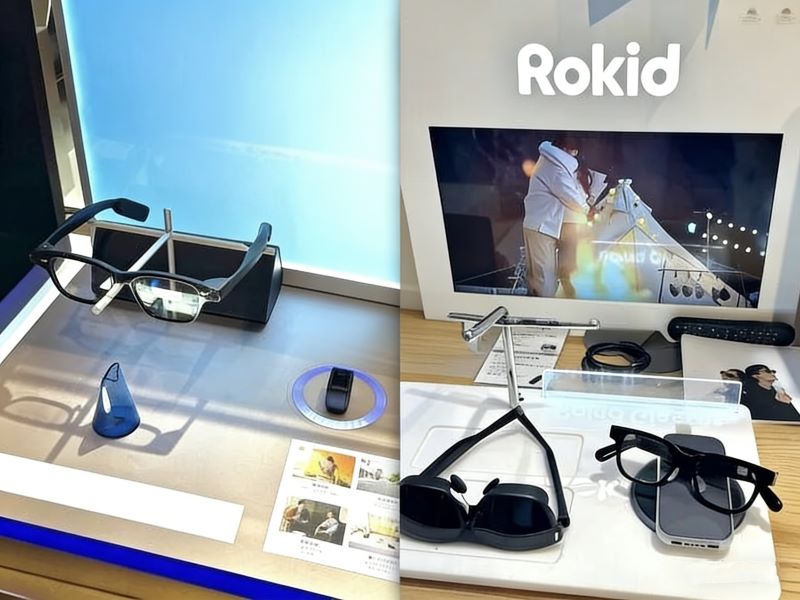
“A user with high myopia would face significantly higher costs with Kuaike’s custom lenses, and the lenses cannot be replaced if vision changes,” a salesperson explained. A consumer considering a purchase highlighted the cost difference: “With nearly 600 degrees of myopia, Kuaike’s total cost with custom lenses reaches around 5,600 yuan, while Rokid’s package with official myopia clips totals 3,698 yuan—even lower than Kuaike’s standard price. Given the similar functions, Rokid offers better cost-effectiveness and flexibility.”
Google’s Entry & Industry Diversification
Last week, Google announced two AI glasses products during its Android Show live event: a display-less AI glasses model and a monocular full-color AI glasses solution. Developed in collaboration with Samsung, Gentle Monster, and Warby Parker, the new offerings mark Google’s formal entry into the competitive landscape.
Industry supply chain links reveal that Samsung maintains close partnerships with Goertek and BES Technology. Multiple Samsung products feature BES Technology chips, including the Galaxy Buds3/3 Pro AI earbuds, which debuted the BES2800 chip. Additionally, the Galaxy XR, equipped with the Android XR system, is contract-manufactured by Goertek—who also handles hardware R&D and full-device manufacturing for Li Auto’s AI glasses, the first mass-produced shooting-focused AI glasses using the BES2800 chip as the main controller.
The AI glasses sector currently exhibits diversified technical paths. Manufacturers like Rokid and Thunderbird focus on AR optical display, leveraging waveguide and other technologies to enable enhanced visual interaction. Cross-industry players such as Xiaomi and Li Auto, meanwhile, prioritize voice and audio interaction, targeting more mature wearable scenarios.
Internet giants and automotive companies are actively deploying AI glasses as a key form of next-generation human-machine interaction. For tech giants like Alibaba, AI glasses serve as a critical node for landing AI large models and connecting online-offline services. For automakers like Li Auto, the devices focus on in-vehicle scenarios, testing AI interaction to create intelligent mobility experiences—representing both an exploration of new growth curves and a proactive response to industry competition.
Nevertheless, the industry faces persistent technical challenges. Firstly, balancing battery life and performance remains a hurdle: AI+AR glasses demand high computing power and power consumption to drive optical displays and process visual data, often leading to short battery life or bulky designs. While AI audio devices alleviate power pressure by omitting screens, the boundaries between their AI interaction capabilities and basic audio functions need further clarification, with product differentiation yet to be fully validated.
Secondly, the ecosystem and application scenarios require expansion. AR glasses lack “killer apps” for consumer use, with value primarily concentrated in vertical scenarios like speech prompting and cross-border translation. Although AI audio devices integrate well with existing ecosystems, they mostly serve as extensions of smartphone functions, with their independent value not yet fully realized.
As technological iteration accelerates and market education deepens, the AI glasses industry is poised for further growth, with intensified competition and innovation driving the evolution of next-generation smart wearables.


Related Articles
Lorem ipsum dolor sit amet
Lorem ipsum dolor sit amet consectetur adipiscing elit. Quisque faucibus ex sapien...
Lorem ipsum dolor sit amet
Lorem ipsum dolor sit amet consectetur adipiscing elit. Quisque faucibus ex sapien...
Lorem ipsum dolor sit amet
Lorem ipsum dolor sit amet consectetur adipiscing elit. Quisque faucibus ex sapien...
Découvrez le monde passionnant de Nine Casinos : votre guide complet
Le secteur des casinos en ligne ne cesse de croître, offrant aux...