

AI Cheating Storm Sweeps Through Top South Korean Universities
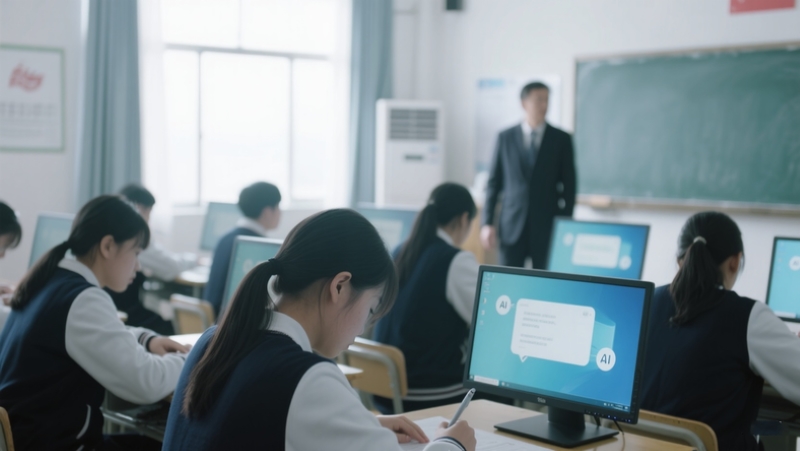
In the late autumn of 2025, three top South Korean universities—Yonsei University, Seoul National University, and Korea University—successively exposed large-scale AI cheating incidents. Generative artificial intelligence has become a tool for exam cheating, triggering widespread social discussions on educational fairness and the transformation of education in the AI era.
Frequent Cheating Incidents Across Universities
Yonsei University was the first to spark public outcry. During the online midterm exam for the general education course Natural Language Processing and ChatGPT, more than 190 students evaded monitoring and cheated using ChatGPT. Proctors noticed that some students frequently glanced outside the camera, while others had multiple overlapping windows on their computer screens. When teaching assistants checked the answers, they found that many answers had a uniform format and carried AI linguistic features. The scores of the involved students were recorded as zero, and those who refused to confess faced the risk of suspension.
The cheating method at Korea University was even more blatant. When approximately 1,400 students took the online exam for the distance course Understanding an Aging Society from a Multidisciplinary Perspective on October 25, they shared exam questions and relayed answers in public chat rooms on KakaoTalk—some even “accepted orders to answer on behalf of others.” In the end, the entire exam was declared invalid. At Seoul National University, during the exam for Statistical Experiments, some students secretly logged into the web version of ChatGPT on classroom computers to copy answers, despite the professor’s explicit ban on AI tools.
The Contradiction Between Technological Popularization and Lagging Supervision
South Korean students have long been in an environment where rhetoric like “needing to understand AI” prevails. A 2024 survey by the Korea Research Institute for Vocational Education and Training showed that 91.7% of college students had used AI to complete assignments or projects, and 84.2% planned to continue using it. However, university supervision has failed to keep up: only 22.9% of the country’s 131 universities have AI usage guidelines, and most institutions lack clear regulations. Additionally, due to financial issues, universities have retained a large number of online courses and increased the number of large lectures since the pandemic, making it difficult for professors to attend to all students—creating fertile ground for cheating.

This incident has also exposed deep-seated problems in education. The Hankyoreh pointed out that students using AI to complete assignments and exams has become a norm, and simply imposing severe penalties has limited effect. Scholars such as Professor Park Joo-ho from Hanyang University believe that it is necessary to formulate AI usage guidelines and innovate educational methods to prevent the decline of students’ creativity and avoid affecting national competitiveness.
In response to the crisis, South Korea’s Ministry of Education has taken action. It plans to collaborate with the Korean Council for University Education to develop an “AI Ethics Guide” that clarifies compliant usage methods and standards for defining cheating. It also intends to invest 1.4 trillion won to advance the “National AI Talent Cultivation Program,” increasing the proportion of AI courses in primary and secondary schools and expanding the number of “Intelligent Science Laboratories” and “AI-Characteristic Schools.” Meanwhile, South Korea has passed the Basic Act on Artificial Intelligence, which will take effect in January 2026. The act regulates AI usage and requires prompts for “deepfake” content, providing a legal basis for educational governance in the AI era. However, how to balance technological application and academic integrity remains a pressing challenge for South Korea’s education system, even as we keep an eye on the latest AI news to see how such issues evolve globally.



Related Articles
Lorem ipsum dolor sit amet
Lorem ipsum dolor sit amet consectetur adipiscing elit. Quisque faucibus ex sapien...
Lorem ipsum dolor sit amet
Lorem ipsum dolor sit amet consectetur adipiscing elit. Quisque faucibus ex sapien...
Lorem ipsum dolor sit amet
Lorem ipsum dolor sit amet consectetur adipiscing elit. Quisque faucibus ex sapien...
Découvrez le monde passionnant de Nine Casinos : votre guide complet
Le secteur des casinos en ligne ne cesse de croître, offrant aux...