

Abe Assassination Trial Opens in Nara, Yamagami Admits Guilt

Recently, the Nara District Court in Japan officially held a trial for the shooting incident involving former Prime Minister Shinzo Abe. This case has drawn much attention from the international community since it occurred in 2022. According to the latest news, on the day of the trial, the suspect, Tetsuya Yamada, admitted to the shooting on the spot, stating that “he did shoot and caused the death of former Prime Minister Abe,” but at the same time argued that the motive “was not against Abe personally, but out of dissatisfaction with a specific religious group.” This statement once again sparked extensive discussions in Japanese society about the relationship between religion and politics.
Event review
On July 8, 2022, Shinzo Abe, then former Prime Minister of Japan, was shot dead while giving a campaign speech for the upper house election in Nara City. He was 67 years old. The murderer, Tetsuya Yamagami, was arrested at the scene. The police later confirmed that he had used a homemade firearm. The case shocked Japan and the international community and is regarded as one of the most serious political violence incidents in Japan since World War II.
Today’s court hearing situation
According to Japan’s NHK, the Nara District Court held a hearing at 9 a.m. today. The prosecution accused Tetsuya Yamashita of premeditated murder and using self-made weapons to attack important political figures of the country. During the trial, Shangshan remained calm and admitted all the facts. However, the defense lawyer team claimed that “due to the influence of his family background that has long been harmed by religious organizations”, they requested the court to consider reducing his criminal liability.
The prosecution believes that this case constitutes an “extremely dangerous act of personal terrorism” and should be sentenced to life imprisonment or death in accordance with the law to maintain social order and political security. The court is expected to hold multiple rounds of hearings, and the final judgment may be made in the first half of 2026.
Social and public opinion responses
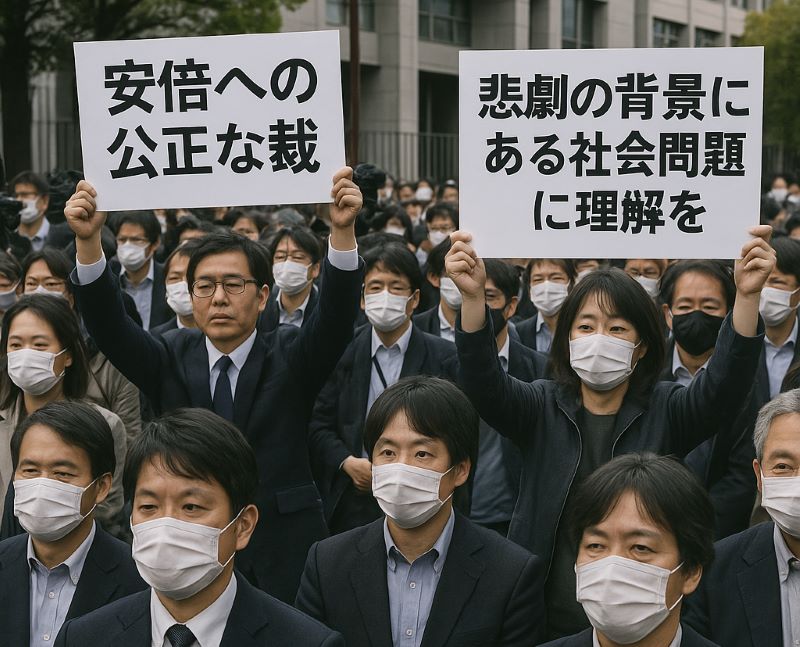
This court hearing has aroused strong reactions in Japanese society. A large number of people gathered outside the Nara Court. Some held signs that read “Seek justice for Abe”, while others called for “understanding the social issues behind the tragedy”. Major Japanese media outlets have successively published comments, pointing out that this case “exposes the complex entanglements in Japanese society at the levels of faith, politics, and family education.”
Meanwhile, the incident reignited the debate on gun control and the influence of religious groups. After Abe’s attack, the Japanese government has revised relevant firearms laws and strengthened supervision over the purchase of materials and online tutorials.
International attention and political influence
Media outlets from many countries, including the United States, South Korea, and the European Union, all reported on the court hearing. International observers believe that the case of Tetsuya Yamagami is not only a criminal case but also reflects the vulnerable side of Japan’s political culture. Abe’s long-term governance and diplomatic influence during his lifetime enabled the case to transcend domestic boundaries and become a symbolic event in international political studies.
In addition, an insider from the Japanese government disclosed that Prime Minister Fumio Kishida stated at a cabinet meeting that he would “closely monitor judicial progress to ensure that cases are handled in accordance with the law and fairly.”
Conclusion
This trial, which has been delayed for three years, is not only a judicial response to a political violence incident but also a mirror image of reflection on Japan’s social structure, beliefs, and institutions. With Tetsuya Yamashita pleading guilty in court, the legal outcome of the case seems clear, but the social rifts it reflects are still fermenting.


Related Articles

Trump Issues Ultimatum as Ukraine Weighs Peace Plan
A U.S.-backed 28-point plan to end the Russia-Ukraine conflict has emerged as...

After Myanmar Raid, 20,000 Cyber Scammers Scatter and Regroup
Last month, the Myanmar military’s raids on notorious telecom fraud hubs like...

APEC Focuses on Demographic Change for the First Time
In August 2025, at the APEC dialogue held in Incheon, South Korea,...


Over 1,000 Artifacts Stolen in Massive Heist at Oakland Museum
In October 2025, US media disclosed that the Oakland Museum of California...
Leave a comment