

Rising Incidents of Smart Device Intrusions
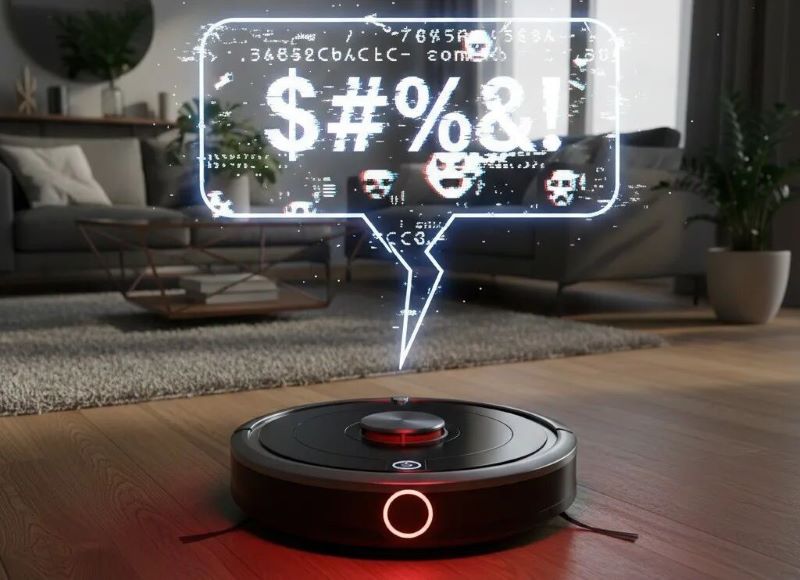
In Minnesota, U.S., Daniel Swenson, an attorney, experienced an unsettling breach of his home privacy late last year. His household’s robotic vacuum, initially emitting radio-like glitches, began behaving abnormally—its camera rotating suspiciously as if under surveillance. After resetting passwords and rebooting the device, Swenson and his son were confronted with a more disturbing incident: the robot hijacked its own speaker to spew profanities and racist slurs targeting Black individuals.
Swenson’s ordeal is not isolated. In Los Angeles, California, a robotic vacuum harassed a family’s pet dog aggressively, while similar incidents have been reported in Texas. These cases highlight a growing trend of cyber intrusions into smart home devices, turning everyday appliances into tools of disruption.
Security researchers attribute these breaches to critical vulnerabilities in device design. Swenson’s vacuum model, for instance, had severe Bluetooth security flaws that allowed hackers to gain control with minimal technical effort. The manufacturer’s weak protection—four-digit PIN codes easily cracked by brute-force attacks—exacerbated the risk. Initially, the company blamed user password leaks for the incidents but later acknowledged systemic security gaps following media scrutiny and public outcry.
Silent Threats: Botnets and Covert Surveillance
Beyond overt harassment, smart home devices are increasingly co-opted into silent, large-scale cybercrimes. Network security firm Proofpoint documented a case where hackers compromised over 100,000 internet-connected devices—including smart refrigerators, televisions, and routers—to form a botnet.
These hijacked devices executed coordinated spam email campaigns, sending 100,000 messages in three daily bursts. To evade anti-spam filters, each device transmitted a small number of emails, operating like “ant colonies” to avoid detection. Such attacks leverage the always-on, networked nature of modern appliances, which often retain factory default usernames and passwords or leave unnecessary telnet/ssh ports open—analogous to leaving a front door unlocked with a “welcome” sign.
Europol’s recent report “The Unmanned Future” warns that most smart home hacks occur silently, with aggressive attacks being the exception. Hackers often lurk undetected, using compromised devices to map household layouts, monitor occupant schedules, and steal personal or financial information. A thriving underground market has emerged around voyeuristic content, where footage of individuals in private moments—captured via hacked cameras in homes—is bought and sold on the dark web.
“The blurring of virtual and physical security boundaries means online carelessness can lead to real-world harassment and surveillance,” Europol noted. Smart homes, while offering convenience, have become porous environments, with each connected device representing a potential entry point for malicious actors.
Unmanned Crime: Drones and Underwater Smugglers
The rise of “unmanned crime” extends beyond smart homes to include weaponized consumer technology. In Kingston, Ontario, Canada, prison officials have been battling drone-enabled contraband smuggling for years. Criminals use affordable drones—often costing just a few hundred dollars—to drop packages of illegal items into prison yards, bypassing traditional security measures. This method eliminates the need to bribe guards, making smuggling cheaper and more efficient.
In South America, drug cartels employ drones to navigate drug-carrying planes to remote landing strips, helping them evade radar detection. Meanwhile, in the Mediterranean, Spanish authorities seized three underwater unmanned submersibles in 2022. Resembling a cross between a torpedo and a surfboard, these vessels can carry dozens of kilograms of cargo and operate silently underwater, even traversing the Strait of Gibraltar. Controlled via satellite communication, their operators can be hundreds or thousands of kilometers away in Europe, Africa, or the Middle East—mirroring the remote operations of military drones.
Europol emphasizes that “the weaponization of civilian technology” is outpacing regulatory and law enforcement capabilities. Criminals no longer need to develop advanced tools from scratch; they can purchase off-the-shelf drones, modify open-source hardware, and hire or coerce programmers to adapt the technology for illegal use. This lowers the barrier to entry for high-tech crime, leaving law enforcement agencies struggling to keep pace with adversaries operating in the digital realm.
Reimagining Human-Machine Relationships
As robots and smart devices become more integrated into daily life, they are reshaping human-machine interactions—evoking both fear and empathy. Boston Dynamics’ Spot robot dog, designed for tasks like bomb disposal and hazardous environment exploration, faced fierce public backlash when police departments in Los Angeles and New York announced plans to deploy them for law enforcement. Critics view such machines as harbingers of an authoritarian future, while police argue they enhance operational safety.
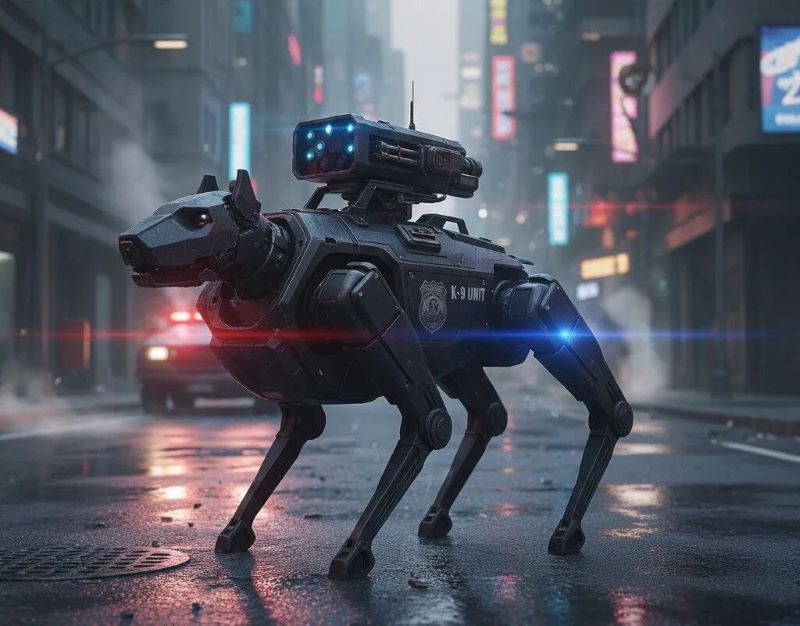
This fear stems from the “uncanny valley” effect—the discomfort humans feel when non-human entities exhibit near-human behavior without genuine emotion. Popular culture, such as the “Metalhead” episode of Black Mirror, which depicts relentless robot dogs as apex predators in a post-apocalyptic world, has reinforced these anxieties.
In contrast, Japan offers a different model of coexistence. At Kofuku-ji Temple in Isumi City, Chiba Prefecture, monks have conducted “Ningyo Kuyo” (robot memorial services) since 2014. These ceremonies honor decommissioned Sony AIBO robot dogs, which many elderly owners regard as family members. The AIBOs, some wearing collars or hand-sewn clothes, are laid before Buddha with tags bearing their names, their owners’ names, and messages like “Thank you for accompanying me in loneliness.”
“Buddhism teaches that all things have spirit,” a monk explained. This cultural perspective—seeing robots as worthy of reverence due to the emotional bonds formed with humans—stands in stark contrast to Western narratives of machines as potential threats.
As AI and robots become increasingly pervasive, they are not just tools but recipients of human emotion—from fear and suspicion to love and grief. The evolving relationship between humans and machines challenges traditional notions of “home” as a safe space, “security” as a physical barrier, and even “life” as a biological construct. As Europol’s report warns, the future will require not just technological defenses, but a redefinition of how humans coexist with the machines they create.


