

Oslo Accords Anniversary Shadows Gaza’s Ongoing Humanitarian Crisis
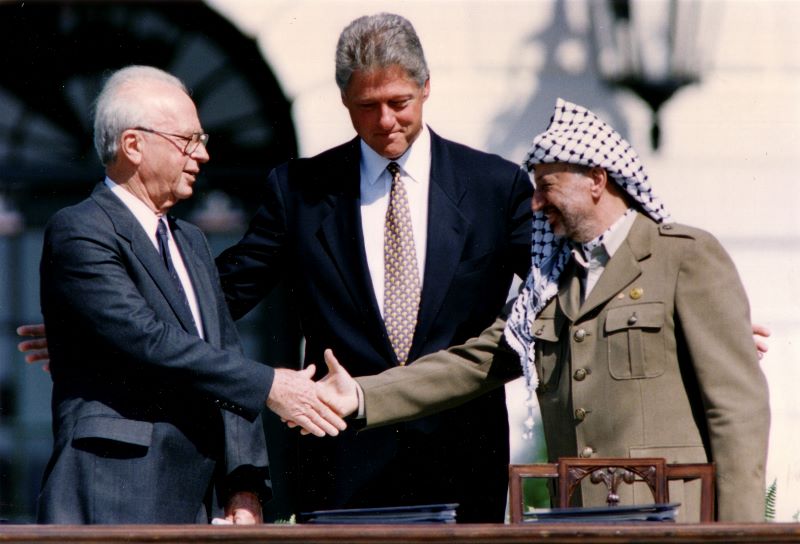
Thirty-two years ago, Israel and Palestine signed the highly anticipated Oslo Accords on the White House lawn in Washington. At that time, the international community generally believed that this agreement would become a historic starting point for peace in the Middle East. However, more than three decades have passed, and the vision of peace has not been realized. Instead, in 2025, the Gaza Strip has been described by UN officials as “the world’s largest living hell”. This tragic contrast once again highlights the complexity and cruelty of regional conflicts.
On September 13, 1993, in the presence of US President Bill Clinton, Israeli Prime Minister Yitzhak Rabin and PLO leader Yasser Arafat shook hands and made peace. This scene was called the “handshake of the century” by the world media. The core content of the Oslo Accords is that Israel will gradually withdraw from the occupied territories and recognize the legitimate status of the PLO, while laying the foundation for the establishment of Palestinian self-governing institutions and a future independent state. At that time, countless people believed that peace in the Middle East was just around the corner.
However, the development of reality has taken a different path. As time went by, negotiations on the final status issue in the agreement remained stagnant for a long time, and core disputes such as the ownership of Jerusalem, the return of refugees, and the expansion of settlements remained unresolved. Since the beginning of the 21st century, violent conflicts, terrorist attacks, military strikes, and political deadlocks have occurred one after another, making the Oslo Accords gradually become a historical memory rather than a current framework.
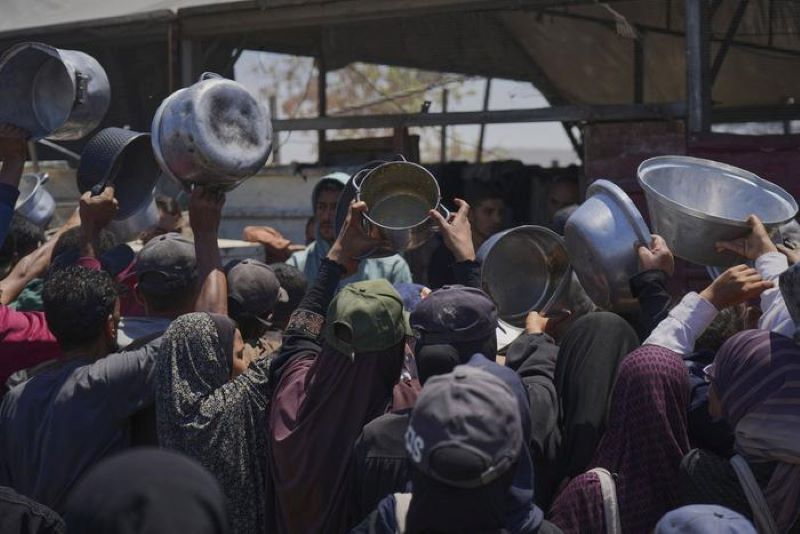
According to the latest report from the United Nations Office for the Coordination of Humanitarian Affairs (OCHA), the situation in the Gaza Strip has deteriorated sharply since 2023. The armed conflict between Israel and Hamas has repeatedly escalated, causing tens of thousands of civilian casualties. More than 2.2 million people in Gaza are almost completely trapped in a small area, and their living conditions are “catastrophic”. The power supply has been chronically insufficient, the drinking water system has been severely paralyzed, and the medical system is on the verge of collapse. UN Secretary-General Antonio Guterres said in a speech at the UN headquarters in New York last week: “Gaza is gradually evolving into the world’s most serious humanitarian crisis today. It is no longer an ordinary conflict zone, but a dark valley in the human living environment.” This scene is not only a war news story, but also a shocking social event.
On-site reporters’ reports show that the war-torn Gaza City is strewn with ruins. The streets are covered with dust and debris, and hospital corridors are crowded with injured people who have nowhere to be accommodated. Many children are facing life-and-death tests due to hunger and disease. World Health Organization (WHO) officials have warned that if the situation does not ease, infectious diseases will spread in winter. The International Committee of the Red Cross also said that aid supplies are difficult to enter, and limited rescue convoys are often trapped at the border or delayed for several weeks.
Meanwhile, the Israeli government still insists that its military operations are “acts of self-defense” and emphasizes that the armed forces of Hamas must be completely weakened to ensure national security. The Prime Minister of Israel said at a press conference marking the 32nd anniversary of the Oslo Accords: “We have never given up peace, but true peace must be built on security and mutual recognition.” However, the Palestinian side criticized Israel for “using security as an excuse to continuously occupy and blockade”, and pointed out that the Oslo Accords had long been torn apart by reality.
Mediation by the international community remains difficult. The United States, the European Union, and the Arab League have successively called for an immediate ceasefire, but under the intense confrontation and internal political pressure between the two sides, the progress of the negotiations has almost come to a standstill. Observers point out that the historical lesson of the Oslo Accords lies in the fact that without substantive implementation mechanisms and mutual trust guarantees, even the most grand blueprint for peace can only remain empty talk.
For many residents of Gaza, the word “agreement” has become a distant symbol. Youssef, a 54-year-old resident of Gaza, said in an interview with great pain, “When I was still a young man and heard the Oslo Accords, I thought peace would be achieved in my lifetime.” Now my children are growing up in ruins, with no future in sight. His voice is a microcosm of the sentiments of thousands upon thousands of Palestinian civilians.
In the global public opinion arena, an increasing number of scholars and policy experts have begun to call for a fundamental re-examination of the legacy of the Oslo Accords. Some people advocate promoting the relaunch of the “two-state solution” through the UN framework, while others believe that new models of regional security cooperation should be sought. But the undeniable fact is that today, 32 years later, the reality of Gaza forms the cruelest contrast with the vision of that time.
The flowers, smiles, and hopes on the White House lawn back then have now vanished into thin air amid the smoke, cries, and ruins of Gaza. The signing date of the Oslo Accords has become a wake-up call for humanity: peace requires not just handshakes and documents, but lasting political will, mutual compromis,e and solid guarantees from the international community. On this land that has suffered so much, time is still passing, but peace seems to be getting further and further away.


Related Articles

Trump Issues Ultimatum as Ukraine Weighs Peace Plan
A U.S.-backed 28-point plan to end the Russia-Ukraine conflict has emerged as...

After Myanmar Raid, 20,000 Cyber Scammers Scatter and Regroup
Last month, the Myanmar military’s raids on notorious telecom fraud hubs like...

APEC Focuses on Demographic Change for the First Time
In August 2025, at the APEC dialogue held in Incheon, South Korea,...


Over 1,000 Artifacts Stolen in Massive Heist at Oakland Museum
In October 2025, US media disclosed that the Oakland Museum of California...
Leave a comment