

Google’s UCP Launches, E-commerce Giants Divide

On January 12, 2026, Google, alongside Shopify, Walmart, Target, and payment leaders Visa and Stripe, unveiled the Universal Commerce Protocol (UCP). This open protocol, crafted to create a common commercial language for AI Agents, has sent seismic waves through the global e-commerce sector, marking a shift from centralized platform traffic acquisition to a new era of “conversation as transaction.”
The Disruptive Power of UCP
More than just an API framework, UCP seeks to standardize every key interaction in e-commerce transactions—from product discovery, price comparison, and bargaining to checkout and after-sales service—once considered core competitive advantages by platforms. It aims to act as the “TCP/IP of intelligent commerce,” enabling any AI Agent to query products, access services, and process payments uniformly, breaking down barriers between systems.
This latest transformation redefines traffic distribution: moving from traditional app ecosystems focused on “capturing user time” to AI Agents that prioritize understanding and executing “user intent.” Human-computer interaction evolves from GUI-based “click-jump” to Intentional User Interface (IUI)-driven “conversation-execution.” For e-commerce platforms, this threatens core values like homepage traffic and search rankings, potentially reducing them to standardized service nodes within the UCP network.
UCP also designates merchants as legal transaction subjects, preserving their control over customer relationships and payments. This empowers brands to connect directly with consumers via AI Agents, reshaping their reliance on and bargaining power with centralized platforms. E-commerce value is shifting from platform-centric “traffic hubs” to merchants and AI-driven “intent gateways.”
Amazon: Fortifying Defenses, Selective Openness
Notably absent from the UCP alliance, Amazon’s stance reflects its end-to-end closed business model—encompassing traffic entry, marketplaces, FBA fulfillment, and AWS cloud services. UCP’s open connectivity directly challenges this foundation.
In late 2025, Amazon announced the end of its shared inventory model by March 31, 2026, requiring independent seller inventory to enhance control over products and suppliers. Simultaneously, it is promoting its AI shopping assistant Rufus and testing features like “Buy for Me,” aiming to match or surpass external AI Agent experiences within its ecosystem.
Amazon CEO Andy Jassy acknowledged AI Agents’ potential but noted current limitations in personalization and data accuracy. The company’s strategy is clear: leverage its strengths in product data, real-time pricing, and logistics to set an experience benchmark. It may pursue “limited openness” only when external AI matures and collaboration terms protect core interests like ad revenue and customer data—potentially leading AI platforms to pay for access to Amazon’s product library.
Alibaba: Embracing Open Ecosystems
In contrast, Ant International—Alibaba’s affiliate—has actively joined UCP, leveraging its commercial ecosystem and payment technology strengths. “We’re expanding partnerships with leading large models to build the AI Agent commerce ecosystem,” said Yang Jiangming, Ant International’s Chief Innovation Officer. “Our solutions enable convenient merchant access, end-to-end security, and AI-driven growth.”
Ant’s strategy focuses on becoming foundational infrastructure rather than competing at the application layer. Its offerings include merchant-managed AI algorithms, a proprietary e-wallet payment solution (Antom EasySafePay) enabling in-interface transactions, and AI-powered security features like fraud interception and theft compensation.
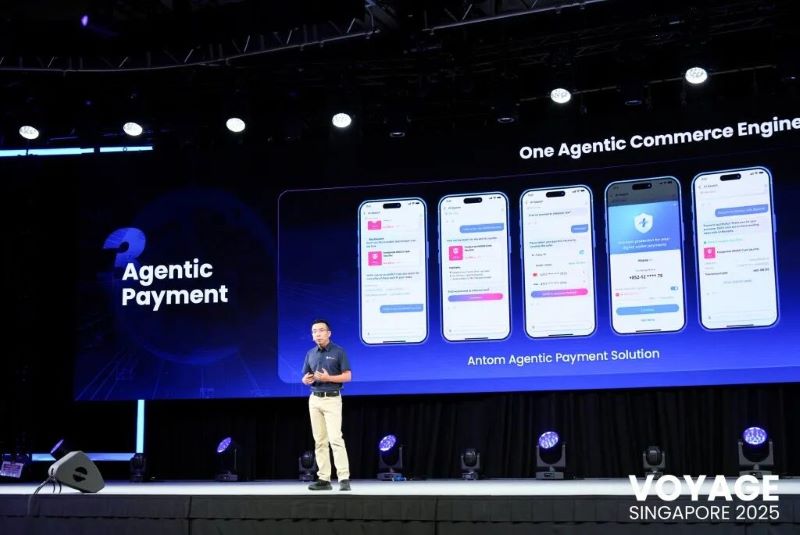
Collaborations with large model providers like Qianwen and DeepSeek span payments, customer service, and risk control, targeting B2B and emerging market needs. For Alibaba, UCP accelerates international expansion—reaching 200+ markets—and provides a blueprint for domestic “AI+e-commerce” innovation, with Alibaba Cloud and Tongyi Qianwen potentially adapting UCP concepts to activate millions of merchants.
The Future of E-commerce Rivalry
UCP’s launch expands e-commerce competition beyond individual platforms to cloud services, conversational interfaces, and data streams. 2026 will see AI penetrate industrial cores, driving a structural revolution in interaction models and business structures, fueled by AI Agent and ecosystem evolution.
Amazon is deepening its competitive moat with scale and experience, while Alibaba is integrating into the open ecosystem as an infrastructure provider. No quick winner will emerge, as consumer behavior shifts and technology matures gradually. With UCP laying the groundwork, a new commercial ecosystem is taking shape, reshaping the entire industry value chain.



Related Articles
Lorem ipsum dolor sit amet
Lorem ipsum dolor sit amet consectetur adipiscing elit. Quisque faucibus ex sapien...
Lorem ipsum dolor sit amet
Lorem ipsum dolor sit amet consectetur adipiscing elit. Quisque faucibus ex sapien...
Découvrez le monde passionnant de Nine Casinos : votre guide complet
Le secteur des casinos en ligne ne cesse de croître, offrant aux...
Découvrez comment la technologie révolutionne l’expérience des casinos en ligne
Avec plus de 60 % des joueurs français qui préfèrent désormais jouer...