

Exploring Norway: Arctic Seaweed Emerges as a Powerful Tool for Agriculture
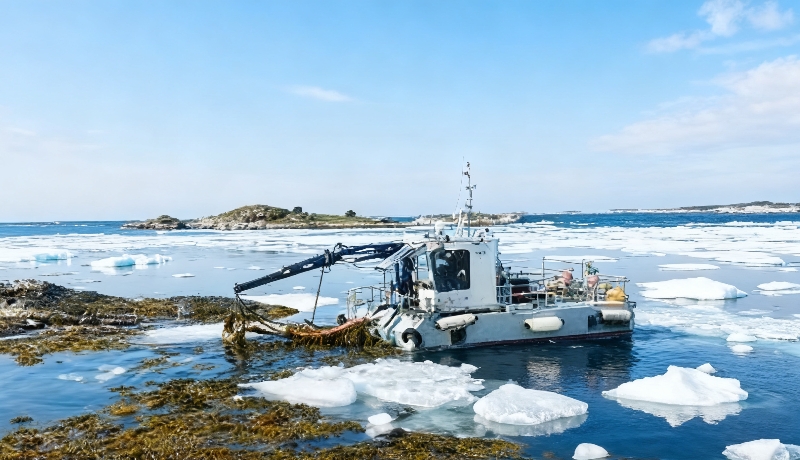
On September 26, 2025, at a seaweed harvesting site in Kristiansund, a city near the Arctic Circle in Norway, ships engaged in seaweed collection unveiled the secret of how local cold-water seaweed supports the global green transformation of agriculture. Backed by the “Blue Economy” of Norway government development strategy— which prioritizes sustainable utilization of marine resources to drive low-carbon industries—this once-overlooked coastal brown algae has now become a core raw material for enhancing crop stress resistance and improving soil structure. The biological agents derived from it are providing new solutions for global food security and sustainable agricultural development.
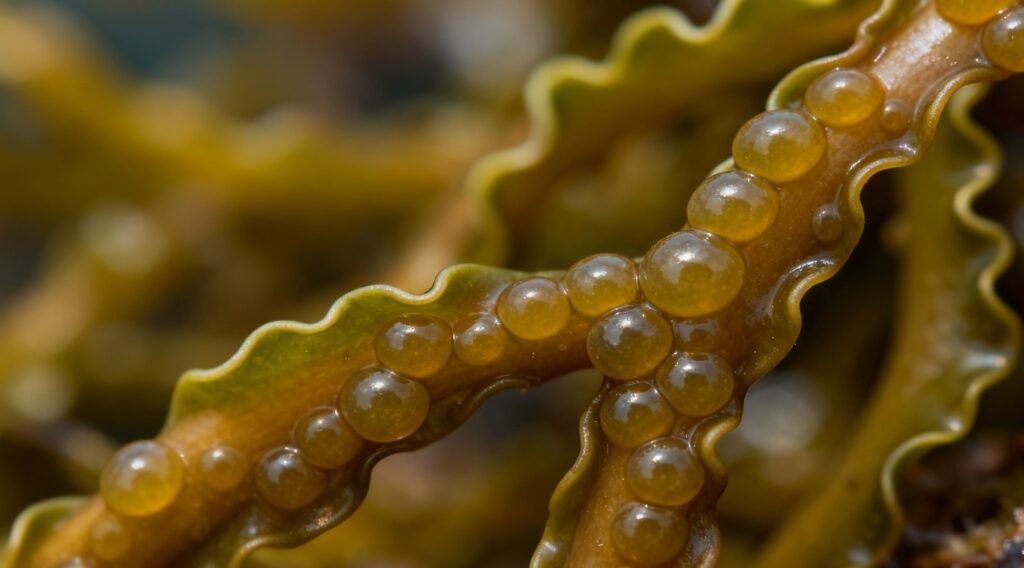
Kristiansund, due to its proximity to the Arctic Circle, boasts cold, clear seawater and a low-temperature environment. These unique natural conditions have nurtured a large brown alga called “Ascophyllu” . With its slender, brownish-green appearance and nutrient-filled vesicles, this alga was once only used by local residents to feed livestock or fertilize crops. Today, however, driven by biotechnology, it has unleashed new value. On-site observations show that seaweed harvesting vessels developed by Algdia (a subsidiary of Syngenta Group) are operating along the coast: the “elephant trunk-style” mechanical tube at the bow is equipped with a spiral cutter head, which cuts the seaweed with high-speed rotation and then suctions it into a net for packaging via pipeline. Each vessel can harvest 5 tons of Ascophyllum nodosum per hour. More importantly, the harvesting process only targets the upper part of the seaweed, while the retained algal base can regenerate naturally after the tide recedes, achieving ecologically friendly and sustainable harvesting.
From Seaweed to Biological Agents
After harvesting, the Ascophyllum is immediately transported back to factories, where it undergoes processes such as drying, grinding, and dissolution-extraction to isolate a variety of natural active ingredients. Ottorino Biondi, General Manager of Algdia, explained that due to its long-term adaptation to the cold environment of the North Atlantic tidal zone, Ascophyllum nodosum has evolved a unique molecular composition. Its extracts are rich in substances such as alginic acid, laminarin, phlorotannins, iodine, and mannitol, and each component can provide “stress resistance support” for crops. For instance, alginate can supplement minerals needed by crops, while enhancing soil aeration and water retention capacity to improve the farming foundation; laminarin can store energy for plants, activate their self-defense systems, and enhance resistance to diseases and pests; phlorotannins and algal polysaccharides are the “core weapons” for coping with harsh environments, helping crops withstand extreme weather such as drought and low temperatures; iodine, on the other hand, exerts an antioxidant effect, reducing cell damage in crops caused by environmental stress. “This kind of biological agent, derived from nature and used for nature, increases crop yields without damaging the ecology. It is an ideal choice for sustainable agricultural development,” Biondi emphasized.
Key to the Green Transformation of Agriculture
A wealth of international experimental data has confirmed the practical value of Arctic seaweed-based biological agents: in farmland tests in Europe and the Americas, crop yields increased by an average of 15% with the use of these agents; a study on drought stress resistance of corn conducted in Brazil showed that corn suffering from drought stress could recover 12% of its yield loss after application. Fang Dong, Head of Syngenta’s Biological Agents Business in China, explained, “Seaweed active substances can quickly activate the physiological functions of crops when they are in crisis or targetedly improve crop quality, which is their core value for farmers.”
As the global green transformation of agriculture accelerates, the biological agent market has witnessed explosive growth. According to market research forecasts, the global agricultural biological products market will grow from USD 15.12 billion in 2024 to USD 43.53 billion in 2035, with a compound annual growth rate of 10%. Agricultural giants such as Syngenta, Bayer, and BASF have all increased their investment in innovation in this field. Marco Rosso, Head of Syngenta’s Biological Agents Business, pointed out, “Biological agents are key tools for soil health and regenerative agriculture, and such innovative technologies are reshaping the future of agriculture.” Liu Jian, Director of the China Biostimulant Professional Committee, also stated that biological agents have become the fourth category of core agricultural production materials after seeds, chemical fertilizers, and pesticides. “In the future, their role will become even more prominent in ensuring food security and addressing climate change.”
From the tiny seaweed along the Arctic coast to a powerful tool for safeguarding global crops, Norway’s practice not only provides a new path for the green development of agriculture, but also demonstrates the enormous potential of “ecological resources plus technological innovation” in solving food security challenges—proving that leveraging natural resources through science and technology has become agriculture new trend in addressing global agricultural sustainability issues.


Related Articles

New Zealand’s Kiwifruit Output Expected to Hit Record High
Benefiting from optimized planting varieties and favorable weather conditions, New Zealand’s kiwifruit...

FRUIT LOGISTICA 2026 Innovation Award Winners Announced
On February 6, the 20th edition of FRUIT LOGISTICA concluded in Berlin,...

Carbon Robotics Launches First Large Plant Model
Carbon Robotics, a U.S.-based agritech firm focused on agricultural artificial intelligence and...


Brazil’s Corn Industry Hit Hard by Leafhopper Infestation
A new research conducted in Brazil has revealed staggering economic losses to...