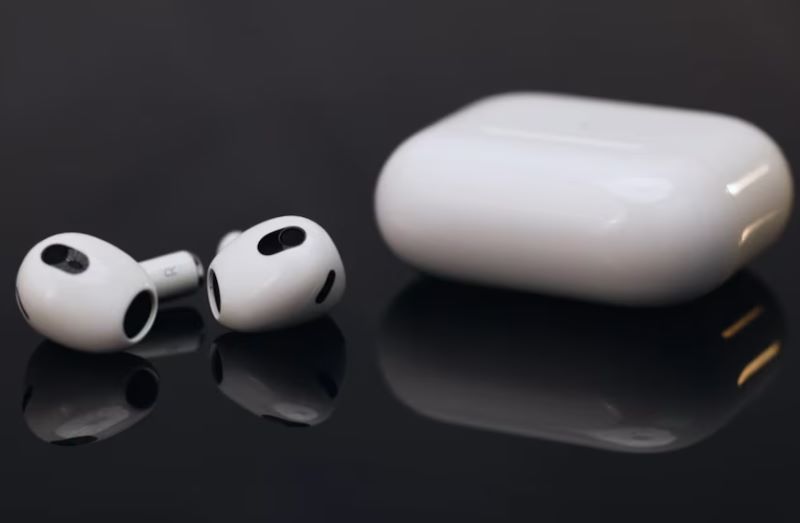
According to tech media outlet AppleInsider, Apple has been granted a new patent for integrating cameras into its AirPods. The patent, titled “Wavelength Mixing for Optical Systems”, adds weight to previous reports dating back to 2024 that hinted at AirPods evolving into smart terminals with environmental sensing capabilities. With the patent now approved, Apple seems to be steadily moving forward with this plan. Some sources predict that camera-equipped AirPods could launch as early as 2026.
Advanced Optical System Enhances Environmental Awareness
The patented optical system is designed for a range of handheld or portable electronic devices, with particular emphasis on compatibility with “smaller, more compact devices”—making it a perfect fit for the AirPods’ form factor. The patent describes an optical system integrating detectors or lenses, along with multiple light sources. These light sources work together to illuminate a target area, allowing the camera to capture reflected light for analysis.
With this design, AirPods could gain advanced environmental sensing abilities. They could detect the proximity of objects and even determine the type of material they are sensing. For example, if a user approaches a wall, the AirPods could recognize it; if a user makes a hand gesture, the system could interpret it accurately. Impressively, the system may even detect whether the AirPods are in the user’s ears or resting on a table. Depending on the status, features such as audio playback or environmental awareness could automatically activate or go into standby mode—enhancing convenience and energy efficiency.
Expanded Use Cases: A Key to Apple’s Ecosystem
Adding cameras could greatly expand the functionality of AirPods. Imagine walking down the street while wearing AirPods—they could detect your surroundings and tailor the audio experience accordingly. During movie-watching or gaming, the system could track head movements to deliver spatial audio with greater precision, immersing you more deeply in the content.
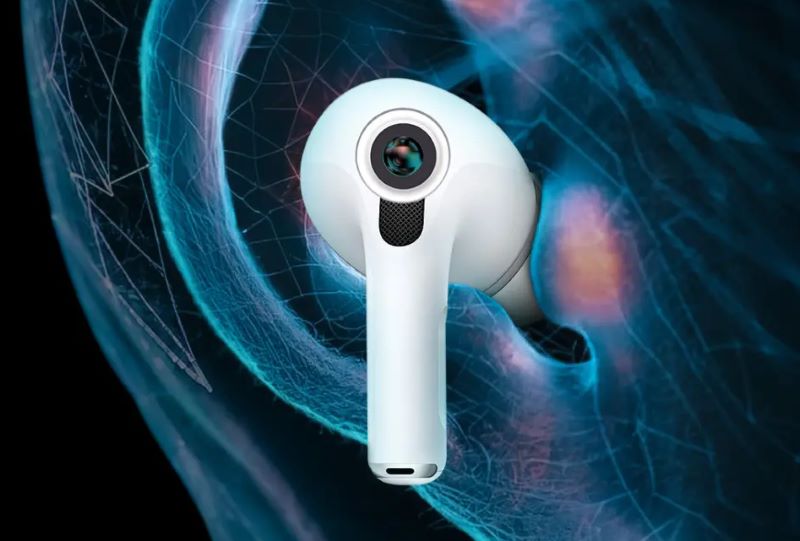
In terms of gesture controls, users could adjust music playback, answer calls, and more—all with simple hand motions, making interactions smoother and more intuitive. In professional settings like video conferences, camera-equipped AirPods could track facial direction and movement to adjust microphone direction and volume accordingly. They could also optimize audio output based on room acoustics, minimizing background noise.
If Apple succeeds in bringing camera technology to AirPods, the product could become the first device in Apple’s ecosystem to combine visual and auditory intelligence. This would not only enhance the audio experience but also support future AR/VR applications—possibly positioning AirPods as an entry point into the metaverse.
Challenges Ahead, But the Future Looks Promising
Although the patent approval brings camera-equipped AirPods one step closer to reality, Apple still faces multiple challenges before mass production. The first is miniaturization. Fitting cameras, sensors, and light sources into the tiny body of AirPods demands cutting-edge component design and manufacturing precision. Apple engineers must ensure top-tier performance without compromising size or form.
Another major challenge is power efficiency. Cameras and optical sensors will increase energy consumption, and users expect long battery life from AirPods. Apple must develop low-power components and improve power management systems to ensure that new features don’t significantly reduce battery life. Supply chain stability is also a crucial factor—production and delivery of these new components must meet large-scale demand.
With greater environmental sensing capabilities comes increased concern over privacy. Cameras can capture images and environmental data, which—if mishandled—could risk user privacy. Apple will need to integrate robust privacy protections, including clear data usage policies, encryption for data transmission and storage, and user control over data collection and permissions.
While the road from patent to product remains complex and uncertain—potentially delayed by technological or supply challenges—this innovation is still a promising leap forward. It’s worth keeping an eye on, as it could redefine the role of AirPods in Apple’s future ecosystem.