

Apple Cancels Development of New Mac Pro: The Fall of “Performance King”
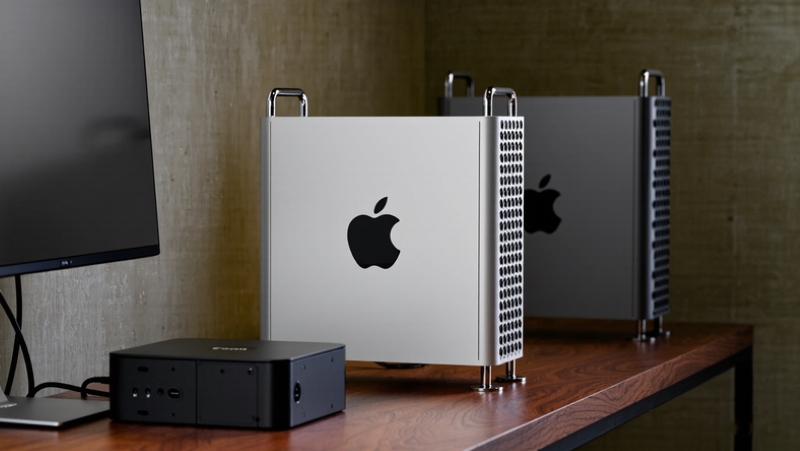
In December 2025, Bloomberg reported that Apple has internally canceled the development of the new Mac Pro desktop computer, and the M4 Ultra processor it was supposed to be equipped with has also been shelved. The next-generation high-end desktop chip will be the M5 Ultra. This news means that the Mac Pro series, which has a 31-year history dating back to the Power Macintosh in 1994, has officially withdrawn from the stage of history, and Apple has clearly identified the Mac Studio as the future of high-end desktop products—a key update in the latest electronics news.
The Turbulent Journey of Mac Pro
The predecessor of the Mac Pro, the Power Macintosh, has been synonymous with Apple’s “professional-grade” computers since its birth. The first-generation product adopted a classic tower chassis, equipped with 6 PCI slots and 7 internal hard drive bays. With its extremely strong expandability, it targeted high-end business and creative users, establishing its position as the “performance ceiling”. After Steve Jobs returned to Apple, he and designer Jonathan Ive launched the Power Mac G3 with a colorful plastic body, achieving a balance between design and performance. However, the subsequent Power Mac G4 Cube, which pursued the ultimate design of a “fanless, all-glass and metal casing”, fell into a heat dissipation dilemma and was discontinued after only one generation. This also laid the groundwork for the “contradiction between design and performance” in the Mac Pro series.
In 2006, the Mac Pro took over from the Power Mac, equipped with Intel Xeon processors and continuing the industrial aluminum alloy casing. In 2013, Apple launched the Mac Pro known as the “trash can”, which was only 1/8 the size of the previous generation. However, due to the heat dissipation bottleneck caused by its single-fan design and the fact that users were only allowed to replace the memory and storage, it aroused dissatisfaction among professional users. In 2019, Apple restarted the tower design and launched the Mac Pro with a “grater”-like appearance. It regained its reputation with high performance and expandability, but unexpectedly, this became the “swan song” of the series.
After the advent of Apple Silicon chips in 2020, the Mac Pro gradually became marginalized—it was the last Mac product of Apple to be equipped with Apple Silicon. Although the M2 Ultra version launched in 2023 still used the “grater” chassis, its expandability was greatly reduced due to the high integration of the chip. It could only be installed with special expansion cards, and the memory or graphics card could not be upgraded.
Why Can the Mac Studio Replace the Mac Pro?
The withdrawal of the Mac Pro is essentially due to the dual iteration of technological trends and user needs. Relying on high-energy-efficiency Apple Silicon chips, Apple launched the compact and exquisite Mac Studio, realizing Steve Jobs’ vision of a “no-redundancy, high-performance” computer back in the day. In terms of core performance, the Cinebench CPU scores of the M2 Ultra version of the Mac Studio and the Mac Pro are basically the same (the former is approximately 28,585-28,919 points, and the latter is approximately 28,838-28,874 points). However, the Mac Pro is $3,000 more expensive, showing an obvious gap in cost performance.
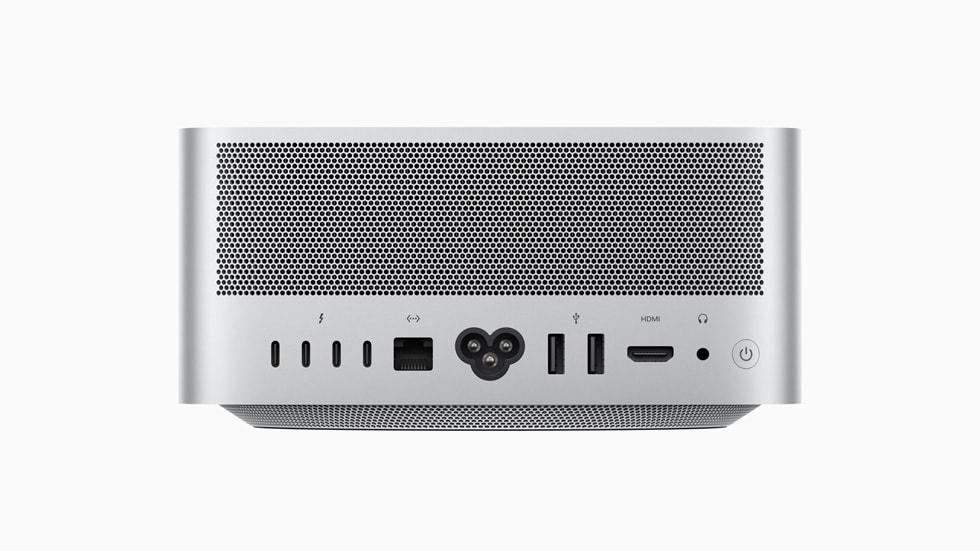
More importantly, the Mac Studio meets the productivity needs of the new era. In the past, professional users relied on tower hosts for fixed office work, and mobile office required matching external hard drives and high-performance laptops, which was inefficient. The Mac Studio, with its small size, can be carried directly. Groups such as DIT professionals in the film and television industry can deploy work at any time, which is impossible for the 16-kilogram Mac Pro. At the same time, the popularity of Thunderbolt interfaces allows the Mac Studio to make up for its expandability through external devices, further weakening the advantages of the Mac Pro.
Nowadays, chip technology has entered the stage of “high performance and low energy consumption”, and miniaturization has become the iterative direction of electronic products. For example, NVIDIA’s DGX Spark is similar in size to the old Mac mini but has 1 Petaflop of AI computing power. In the context of the rise of “super individuals” driven by AI, “performance following people wherever they go” has become a rigid demand, and the tower design and high cost of the Mac Pro ultimately make it difficult to keep up with the pace of the times.


Related Articles

Two Decades of Ups and Downs: The Crimson iPhone 18 Pro Is Coming
According to the latest report from Bloomberg, Apple plans to launch an...

Apple’s Foldable Screen Strategy Fully Exposed
Apple’s long absence from the foldable screen market is about to end....

Apple’s Compact Foldable iPhone on the Horizon
For years, Apple has long played the role of a “late revolutionary”...


TCL Note A1 Raises $1.28 Million in Crowdfunding by Abandoning E Ink
In the market of electronic reading and writing devices, E Ink electronic...