

Agriculture on the American Continent: “Two Extremes” Under U.S. Tariff Policies
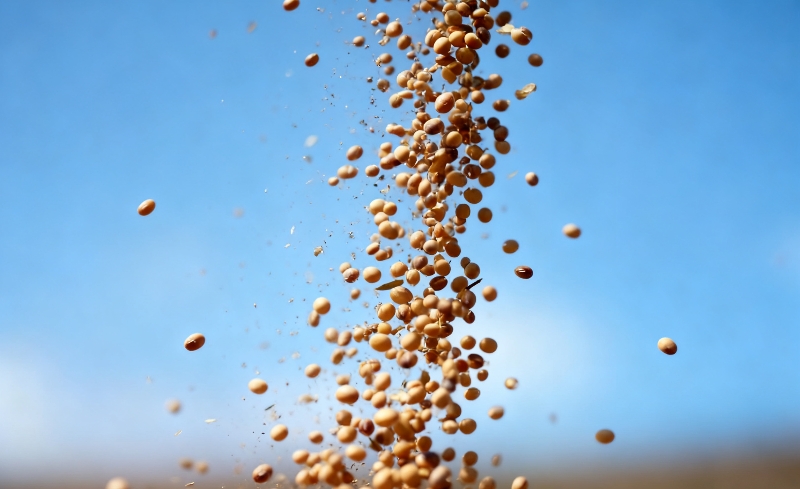
Recently, Brazilian President Lula held a call with U.S. President Trump regarding the 40% tariff imposed by the U.S. on Brazil, drawing international attention. Behind this tariff game, South American countries led by Brazil have continued to expand their market share in the agricultural sector, while U.S. farmers have fallen into trouble—their situations can be described as “two extremes.”
Brazilian Agricultural Exports Break Records Repeatedly
Data from the Brazilian National Association of Cereal Exporters shows that Brazil’s soybean output in 2025 exceeded 170 million tons, a record high. From January to October 2025, Brazil’s total soybean exports are expected to reach 102.2 million tons, surpassing the all-time annual high set in 2023, with full-year exports likely to rise to 110 million tons.
China is the core destination for Brazil’s soybean exports. By the relevant statistical period in 2025, 79.9% of Brazil’s soybeans were exported to China; in September alone, 6.5 million tons of soybeans were sold to China, accounting for 93% of the month’s total exports.
Beyond soybeans, Brazil’s beef exports have also delivered impressive results. Data from the Brazilian Refrigerated Warehouse Association indicates that in September, Brazil’s beef exports to China increased by 38.3% year-on-year to 18.73 tons, break the monthly export volume record. Notably, the U.S. had already imposed a 50% tariff on Brazilian beef and other commodities in August—against this backdrop, Brazil’s beef export performance is even more striking.
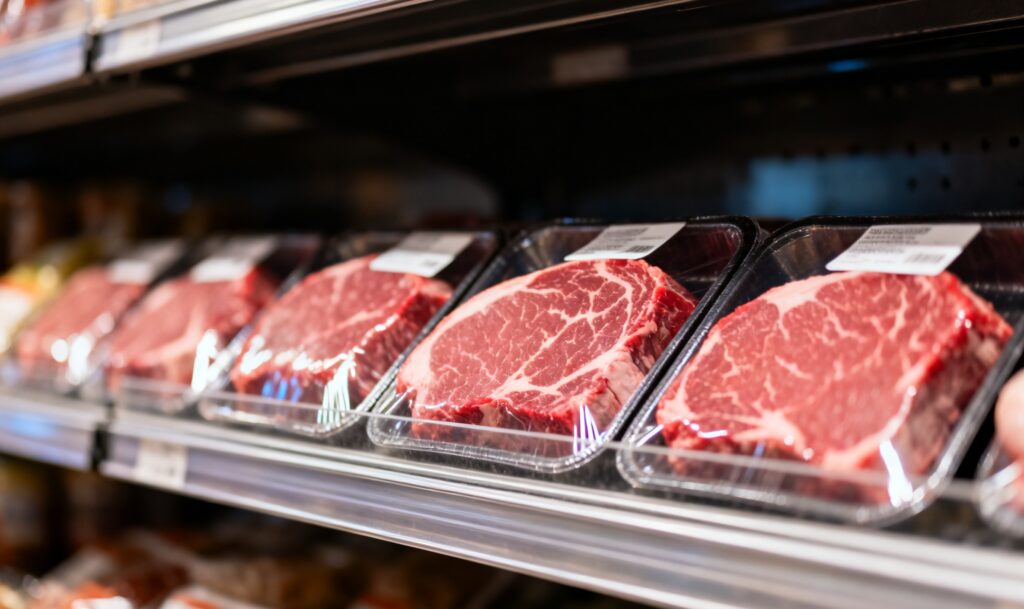
Global demand for beef has effectively offset the impact of U.S. tariffs on Brazil’s exports. This year, 130 countries have increased their purchases of Brazilian beef, with the EU becoming the second-largest destination for Brazil’s beef exports. Last month, Brazil’s beef export value to the EU reached 131.7 million U.S. dollars, a year-on-year increase of 106%.
U.S. Farmers Trapped in a Survival Crisis
In terms of soybeans alone, U.S. farmers lost billions of U.S. dollars in export revenue during the 2025 harvest season. The American Soybean Association points out that China is the world’s largest soybean importer, accounting for 61% of global traded soybeans imported over the past five marketing years—and the U.S. was once China’s main soybean supplier.
However, affected by U.S. tariff policies, China has ceased purchasing U.S. soybeans since May 2025, leaving U.S. soybean exports to China at zero for five consecutive months. U.S. soybean farmers are facing a systemic crisis. Although U.S. soybean growers have attempted to explore new markets, the results have been unsatisfactory. Brad Arnold, a grower in southwestern Missouri, admitted that U.S. agriculture relies on trade with other countries, especially China, and the suspension of Chinese purchases has dealt a huge blow to his business and profits.
In the field of beef exports, the U.S. has also lost the Chinese market due to its own tariff policies. From April to August 2025, the U.S. beef export value to China decreased by 388 million U.S. dollars compared with the average of the previous two years, and its market share was seized by countries such as Australia and Brazil. During the same period, Australia’s beef export value to China increased by 313 million U.S. dollars.
U.S. Agricultural Economy Hard Hit by Policies
Agricultural economists analyze that the current situation has long been predictable—the U.S. government’s trade policies are destroying the country’s own agricultural economy. As a trade weapon, tariffs have pushed up the input costs of agricultural production, reduced market demand, and led many countries to “shut their doors” to U.S. agricultural products, squeezing farmers’ living space in multiple ways.
To ease farmers’ dissatisfaction, the White House plans to use 10 billion to 14 billion U.S. dollars in tariff revenue to subsidize soybean growers and the agricultural economy. However, there are doubts about whether this subsidy can actually reach farmers’ hands; even if it is distributed, how long this “placebo”-like subsidy can appease farmers remains unknown.
In fact, a key insight from recent agriculture news is that the global market is not dominated by the U.S. alone, nor is the U.S. the only supplier. When the U.S. wields the tariff stick, its trading partners may have to endure short-term “growing pains,” but for other countries, this is precisely an opportunity to find new trading partners and open up new trade channels.



Related Articles
Lorem ipsum dolor sit amet
Lorem ipsum dolor sit amet consectetur adipiscing elit. Quisque faucibus ex sapien...
Lorem ipsum dolor sit amet
Lorem ipsum dolor sit amet consectetur adipiscing elit. Quisque faucibus ex sapien...
Découvrez le monde passionnant de Nine Casinos : votre guide complet
Le secteur des casinos en ligne ne cesse de croître, offrant aux...
Découvrez comment la technologie révolutionne l’expérience des casinos en ligne
Avec plus de 60 % des joueurs français qui préfèrent désormais jouer...