

Meta’s Zuckerberg Says Going All-In on AI Is Worth the Risk
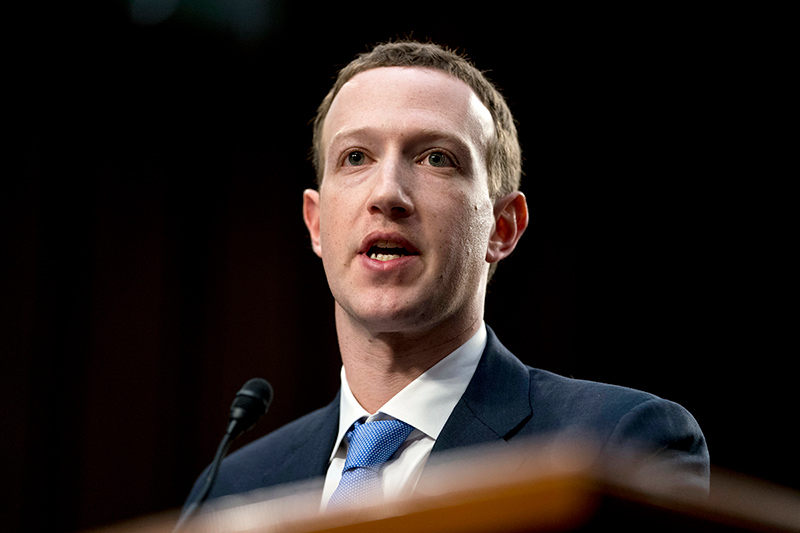
In the current artificial intelligence (AI) frenzy, it seems every tech giant is recklessly spending big to ensure they don’t fall behind. Meta CEO Mark Zuckerberg is no exception, spending heavily to ensure Meta doesn’t miss out on the AI ”moneybag.”
In a recent podcast, Zuckerberg acknowledged that an AI bubble is “very likely.” He pointed out that there’s historical precedent for companies overbuilding, failing, and leaving valuable assets behind after the bubble burst. But he noted that the greater risk for Meta is hesitation.
“If we end up wasting hundreds of billions of dollars, I think that would obviously be very unfortunate. But I would say that I actually think the risk is higher on the other side,” he added.
Zuckerberg also stated that if a company develops too slowly and super AI arrives sooner than expected, it will be “disadvantaged in what I think is the most important technology, which is the technology that will enable most new products, innovation, value creation, and history.”
“The risk, at least for a company like Meta, is probably not being aggressive enough, not being too aggressive,” he added.
Indeed, as Zuckerberg has stated, Meta has already invested heavily in AI infrastructure.
Zuckerberg stated earlier this month that Meta will spend at least $600 billion on US data centers and infrastructure by 2028. Meta CFO Susan Li explained that this figure covers all of the company’s US data center construction and all investments supporting its US operations, including new employee hires.
This spending pledge comes as discussions about an AI bubble reach a fever pitch. Some investors worry that the industry is overheating, similar to the dot-com bubble that burst in 2000. For example, Bret Taylor, chairman of OpenAI and CEO of AI agent startup Sierra, recently admitted that we are indeed in an “AI bubble.”
“I believe AI will indeed transform the economy, and I believe it will create enormous economic value in the future, just like the internet did. But I also believe we are in a bubble, and a lot of people are going to lose a lot of money,” he said.
However, in the latest interview, Zuckerberg reassured investors that Meta is not at risk of collapse. He contrasted Meta with other AI startups like OpenAI and Anthropic, which rely on fundraising to cover their massive computing costs.
“We are not at risk of collapse. Private companies like OpenAI and Anthropic face the question of whether they can continue to raise capital. This depends not only on their performance and the trajectory of AI development, but also on broader economic conditions,” he said.
Zuckerberg added that a market downturn caused by global events could quickly make it impossible for them to cover their massive computing costs. Some analysts believe that these structural risks warrant attention from institutions like the International Monetary Fund (IMF) when assessing global financial stability.
“If you were in their shoes, the situation might be different,” he said.



Related Articles
What Makes Modern Online Casinos So Popular
What Makes Modern Online Casinos So Popular Online casino sites have become...
Lorem ipsum dolor sit amet
Lorem ipsum dolor sit amet consectetur adipiscing elit. Quisque faucibus ex sapien...
Lorem ipsum dolor sit amet
Lorem ipsum dolor sit amet consectetur adipiscing elit. Quisque faucibus ex sapien...
Lorem ipsum dolor sit amet
Lorem ipsum dolor sit amet consectetur adipiscing elit. Quisque faucibus ex sapien...