

At China-ASEAN Expo, AI Takes Center Stage
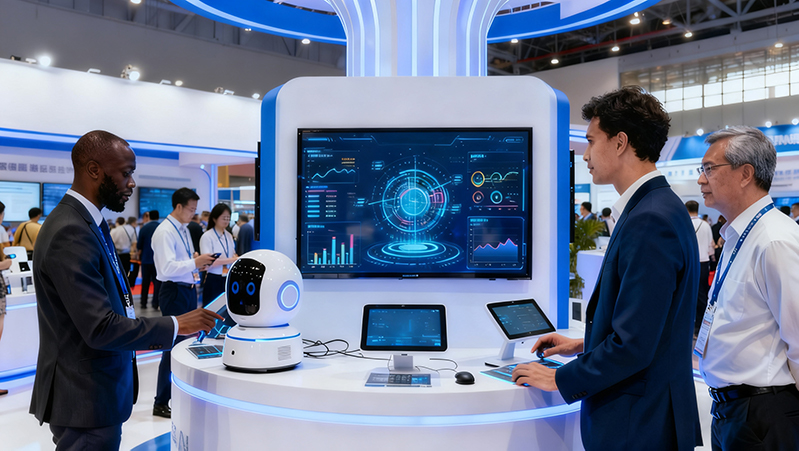
The 22nd China-ASEAN Expo (CAEXPO) recently concluded, with artificial intelligence elements emerging as the standout highlight. According to the organizing committee, AI-related exhibits accounted for over half of the total. The newly established AI Pavilion showcased approximately 1,200 innovative achievements and hosted 16 thematic events, with trade deals exceeding 140 million RMB.
In the Guilin “Charming City” exhibition area, the “Aibao” robot developed by Zhi Ping Fang Company became a focal point. This intelligent device, equipped with an embodied large model, not only collaborated with intangible cultural heritage inheritors to demonstrate the making of Gongcheng Oil Tea but also prepared beverages like coffee and ice cream within 1 minute and 30 seconds. More remarkably, it could play the drum set, performing the song “The Earth Flies with Songs” with precise strikes every 0.375 seconds, showcasing its general-purpose intelligence across diverse scenarios.
The integration of technology and culture reached new heights in the scent experience zone. Hangzhou Scent Kingdom Company introduced a neck-worn digital scent player that uses AI large models to parse language descriptions and generate corresponding scent data. While watching the “Taste of Guilin” video, viewers wearing the device could simultaneously perceive four characteristic aromas: rice noodles, osmanthus flowers, and oil tea. This multi-sensory immersive experience prompted Ms. Wang, a resident of Nanning, to recall, “The osmanthus fragrance instantly evoked the romantic essence of Guilin’s landscapes.”
Innovative breakthroughs were also seen in the music sector. Shenzhen Ganyin Technology’s “Air Drum Kit” utilizes spatial positioning algorithms to enable virtual recognition of seven drum pads and two pedals. Visitors can wield drumsticks and strike in the air to produce accurate drum sounds. This technology reduces the cost of a traditional drum kit to one-tenth and requires only a small corner for setup, significantly lowering the barrier to music learning.
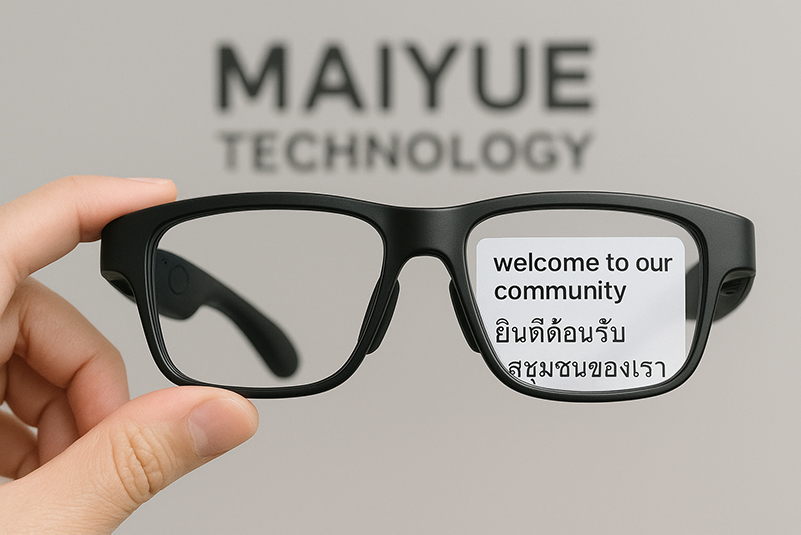
According to the latest news, the AI glasses displayed by Maiyue Technology also drew significant attention. This device, equipped with a built-in micro-display, stores billions of language entries, can translate 138 languages, and achieves a 90% recognition accuracy for the less common languages of the ten ASEAN member states. Thai merchants have already placed an order for 1,000 units for community government services, where users can view speech scripts simply by swiping gestures. The company’s chairman expressed hope to leverage Guangxi’s geographical advantages to introduce more smart products to the Southeast Asian market.
The “Solid and Hazardous Waste Utilization and Disposal” section in the green and low-carbon exhibition hall showcased new technological paths for environmental protection. Guangxi Recycling Industry Group displayed railway waste recycling technology that transforms scrapped passenger cars, freight cars, steel rails, and other materials into industrial products like forged steel grit and new-type square column clamps. The group plans to invest 150 million RMB in building a remanufacturing demonstration base, adopting an AI + manufacturing model to achieve fully intelligent production, with an estimated annual capacity exceeding 100,000 tons.
In the field of hazardous waste treatment, a blockchain traceability system ensures full-process data is recorded on the chain. By scanning a code, one can view information for each step, from recovery to disposal. Furthermore, over 1,000 intelligent recycling stations and 17 sorting centers deployed across 14 prefecture-level cities in Guangxi aggregate data on recycled waste materials in real-time through a big data platform, forming a visual “waste map.”
The expo also featured hundreds of other innovations, including autonomous vehicles and AI photo booths. Mr. Le Cong Nang, Chairman of the Vietnam Global Entrepreneurs Forum, who led a delegation to the event, stated that China has become a global benchmark for technology transformation in areas like agricultural and industrial robotics. His delegation of 30 Vietnamese companies came specifically seeking cooperation. From intelligent devices to environmental technologies, AI is deeply integrating into China-ASEAN collaboration, injecting new momentum into regional development.


Related Articles
What Makes Modern Online Casinos So Popular
What Makes Modern Online Casinos So Popular Online casino sites have become...
Lorem ipsum dolor sit amet
Lorem ipsum dolor sit amet consectetur adipiscing elit. Quisque faucibus ex sapien...
Lorem ipsum dolor sit amet
Lorem ipsum dolor sit amet consectetur adipiscing elit. Quisque faucibus ex sapien...
Lorem ipsum dolor sit amet
Lorem ipsum dolor sit amet consectetur adipiscing elit. Quisque faucibus ex sapien...